2026 Subaru Outback Wilderness: The Smartest Way to Go Off-Road
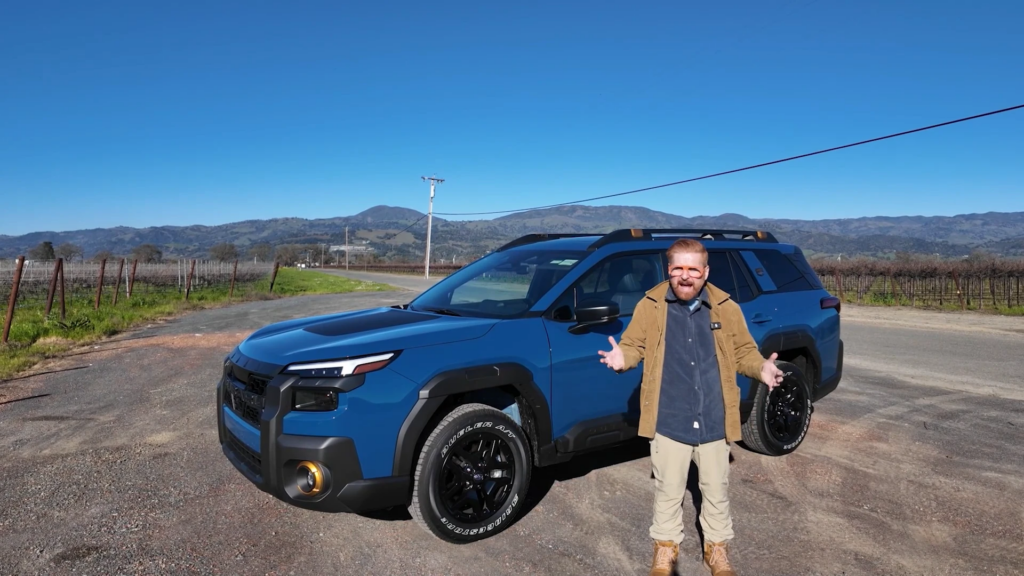
Every few years a vehicle comes along that doesn’t try to reinvent your life, sell you a fantasy, or lecture you about how you should drive. It simply solves problems you already have. The 2026 Subaru Outback Wilderness is exactly that sort of car. It’s not flashy. It’s not chasing luxury trends or off-road cosplay. It’s a pragmatic answer to a very modern question: how do you buy one vehicle that works Monday through Friday and still feels confident disappearing into the woods on the weekend?
Subaru has been edging the Outback toward this space for years, but for 2026 the Wilderness finally feels fully resolved. More power where it matters, genuine off-road hardware, improved technology, and, crucially , no loss of day-to-day usability. If you’ve been quietly waiting for a one-car solution that doesn’t feel like a compromise, this is worth your time.
Why does this matter right now?
The timing of the 2026 Outback Wilderness is not accidental. Buyers are holding onto vehicles longer, new-car prices remain stubbornly high, and people are thinking harder about versatility. When you’re spending north of $45,000, the expectation is that the vehicle earns its keep in multiple roles.
At $44,995 before destination, and $46,445 delivered, the Outback Wilderness is not inexpensive. With option packages, it can crest just over $50,000 delivered. That puts it squarely into the territory of compact and midsize SUVs that promise adventure but often deliver it cosmetically rather than mechanically. What Subaru is offering here is substance.
The Wilderness is powered exclusively by the 2.4-liter turbocharged BOXER engine, producing 260 horsepower and 277 lb-ft of torque. That matters because torque is what moves weight, climbs grades, and pulls trailers. Subaru rates the Wilderness to tow 3,500 pounds, which is enough for small campers, utility trailers, or a pair of snowmobiles. This isn’t theoretical capability it’s rated, engineered, and warrantied.
Ground clearance jumps to 9.5 inches, a full 0.8 inches higher than other 2026 Outback trims. Subaru also publishes improved off-road geometry: a 20.0-degree approach angle, 21.2-degree breakover, and 22.5-degree departure. These numbers may not sound dramatic until you’re cresting a washout or dropping off a rutted trail and realize you’re not scraping expensive plastic.
This is also the first Outback Wilderness to feature electronically controlled dampers. That’s a meaningful upgrade. The suspension now adapts in real time, reducing body motion on pavement while maintaining composure and traction when the surface turns uneven. It’s the difference between a vehicle that tolerates daily driving and one that’s genuinely comfortable doing it.
How does it compare to rivals or alternatives?
The Outback Wilderness occupies a very specific niche, and that’s why comparisons are tricky. Traditional compact SUVs often lack ground clearance and proper off-road systems. Body-on-frame SUVs offer toughness but sacrifice efficiency, comfort, and road manners. Subaru is threading the needle.
Compared to vehicles like the Toyota RAV4 TRD Off-Road or Honda Passport TrailSport, the Wilderness offers more usable clearance and a lower center of gravity thanks to its wagon-based architecture. Against more rugged entries like the Ford Bronco Sport Badlands, the Subaru counters with better on-road refinement and cargo usability.
The Wilderness rides on 17-inch matte-black alloy wheels wrapped in Bridgestone Dueler all-terrain tires. That choice favors sidewall durability and grip on gravel, snow, and rutted trails over on-road theatrics. It’s a deliberate setup, not a styling exercise.
Subaru’s Symmetrical All-Wheel Drive remains standard, paired with X-MODE Dual Mode. Drivers get Snow/Dirt and Deep Snow/Mud settings, along with Hill Descent Control that manages speed on steep declines so you can focus on steering rather than braking. Many rivals still treat this level of control as optional or omit it entirely.
Inside, Subaru continues to make a quiet but important stand. The new 12.1-inch center touchscreen and 12.3-inch digital instrument cluster modernize the cabin without overreaching. Wireless Apple CarPlay and Android Auto are standard, and the system is faster and more intuitive than before. Crucially, Subaru keeps physical climate controls. Anyone who has tried to adjust the temperature on a washboard road knows why that matters.
Cargo space comes in at 34.6 cubic feet, about two cubic feet more than before. Utility hooks can be mounted in eight locations, each rated to six pounds, making it easier to manage groceries, camera gear, or dog equipment without everything sliding forward under braking. This is small-detail thinking that adds up over years of ownership.
Who is this for and who should skip it?
The Outback Wilderness is for people who want capability without committing to a lifestyle costume. It’s for commuters who deal with snow, gravel roads, or poorly maintained pavement. It’s for families who camp, ski, paddle, or haul dogs and gear without wanting a vehicle that feels oversized or cumbersome in daily use.
It’s also for buyers who value restraint. The Wilderness does not shout about its abilities. The cladding is purposeful. The ride height is functional. Even the available colors, including Deep Emerald Green Pearl and River Rock Pearl, feel chosen for longevity rather than trend-chasing.
However, this is not the right vehicle for everyone. If you want maximum towing capacity, a full-size pickup or body-on-frame SUV will serve you better. If your driving never leaves asphalt and you prioritize luxury finishes above all else, there are smoother, quieter crossovers available for similar money.
The option structure also deserves careful consideration. The $2,045 package that adds a moonroof, navigation, and a surround-view monitor is relatively easy to justify. The $4,090 package adds Nappa leather with copper stitching, ventilated front seats, and significant power-seat upgrades. It’s appealing, but it nudges the Wilderness into pricing territory where alternatives multiply quickly.
What is the long-term significance?
The 2026 Outback Wilderness represents something increasingly rare in the modern automotive market: clarity of purpose. Subaru has not tried to turn this into a luxury statement or an off-road caricature. Instead, it has refined the idea of a do-everything vehicle until it feels coherent.
The roof-rail system tells the story. Rated at 800 pounds static and 220 pounds dynamic, with built-in measurement markers, it’s clearly designed for real gear and rooftop tents, not just aesthetics. The EyeSight driver-assistance suite now uses three forward-facing cameras with radar support, enabling features like adaptive cruise control, lane centering, and available driver-supervised hands-free highway driving up to 85 mph. Safety and usability are treated as foundational, not optional.
Put all the numbers together 260 horsepower, 277 lb-ft of torque, 9.5 inches of clearance, 3,500 pounds of towing and you get a vehicle that quietly does more than most people will ever ask of it. More importantly, it does so without demanding sacrifices the rest of the week.
The Outback Wilderness doesn’t chase trends. It doesn’t posture. It simply works. And in a market full of vehicles trying very hard to be something, that may be its most compelling feature.