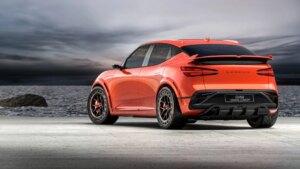
2026 Toyota C-HR EV First Look: 338 HP, 287-Mile Range. Is This Toyota’s Best EV Yet?
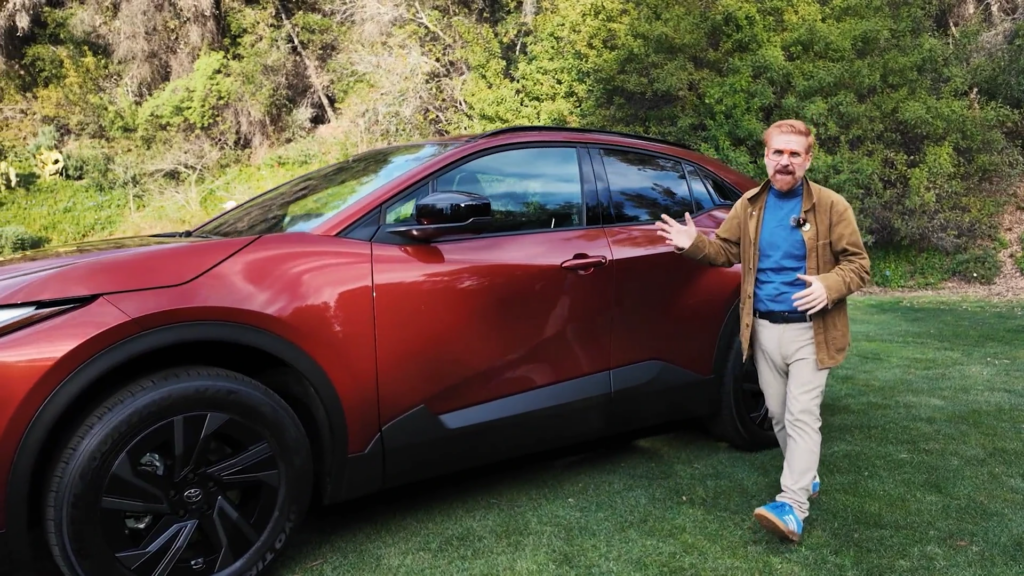
I have spent years listening to smart, busy people explain why they remain mildly skeptical of EVs. Not because they hate the idea, but because the real world keeps getting in the way. Range anxiety is usually just schedule anxiety. Charging stress is often just “I do not have time for a tech support call.” And some EVs still feel designed for people who never carry anything heavier than a tote bag.
That is why the 2026 Toyota C-HR Battery Electric Vehicle matters. Not because Toyota finally built another EV. The more interesting story is that Toyota built an EV that behaves like a normal person’s car.
It is shaped like a coupe for no practical reason at all, which is very on-brand for modern design departments. But underneath that roofline, Toyota has done something refreshingly grown-up: it has combined useful range, straightforward charging hardware, real cargo room, and a cabin that is clearly designed around everyday routines.
You can feel the intent in the numbers. Standard dual-motor all-wheel drive. 338 horsepower. A manufacturer-estimated 0–60 mph time of 4.9 seconds. Those figures are not there for bragging rights. They are there because EVs carry weight, people carry stuff, and merging onto a motorway should not feel like a leap of faith.
Then there is the range. Toyota lists up to 287 miles on the SE grade with 18-inch wheels, and 273 miles on the XSE with 20-inch wheels. Same basic vehicle, different wheel-and-tyre reality. If you care about maximum range, the smaller wheels are not a downgrade. They are a strategy.
Why does this matter right now?
Because the EV market in February 2026 is very different from what it was even a year ago.
First, the federal EV tax credit is no longer a current shopping tool. It ended for vehicles acquired after September 30, 2025. That means the decision has shifted back where it probably belongs for most buyers: the car has to make sense on its own. Not on a spreadsheet that assumes a credit you cannot claim.
Second, charging standards have consolidated. The North American Charging Standard is now the practical default direction in the U.S., not a niche talking point. Toyota putting a NACS charging port on the C-HR and including a NACS-to-CCS adapter is a big deal because it reduces friction. More places to plug in. Fewer dead ends. Less time spent wondering whether your next stop is a charger or a sculpture.
Third, the conversation has matured. Early adopters wanted novelty. Most mainstream buyers want normal. They want a car that fits into life without a new set of habits taped to the fridge.
Toyota’s choices here are very much in that “normal wins” direction.
The 74.7-kWh battery pack is the energy supply. The 11-kW onboard AC charger is what makes Level 2 charging at home or work feel realistic. Faster Level 2 charging is not glamorous, but it is the difference between waking up to a full battery and waking up to a half-filled apology.
Toyota also says the C-HR can charge from 10 to 80 percent in about 30 minutes under ideal conditions on DC fast charging. The fine print always applies: temperature, charger output, and battery state all matter. But the key point is simple. This is positioned for regular road-trip stops, not heroic endurance planning.
Battery preconditioning is built in, too. Toyota says it can be activated manually or automatically when routing to a fast charger using navigation. In cold climates, this matters because cold batteries charge like they are sulking. Warming the pack closer to its optimal temperature improves charging performance and reduces the frustration of “why is this taking so long?”
Then there is practicality. The C-HR is not trying to be huge. It is 177.9 inches long with a 108.3-inch wheelbase and 8.0 inches of ground clearance. Compact outside, grown-up underneath. That wheelbase-to-length relationship often helps stability and packaging, which matters when you want a car that is easy to park but does not feel nervous on the motorway.
And cargo space is where Toyota has quietly made its loudest point.
Behind the rear seats you get 25.3 cubic feet. That is the everyday configuration: groceries, camera bags, dog gear, school bags, all the normal chaos. Fold the 60/40 rear seats flat and Toyota says you get up to 59.5 cubic feet. That difference is not theoretical. It is the difference between “we can bring it” and “we can bring it and still close the liftgate.”
Toyota adds a power liftgate and low-profile roof rails because real life does not lift itself. These features matter even more on an EV because you are already asking buyers to adjust. Every convenience that reduces daily friction is a quiet form of range anxiety prevention.
How does it compare to rivals or alternatives?
The compact electric crossover space is now properly crowded. The Tesla Model Y remains a sales and ecosystem benchmark. Hyundai’s Kona Electric has been a sensible efficiency-first choice. Chevrolet’s Equinox EV has drawn attention by trying to put electric ownership closer to mainstream budgets.
Toyota is not trying to win the loudest headline. It is trying to win the easiest week.
The C-HR’s standard dual-motor all-wheel drive and 338 horsepower give it a very specific personality: confident, quick, and unbothered by a full load. Toyota’s claimed 4.9-second 0–60 mph time is quick enough that the car will never feel strained merging or passing, even when you have people in the back and cargo in the boot.
Range-wise, Toyota’s numbers set expectations clearly. The SE’s up to 287 miles is the “max range” play. The XSE’s 273 miles is the “style and wheel” play. Toyota is effectively giving buyers an honest trade: bigger wheels look good, but physics sends the invoice.
Where Toyota has a real advantage, at least on paper, is the charging hardware decision. A NACS port plus a NACS-to-CCS adapter is the kind of dual-compatibility that makes the ownership experience feel less brittle. It is not about being a charging nerd. It is about having options when the first charger you reach is busy, broken, or simply not your connector.
Inside, Toyota’s priorities feel practical rather than performative. A 14-inch touchscreen anchors the cabin. Two wireless Qi chargers up front reduce cable clutter. USB-C ports for rear passengers reduce arguments. This is a vehicle built around device management because modern families are basically rolling data plans with legs.
Toyota adds steering-wheel paddle shifters for four levels of regenerative braking. That gives you control over how strongly the car slows when you lift off the accelerator, recovering energy back into the battery. It is useful in stop-and-go traffic, and it is genuinely helpful on long descents when you want more control without riding the brake pedal.
Then there is ambient lighting with 64 colours. Yes, it is slightly ridiculous. But cabin comfort is not only about seat foam. Soft lighting reduces harsh contrast at night and can make a cabin feel calmer and more premium without being flashy.
Safety is where Toyota is doing what Toyota should do: make the important stuff standard.
Toyota Safety Sense 3.0 is standard, including pre-collision warning with pedestrian detection, full-speed radar cruise control, lane departure alert with steering assist, lane tracing assist, road sign assist, automatic high beams, and proactive driving assist. The point is workload reduction, not autopilot fantasies.
Safe Exit Alert is also standard. It is designed to detect vehicles or cyclists approaching from behind and warn occupants if opening a door could cause a collision. This is the kind of feature that prevents the expensive kind of learning experience, especially in cities where cyclists are not an abstract concept but a daily reality.
Who is this for and who should skip it?
This C-HR EV is for the person who wants an EV to be a car first.
If you commute, run errands, carry family or friends, and occasionally take a road trip, the C-HR’s blend makes sense: up to 287 miles of estimated range in the most efficient configuration, quick performance with standard all-wheel drive, and cargo space that is genuinely usable.
It is also for people who are tired of complexity. The NACS port plus included adapter, the 11-kW onboard charger, and battery preconditioning are all signals that Toyota has thought about ownership, not just launch-day specifications.
Who should skip it?
If you need three rows, this is not your solution. If you need serious towing capability, there is no towing story provided here, so you should not buy this expecting it to behave like a heavy-hauler. If you are shopping purely for the cheapest EV deal in America, Toyota has not positioned this as the bargain-basement play, and there is no federal tax credit to smooth the numbers in February 2026.
If you are someone who wants your EV to feel like a science project, there are cars that will give you more novelty. But if you want your EV to feel like a well-engineered daily companion, the C-HR is pointing in that direction.
There is also a subtle audience Toyota is courting here: the EV sceptic who is not anti-EV, just anti-hassle. The person who wants charging to be predictable, cabin technology to be intuitive, and cargo space to be honest.
What is the long-term significance?
The long-term significance of the 2026 Toyota C-HR EV is not a single number. It is Toyota’s philosophy shift becoming visible.
Toyota has been criticized for being slow to commit to full battery-electric models. But this C-HR feels less like a rushed response and more like a deliberate “here is what mainstream EV ownership should feel like” statement.
The engineering choices point toward a future where EV adoption is driven less by hype and more by habit. Charging standards are consolidating. Convenience features reduce friction. Safety systems reduce workload. Packaging that acknowledges dogs, sports gear, camera bags, and groceries.
And with the federal EV tax credit no longer available for vehicles acquired after September 30, 2025, that shift matters even more. The cars that will win in 2026 are the ones that make sense without a government nudge.
The 2026 Toyota C-HR EV, on paper, looks like Toyota doing real-life engineering. It is fast enough to feel confident, practical enough to feel useful, and thoughtfully equipped enough to make EV ownership feel less like a new hobby.
I still think the coupe roof shape is silly. But I can live with silly if the rest of the car is sensible.