The Truck Parking Crisis Hiding in Plain Sight
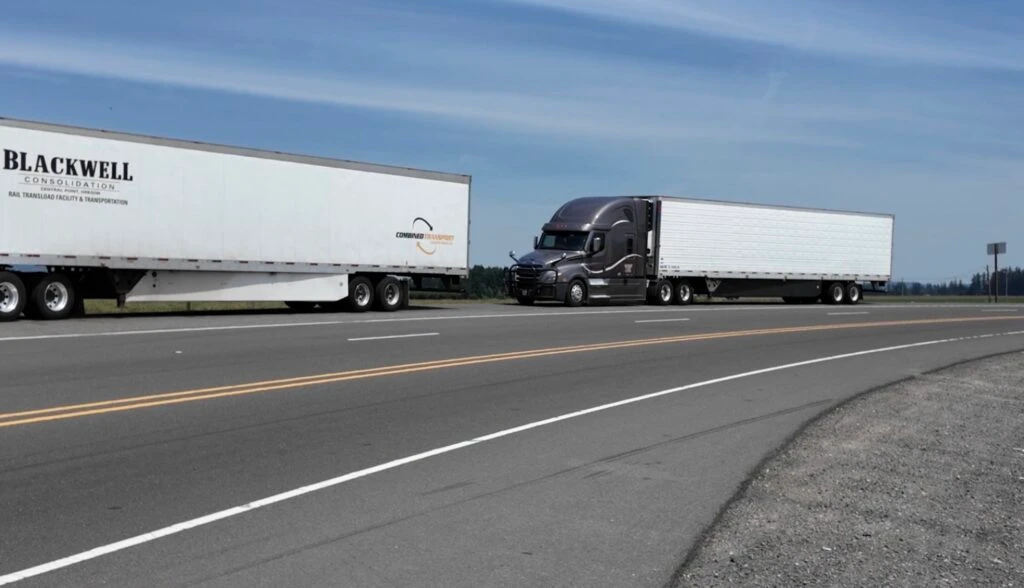
The Truck Parking Crisis Hiding in Plain Sight explains why full lots, federal driving limits, and unsafe roadside parking are putting truckers and everyday drivers at risk.
Federal trucking laws were designed to stop tired drivers from causing crashes, but when the legal driving clock runs down, and there is nowhere safe to stop, a safety rule can create a dangerous roadside problem.
Why Truck Parking Is Now a Road Safety Issue
Federal trucking laws were created for a good reason. They are designed to keep tired commercial drivers from staying behind the wheel too long, because fatigue and 80,000 pounds of moving freight are not a combination anyone wants on the interstate. The rules make sense. The problem begins when the driver follows the law, the legal clock runs down, and there is nowhere safe or legal to park.
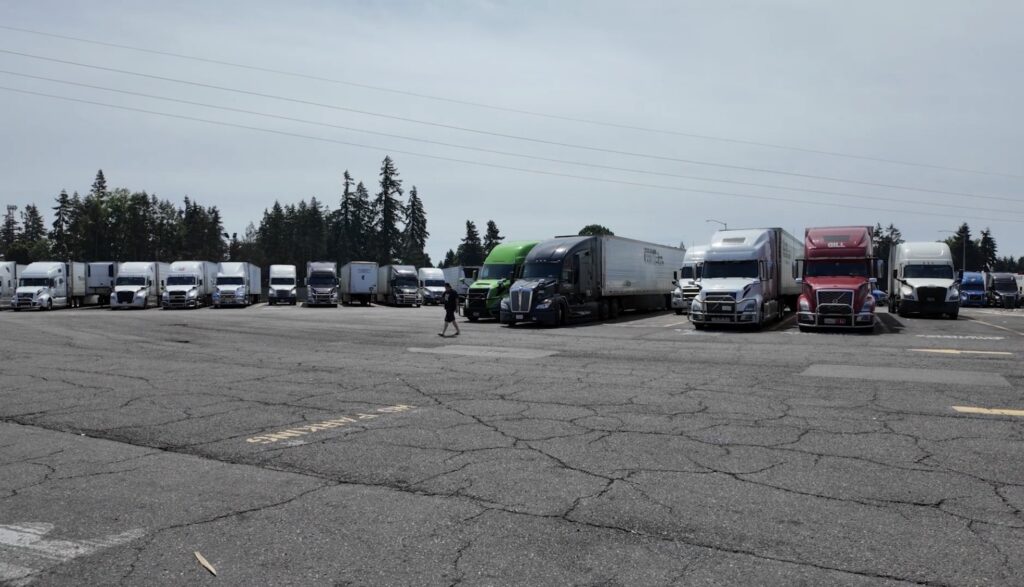
That is why the trucks you see parked along highway ramps, shoulders, industrial roads, and odd corners near distribution centers are not just background scenery. They are evidence of a national logistics problem that has spilled directly into road safety. Most drivers do not want to park there. Most fleets do not want their equipment sitting in exposed places. Most police officers would rather not deal with the enforcement problem. Yet the shortage keeps showing up every night in plain view.
This sounds like a trucking problem, but it is not. It is a road safety problem for everyone who shares the highway. The family in the SUV, the commuter changing lanes at dusk, the distracted driver drifting onto a shoulder, and the trucker trying to obey the law are all part of the same system. When that system does not provide enough safe parking, the risk does not stay inside the trucking industry. It lands on the road beside the rest of us.
You may also enjoy: Why Small Trucks Are America’s Smartest Pickup Choice
America Runs on Trucks
Truck drivers move the goods America depends on every day. Food, medicine, auto parts, furniture, building supplies, pet food, appliances, and nearly everything else touches a truck at some point. Even when freight spends part of its journey on a ship, train, or airplane, a truck usually handles the first mile, the last mile, or both.
That makes truck parking more than a convenience issue. It is infrastructure. The Federal Highway Administration says truck parking shortages are a national safety concern, and that safe, secure, accessible parking is essential for commercial drivers. A safe place for a commercial driver to stop is part of the same freight system as highways, bridges, loading docks, warehouses, ports, and fuel stations.
Without parking, the entire schedule becomes more fragile. The driver loses time. The dispatcher loses flexibility. The shipper loses predictability. The retailer may lose inventory. Eventually, the consumer feels it through higher costs or slower deliveries. The strange part is that most Americans see the evidence but rarely hear the explanation.
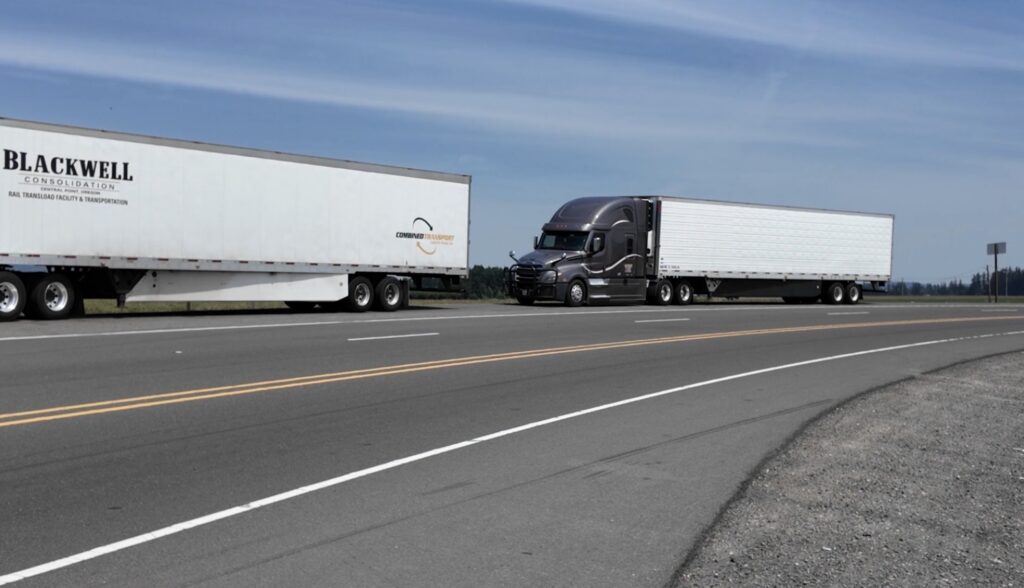
A parked semi on a freeway ramp may look like one driver making a questionable decision. In reality, it may be the final result of federal driving limits, electronic logs, full truck stops, tight delivery windows, zoning restrictions, and a freight network that has grown faster than the parking supply around it.
The Legal Clock Does Not Care About Empty Spaces
Commercial truck drivers operate under federal hours-of-service rules that limit how long they can drive and how long they can be on duty. The purpose is straightforward: keep drivers rested enough to operate safely. The challenge is that the clock keeps running whether the next truck stop has room or not.
The Federal Motor Carrier Safety Administration explains that hours-of-service rules govern maximum on-duty and driving time, along with required rest periods, to help ensure commercial drivers stay awake and alert. In practical terms, those rules can force a driver to stop even when the nearest legal parking area is already full.
That is where the tension begins. A driver may plan a route correctly, check available parking, and still arrive to find every legal spot taken. Weather, traffic, loading delays, road construction, and warehouse backups can all eat into the driver’s available time. Once the legal clock is close to running out, the driver faces a bad set of choices.
The law says stop driving. The parking lot says no vacancy. The delivery schedule says keep moving. The shoulder says there is space, but not safety. That is the moment when policy, infrastructure, and real-world logistics collide.
You may also enjoy: Mazda Leads in Safety with Eight IIHS Top Safety Pick+ Awards
The Problem You Have Seen but Never Heard Of
To understand the issue, we spoke with Evan Shelley, founder and CEO of Truck Parking Club. His company describes itself as a two-sided marketplace that helps truckers, fleet managers, and dispatchers find and reserve parking through a mobile app and website. The company also helps property owners turn unused space into paid truck parking.
Think of it as Airbnb for truck parking. Fewer throw pillows, considerably more diesel.
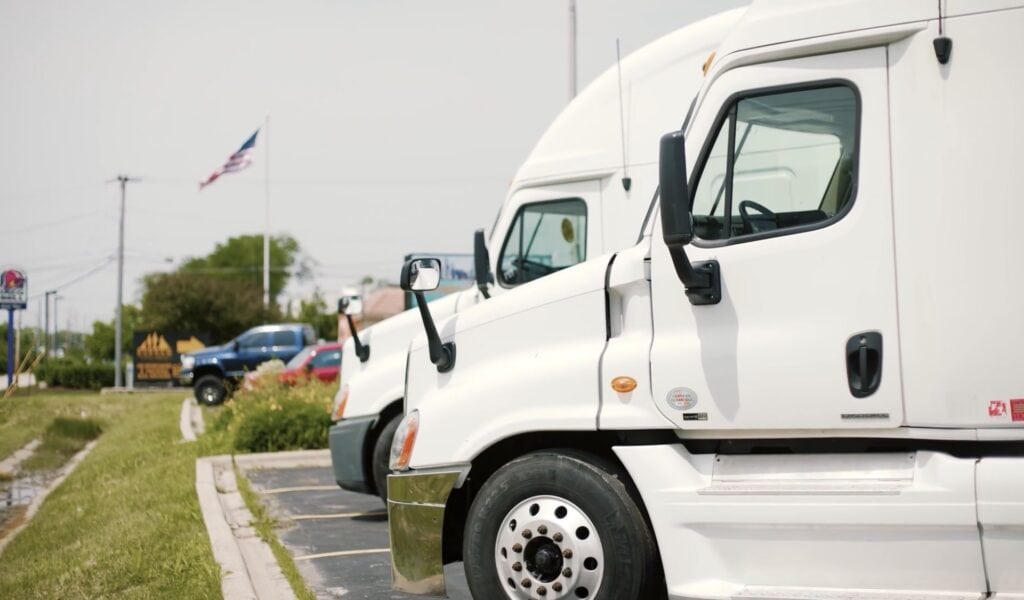
The idea is simple because the problem is not. Shelley says there is only one truck parking space for every 11 trucks in the United States. He also says the average driver can waste nearly an hour a day driving around looking for parking. That lost time is not just annoying. It is costly, inefficient, and potentially dangerous.
One space for 11 trucks is not a small mismatch. Imagine that at Costco on a Saturday, then make every vehicle the size of a small building and put a federal clock on each driver. That is the practical reality facing many truckers when the day ends.
Why New Truck Parking Is So Hard to Build
The truck parking shortage did not appear overnight. Freight traffic increased, distribution patterns changed, e-commerce accelerated delivery expectations, and industrial land became more expensive. At the same time, adding new truck parking became politically and financially difficult.
The Bureau of Transportation Statistics says the Freight Analysis Framework provides estimates of U.S. freight flows by mode, commodity, state, and metropolitan area. That kind of data matters because truck parking is not separate from freight movement. It is one of the physical requirements created by freight movement.
Nobody wants truck parking near them, but almost everyone wants things delivered quickly. That contradiction is at the heart of the issue. A community may oppose a new truck parking facility because of noise, lighting, traffic, diesel exhaust, or visual impact. Those concerns can be legitimate. But the same community still expects grocery stores to be stocked, pharmacies to receive medicine, construction sites to get materials, and packages to arrive quickly.
Land is another barrier. Good truck parking needs access to freight corridors, safe entry and exit, room for large turning movements, lighting, security, drainage, and often restrooms or other services. That usually means expensive property near highways, industrial zones, ports, or distribution hubs. In many places, that land is already spoken for.
You may also enjoy: Used Car Airbag Warning: Hidden Killer in the Wheel
Electronic Logs Made the Problem More Visible
Electronic logging devices have made the driving clock more precise. That precision can improve compliance, but it also leaves less room for improvisation. A paper log world allowed more gray area, sometimes too much. A digital log world makes the timing visible and strict.
The FMCSA says an electronic logging device synchronizes with a vehicle engine to automatically record driving time and make hours-of-service tracking easier and more accurate. That is useful for enforcement and safety, but it also means the parking shortage becomes sharper at the end of the day.
If the parking network does not keep up, legal clarity can still leave drivers boxed in. A driver may be doing everything right and still end up with no safe legal space. That is the frustrating part of this issue. Compliance does not automatically create capacity.
Unsafe Parking Is Not a Victimless Compromise
When a truck parks on a ramp or shoulder, the danger is not only that the truck is in a bad spot. The danger is the tiny margin of error around it. A driver in a passenger car only has to drift a few feet to turn a roadside parking decision into a catastrophic crash.
That is what makes this issue so serious. A semi-trailer parked along a ramp is not forgiving. It is tall, heavy, and stationary. A distracted driver, a drowsy driver, bad weather, poor visibility, or a moment of confusion can be enough to create a severe impact. The truck driver may be asleep in the cab. The passenger vehicle driver may never have expected an obstacle where one should not be.
The FHWA’s Jason’s Law truck parking work explains that an inadequate supply of truck parking can force tired drivers to keep driving or choose unsafe locations such as shoulders, exit ramps, or vacant lots. The federal Jason’s Law survey remains one of the clearest acknowledgments that the problem is national, visible, and dangerous.
Shelley says there are millions of unsafe, unauthorized truck parking events each year, costing the industry more than $100 billion annually. That figure reflects more than one category of loss. It can include wasted fuel, lost driver time, operational inefficiency, missed productivity, insurance exposure, freight disruption, enforcement costs, and the broader cost of crashes and risk.
You may also enjoy: Volvo EX30 Proves Small Cars Can Be Safer
The Marketplace Approach
Truck Parking Club’s answer is to use space that already exists. Warehouses, storage facilities, tow yards, trucking companies, industrial lots, and even dealership properties can become paid truck parking if they meet the need. Instead of waiting only for massive new facilities to be built, the marketplace approach tries to unlock smaller pockets of usable capacity across the country.
That matters because the shortage is too large to solve with one type of property. Traditional truck stops remain essential, but they cannot carry the whole burden alone. Public rest areas help, but many are full at night and not always positioned where freight demand is highest. New construction is needed, but it can take years. In the meantime, unused private space may be one of the fastest ways to add capacity.
The National Highway Traffic Safety Administration provides public information on road safety, recalls, vehicle safety concerns, and driver behavior. Truck parking belongs in that broader safety conversation because it affects what drivers encounter on ramps, shoulders, freight corridors, and high-speed interchanges.
Shelley says Truck Parking Club is adding more than 15 new locations per day, with more than 5,000 locations and over 75,000 spaces. Those numbers show why technology can matter in an old-fashioned infrastructure problem. The spaces may already exist, but drivers need to find them, reserve them, trust them, and know what they are getting before the clock runs out.
The Real Issue Is Planning
For drivers, reserved parking can turn a risky unknown into a manageable part of the route. For dispatchers, it can improve planning. For fleet managers, it can reduce wasted time and exposure. For property owners, it can create a new revenue stream from space that may otherwise sit unused overnight.
But this is not only about one app or one company. The bigger issue is that America needs to treat truck parking as part of freight planning, not an afterthought. If warehouses are approved without enough staging space, the overflow goes somewhere else. If highway corridors carry more freight without enough safe parking, the shoulder becomes the backup plan. If communities reject every legal parking option, illegal parking becomes more likely.
The system has to be designed for the behavior it requires. If the law requires tired drivers to stop, the country needs enough safe places for them to stop. Otherwise, the rule is right in principle but incomplete in practice.
You may also enjoy: Watching the Mazda CX-5 IIHS Crash Test Changed My View on Safety
Why Everyone Pays for the Shortage
The cost of truck parking does not stay with the driver. If a trucker spends nearly an hour a day searching for parking, that time has to be absorbed somewhere. It can affect driver earnings, fleet efficiency, delivery windows, shipping costs, and ultimately consumer prices. The public may not see that cost itemized on a receipt, but it is built into the freight system.
There is also a human cost. Truck drivers already work in a difficult profession that asks them to manage long hours, heavy responsibility, isolation, traffic, weather, loading delays, and public frustration. Ending the day by hunting for a safe place to sleep should not be treated as normal. It is a failure of planning.
For everyone else, the visible sign is the truck parked where it should not be. The invisible part is how many decisions led to that moment. The driver did not create the freight economy. The driver did not design the zoning map. The driver did not decide that a warehouse could operate without enough staging space. The driver is often the person left to solve the problem at the end of the day, in the dark, with a clock running out.
What Has to Change
The solution will not be one thing. It will require more public parking, more private parking, better information, smarter technology, zoning reforms, freight planning, and a more honest conversation about where the goods we consume actually come from. If a region wants fast delivery and full shelves, it also needs to make room for the trucks that provide them.
Technology can help by matching drivers with available space. Property owners can help by making underused lots available. Fleets can help by planning routes with parking in mind rather than treating parking as an end-of-day scramble. Governments can help by recognizing truck parking as a safety issue, not just a land-use inconvenience.
The law was meant to stop tired truckers from driving. That part still matters. But now America has to make sure those drivers have somewhere safe to stop. Until that happens, the trucks parked along the ramp are not just a nuisance. They are a warning sign.