The Homelessness Industry Is Booming. The Results Are Not.
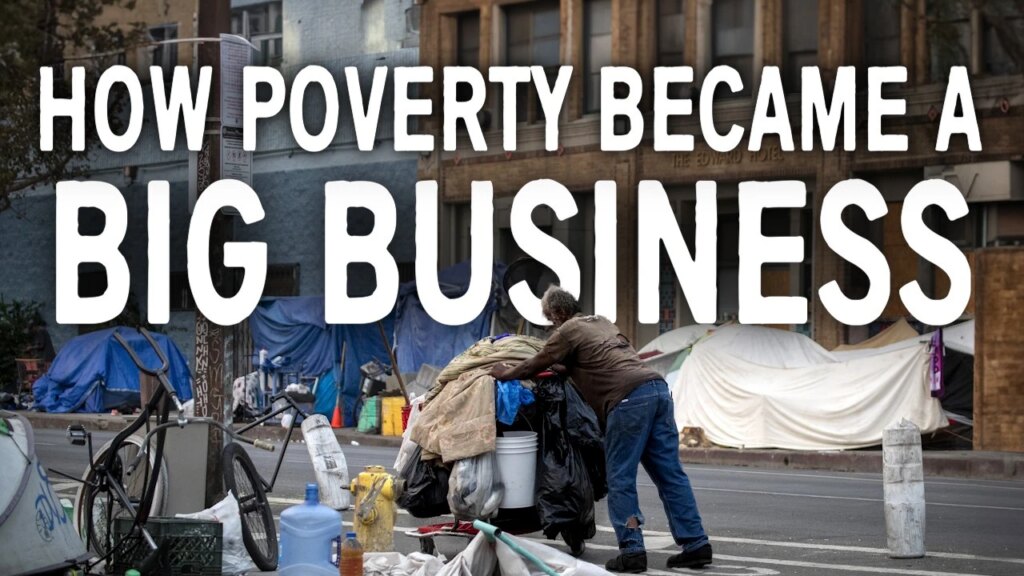
Homelessness is a humanitarian crisis. It is also a business.
Billions of public dollars now flow through a sprawling network of government departments, housing developers, nonprofit organizations, consultants, health providers, outreach teams and private contractors. Entire agencies have been created to manage homelessness, sophisticated organizations have been built around public grants, and expensive housing projects can take years to complete.
The system employs thousands of people. It produces strategic plans, public dashboards, outreach contracts, new offices and increasingly large budgets. What it has struggled to produce consistently is a measurable reduction in homelessness.
That does not mean every organization is corrupt or that every program is ineffective. Many employees are doing difficult work with people facing severe mental illness, addiction, poverty and trauma. The deeper problem is structural: Too many institutions benefit from managing homelessness, while too few are held directly responsible for ending it.
California’s state auditor found that billions of dollars had been spent without enough reliable information to determine whether several major programs were cost-effective. The state could often report how much money had been distributed but not whether the spending prevented homelessness, shortened it or kept people housed.
When a system can measure its budget more accurately than its results, the spending itself begins to look like the product.
A Crisis Became an Economic Ecosystem
The modern homelessness response is not one coordinated system. It is a collection of organizations with different funding sources, political constituencies and definitions of success.
Cities may oversee shelters and encampment operations. Counties administer behavioral-health services. State agencies fund housing and rental assistance. Federal programs provide grants, while nonprofits perform outreach, operate buildings and manage individual cases. Consultants evaluate programs, developers construct housing and contractors provide security, transportation, food and sanitation.
Each organization can argue that it is performing its assigned role. The shelter filled its beds. The outreach team made contacts. The housing department allocated its funding. The contractor removed an encampment. The nonprofit delivered meals.
Yet the same person may remain homeless.
Fragmentation allows every agency to complete a task without anyone being responsible for the final result. A person can move from the street to a shelter, from a shelter to a motel and from a motel back to the street while several programs count the individual as someone successfully served.
The public sees continued homelessness. The system sees completed activities.
Los Angeles Has Spent Heavily and Delivered Slowly
Los Angeles offers one of the clearest examples of how homelessness spending can expand faster than housing production.
City voters approved up to $1.2 billion in bond financing in 2016 to build permanent supportive housing. The projects were intended to combine apartments with services for people experiencing chronic homelessness, including residents with mental-health and substance-use conditions.
The housing was badly needed. The delivery model became extraordinarily expensive.
Some developments approached or exceeded $700,000 per apartment, while individual projects climbed above $800,000 a unit. The cost reflected more than construction. Projects had to navigate land acquisition, financing, design, environmental review, labor requirements, service spaces and multiple layers of public approval.
Those explanations do not erase the basic problem. At such prices, a billion dollars houses a relatively small number of people. Years can pass between the announcement of a project and the arrival of its first resident. During that delay, construction costs rise and more people enter homelessness.
A system focused on preserving every layer of process can spend enormous sums without creating enough actual housing to change conditions on the street.
Supportive housing is necessary for some people. It should not require a development structure so cumbersome that each apartment costs more than many private homes.
The Incentives Reward Managing the Crisis
Homelessness organizations are usually funded to perform services, not to eliminate the need for their own existence.
A contractor may be paid for the number of shelter beds operated. An outreach organization may report the number of contacts made. A nonprofit may receive funding based on the number of clients enrolled. A city department may justify a larger budget by demonstrating that the problem has grown.
None of these incentives necessarily involves dishonesty. They can still produce a system in which activity is rewarded more consistently than resolution.
An organization that permanently houses a difficult client may lose the funding attached to serving that person. A program that repeatedly interacts with the same individual can continue reporting services. A department that admits its strategy is failing may risk its budget, leadership or political support.
The result is an industry that can expand alongside the crisis it was established to address.
That is why claims of success should be tied to outcomes that matter: Was the person permanently housed? Did the person remain housed? Was a household prevented from entering homelessness? Did the intervention reduce repeated use of emergency rooms, shelters and jails?
Counting phone calls, meals and temporary placements may demonstrate work. It does not demonstrate success.
Administrative Growth Is Easier Than Accountability
Public homelessness budgets include legitimate administrative costs. Programs need case managers, clinicians, accountants, maintenance teams and data systems. People with severe behavioral-health conditions require skilled and often expensive support.
The problem is not that administration exists. It is that administrative growth can occur without clear evidence that outcomes have improved.
Large nonprofits can develop executive teams, communications departments, government-relations operations and layers of management funded substantially by public contracts. Government agencies can add coordinators, analysts and directors while the basic system remains difficult for a homeless person to navigate.
A resident may still be told to call several numbers, complete repetitive applications and visit different offices. Agencies may collect similar information in incompatible systems, making it difficult to follow one person across the full continuum of care.
The public is often given total spending figures rather than a clear cost per person permanently housed. When performance data are released, they may use different definitions, periods and populations, preventing meaningful comparison.
Complexity becomes its own defense. When no one can easily understand where the money went, no single organization can be clearly blamed for the result.
Failure Does Not End the Funding
A private business that continually spends more while producing less eventually loses customers, investors or access to credit. Public homelessness programs often face weaker consequences.
Budgets may increase after disappointing results because the worsening crisis is used as evidence that more resources are needed. A program that fails to reduce homelessness can argue that the problem would have been even worse without it. That claim may be true, but it can also be nearly impossible to disprove.
Political leaders have strong incentives to announce new spending. A new shelter, grant or housing initiative produces a press conference and demonstrates concern. Evaluating whether an existing program should be reduced or eliminated is less politically attractive.
Closing an ineffective program also threatens employees, contractors and organizations that have built their operations around the funding. Every spending stream develops a constituency prepared to defend it.
The result is accumulation. New initiatives are layered on top of old ones, even when responsibilities overlap. Reform rarely replaces the system. It adds another office to coordinate it.
The Most Expensive Response Often Arrives Too Late
Once someone has become homeless, the cost of intervention rises sharply.
The person may lose employment, identification, medication, transportation and contact with supportive family members. Time on the street can worsen mental illness, addiction and physical health. The eventual response may involve shelters, hospitals, police, sanitation workers and long-term housing assistance.
Many households could have been helped earlier for far less money.
California’s auditor found evidence that homelessness-prevention programs could keep households housed for roughly $12,000 to $22,000 in some areas. That is a fraction of the cost of building a supportive apartment or repeatedly cycling someone through emergency systems.
A rent payment, vehicle repair or security deposit may prevent an employed household from entering homelessness. Yet prevention is less visible than removing an encampment or opening a housing development. Politicians do not hold ribbon cuttings for evictions that never happened.
The industry is therefore often built around homelessness after it occurs rather than the economic instability that creates it.
That is financially backward. It is also deeply profitable for the institutions that provide expensive downstream services.
Direct Cash Threatens the Existing Model
Giving money directly to people facing homelessness challenges the assumption that every dollar must pass through a large service organization.
Research on direct-cash programs remains limited, and cash is not appropriate for every individual. Someone with severe psychosis or addiction may need intensive treatment and structured care rather than an unrestricted payment.
For people whose primary obstacle is financial, however, direct support can be faster and less expensive than traditional programs. Studies have found that some recipients moved into stable housing sooner and spent fewer days in shelters after receiving cash assistance.
The economic appeal is obvious. Instead of paying several organizations to assess, process, transport and temporarily house someone, the system provides the money needed for rent, a deposit or another immediate barrier.
This does not eliminate the need for services. It raises an uncomfortable question about how many services exist partly because public systems are reluctant to trust recipients with money.
Every layer between the taxpayer and the person in need must justify its cost. If a program spends $30,000 administering $10,000 of assistance, it should be required to prove that the administration created a better outcome than simply providing the assistance.
Housing Construction Has Become a Feeding Ground
Affordable and supportive housing projects frequently involve numerous funding programs, consultants, attorneys, architects, contractors and compliance specialists. Each participant may perform necessary work, but the combined process can inflate costs and delay construction.
Developers may need to assemble financing from several government sources because no single program covers the project. Each source can impose separate rules, reviews and reporting requirements. Delays increase interest, labor and material costs, creating the need for even more financing.
The system then points to the high cost as evidence that additional subsidies are required.
This cycle benefits many participants before the first resident is housed. Developers earn fees, consultants are paid, lawyers close transactions and administrators oversee the funding. The person sleeping outside receives no benefit until the project is complete.
Cities should compare new construction with hotel conversions, modular units, master leasing and the purchase of existing buildings. Permanent supportive housing does not need to be synonymous with the most expensive development process available.
The objective should be safe, durable housing at the lowest responsible cost—not preserving a familiar financing ecosystem.
Not Everyone Needs the Same Expensive Intervention
The homelessness system often treats a diverse population as one category.
A family displaced by a temporary job loss may need several months of rental assistance. A teenager leaving foster care may need transitional housing and employment support. A person with untreated schizophrenia who has lived outside for a decade may require permanent housing, medication management and intensive care.
Providing every person with the most expensive intervention wastes money. Providing everyone with the cheapest intervention abandons those with the most serious needs.
The system should divide resources according to actual barriers. Short-term financial crises should receive rapid financial solutions. Long-term housing affordability problems may require subsidies. Severe mental illness and addiction may require structured treatment that cannot be replaced by a lease alone.
Instead, people are often routed according to which program has an opening or which agency controls the funding. The needs of the institution shape the intervention more than the needs of the individual.
That is not personalized care. It is bureaucratic inventory management.
The Housing Market Keeps Feeding the System
The homelessness industry cannot be understood without the housing shortage that continually supplies it with new clients.
In expensive regions, a worker can lose housing after a relatively small disruption. Once evicted, obtaining another apartment may require good credit, a large deposit, application fees and income several times the monthly rent. A short-term setback becomes a long-term exclusion from the private market.
Most homeless Californians did not move to the state in search of benefits. A major statewide study found that 90% lost their last housing while already living in California, and most remained in the same county.
This matters because it undermines the politically convenient idea that homelessness is primarily imported. The system is largely processing people displaced by the same communities in which they previously lived.
Without more housing, every program becomes more expensive. Vouchers are difficult to use because landlords have other applicants. Shelters remain full because residents cannot find apartments. Temporary placements last longer, consuming money intended to serve additional people.
The industry expands because the housing market continues producing demand for its services.
Mental Illness and Addiction Cannot Be Used as Excuses
Housing advocates sometimes emphasize affordability so heavily that serious behavioral-health conditions are treated as secondary. Critics make the opposite mistake, suggesting that homelessness can be solved primarily through treatment or enforcement.
Both positions allow the system to avoid accountability.
A person cannot receive effective psychiatric treatment while constantly being displaced, robbed or exposed to violence. Housing provides stability that can make recovery possible. At the same time, placing someone with severe psychosis or addiction into an apartment without adequate treatment can lead to eviction, medical crises and harm to the resident or neighbors.
Programs should be evaluated on whether they match housing with the appropriate level of care. A permanent apartment is not a complete outcome when the resident repeatedly enters emergency rooms or cannot safely maintain the home.
The current system can fail at both ends. It may leave people outside because they are considered too difficult to house, or place them into housing without the services necessary to remain stable.
In either case, organizations can claim that they delivered their assigned piece of the intervention while the person continues cycling through public systems.
Encampment Removals Create the Appearance of Progress
Cities face legitimate pressure to address encampments that block sidewalks, create fire hazards and expose residents and nearby communities to unsafe conditions.
Removing an encampment can improve a particular location. It does not necessarily reduce homelessness.
People may be offered temporary shelter and later return outside. Others move to a different neighborhood. Property is discarded, sanitation crews clean the area and officials announce that the encampment has been resolved.
The city has paid for police, outreach, transportation, storage and cleanup. The public sees a visible intervention. The underlying homelessness may remain unchanged.
This is one reason political systems favor encampment operations. They produce immediate, photographable results, unlike prevention or long-term treatment.
Street conditions matter, but they should be measured separately from housing outcomes. A city should report how many people from an encampment entered permanent housing and remained there—not only how many tents were removed.
Without that distinction, displacement can be marketed as resolution.
The Media Profits From the Same Failure
Homelessness is also a reliable source of political and media outrage.
Images of encampments generate attention. Stories about waste, crime and disorder produce clicks and television segments. Political commentators can use the crisis as evidence that an opposing ideology has failed.
The outrage is often justified, but it rarely produces a serious examination of contracts, program design or housing economics. Complex failures are reduced to simple villains: greedy developers, indifferent politicians, addicted individuals, radical activists or hostile neighbors.
This benefits the attention economy while obscuring the work required to distinguish effective programs from ineffective ones.
An article about a shocking housing-unit cost may generate substantial interest. Following the project for five years to determine whether residents remained housed is less likely to attract the same audience.
The homelessness industry and the outrage industry depend on the same condition: the crisis must remain visible.
Accountability Must Threaten the Funding
Reporting requirements are meaningless when poor results carry no consequences.
Every homelessness program receiving public money should identify the population it serves, the outcome it promises and the cost of producing that outcome. The data should be verified independently and published in a form taxpayers can understand.
Prevention programs should report how many households remained housed after six and 12 months. Shelters should report exits to permanent housing rather than simply counting occupied beds. Outreach organizations should show how many contacts resulted in treatment, shelter or permanent placement.
Housing developers should disclose the total public subsidy, cost per unit and time from approval to occupancy. Supportive-housing providers should report retention, hospital use and the level of continuing services residents require.
Programs that consistently underperform should lose contracts or be redesigned. Agencies with overlapping responsibilities should be consolidated. Funding should follow demonstrated results rather than political relationships or historical entitlement.
Accountability becomes real only when organizations can lose money.
The Business of Homelessness Is Built on Good Intentions and Bad Incentives
Most people working in homelessness services are not trying to preserve suffering. They are social workers, clinicians, housing specialists and public employees attempting to help people within a dysfunctional structure.
The system can still behave like an industry even when the individuals inside it have good intentions.
Organizations pursue funding to survive. Departments defend their authority. Contractors seek renewed agreements. Political leaders protect programs associated with their administrations. Each action is rational from the perspective of the institution.
The collective result can be irrational.
Money moves through the system, jobs are maintained and new initiatives are announced, while no one can clearly explain why homelessness remains so persistent after years of escalating spending.
Calling this corruption without evidence is too easy. Calling it compassionate because the spending is well-intentioned is equally inadequate.
It is an entrenched economic system whose participants face too little pressure to produce a final result.
The Public Is Paying for Management Instead of Resolution
Homelessness will never be eliminated through one policy. Housing shortages, poverty, mental illness, addiction, domestic violence and family disruption require different responses.
That complexity does not excuse the lack of results.
Public spending should be directed toward the least expensive intervention capable of solving each person’s actual problem. Households facing temporary financial distress should receive rapid assistance before eviction. People with long-term disabilities need affordable housing and support. Those with severe behavioral-health conditions need treatment that is structured enough to protect both the individual and the public.
Expensive construction should be compared with faster alternatives. Agencies should share data. Contractors should be paid for verified outcomes rather than activity. Programs that cannot show results should not continue indefinitely simply because they employ people and distribute grants.
America does not suffer from a lack of homelessness spending. It suffers from a system in which spending has become easier to defend than success is to demonstrate.
That is the business of homelessness: A crisis that generates budgets, contracts and careers while the people at the center of it remain on the street.