2026 Toyota RAV4 GR Sport Does the Impossible
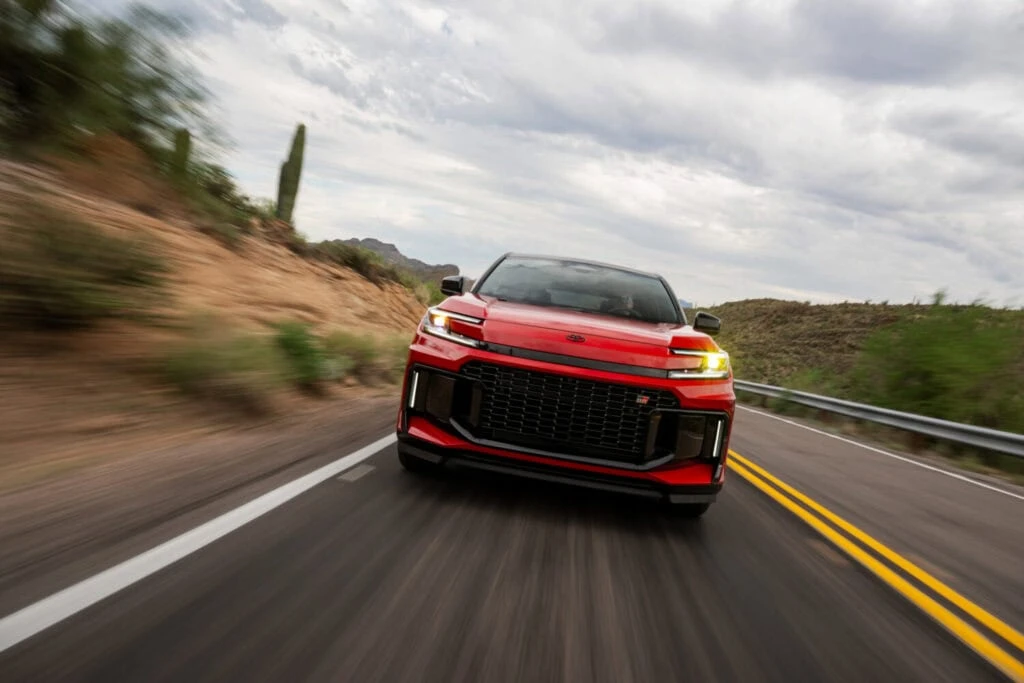
The 2026 Toyota RAV4 GR Sport combines 324 horsepower, plug-in range, and family space, creating a performance SUV with a rational side.
By Nik J. Miles
2026 Toyota RAV4 GR Sport: Quick Verdict
Performance SUVs are supposed to demand sacrifice. They usually cost more, consume more fuel, ride more aggressively and provide less practical space than the sensible models from which they were derived. The 2026 Toyota RAV4 GR Sport approaches the assignment differently.
This is a five-seat family crossover with 324 net combined horsepower, standard electronic all-wheel drive and an electric driving range of up to 48 miles. It can carry groceries, luggage, children and dogs, yet Toyota estimates it can accelerate from zero to 60 mph in 5.4 seconds.
An independent test supplied with the source material recorded 5.34 seconds with two people aboard. Car and Driver subsequently measured 5.1 seconds in its instrumented testing. The exact result will vary with battery charge, temperature, tires, surface and testing procedure, but the broader conclusion survives: this is an unexpectedly quick RAV4.
There are caveats. The GR Sport is not an inexpensive RAV4, and its official $49,950 starting price is higher than the $48,500 quoted in the original script. That figure also excludes Toyota’s processing and handling charge, options, taxes and registration. It is closer to $50,000 before the cashier has found the expensive pen.
You may also enjoy: 2026 Toyota RAV4 Review: America’s Favorite SUV Just Ditched Gas
What Makes This RAV4 Different
The GR Sport uses Toyota’s sixth-generation plug-in-hybrid system. A 2.5-liter four-cylinder gasoline engine works with electric motor-generators at the front and a dedicated electric motor at the rear. Total system output is 324 horsepower, making this the most powerful production RAV4 Toyota has offered.
That number does not tell the entire story. Electric motors can provide torque immediately, so the driver does not wait for a turbocharger to build boost. The gasoline engine and electric propulsion system cooperate through an electronically controlled continuously variable transmission, while the rear electric motor provides all-wheel drive without a conventional mechanical driveshaft connecting the axles.
Toyota Gazoo Racing’s contribution goes beyond logos and red stitching. The GR Sport sits approximately 0.6 inch lower than a regular RAV4 and receives specially tuned suspension, steering and chassis bracing. Toyota also gives it functional aerodynamic components, 20-inch wheels and available summer performance tires.
This distinction matters because the GR Sport badge does not make it a full GR model in the mold of a GR Corolla. It remains a RAV4 first, deliberately tuned to preserve comfort and usability. The engineering brief appears to have been a quicker, more composed everyday SUV rather than a family crossover desperately pretending it has wandered onto a racetrack.
2026 Toyota Rav4 PHEV GR in Supersonic Red
Acceleration That Changes the RAV4’s Character
Toyota quotes a zero-to-60-mph time of 5.4 seconds for the RAV4 Plug-in Hybrid. The independent 5.34-second run in the supplied script is consistent with that estimate, while Car and Driver’s 5.1-second result suggests the powertrain can do even better under favorable test conditions.
Those numbers place the RAV4 GR Sport in interesting company, but a few claims in the original script require restraint. It is not accurate to declare it categorically faster than every Toyota sports car or every GR Corolla configuration. Instrumented results depend on the model, transmission, surface and test protocol.
The fairer and more useful observation is that a RAV4 capable of reaching 60 mph in the low-five-second range is genuinely quick. It has enough immediate response to make passing, highway merging and pulling away from an intersection feel effortless.
The sensation is different from a turbocharged performance SUV. There is no dramatic pause followed by a surge of boost. Electric assistance helps the RAV4 respond promptly, while the gasoline engine joins the effort as the driver asks for more acceleration.
With a curb weight of roughly 4,400 pounds, this is not a lightweight sports car. The achievement lies in making that mass accelerate without feeling clumsy or strained. The GR-tuned steering, lower ride height, structural reinforcement and suspension calibration are intended to keep the body controlled when the road bends.
You may also enjoy: 2026 Toyota RAV4 Woodland Review: Vehicle Analysis
2026 Toyota Rav4 PHEV GR in Supersonic Red
Electric Range Makes the Performance Useful
Toyota estimates the GR Sport can travel up to 48 miles on electricity, although the less performance-oriented SE receives a higher EPA-estimated 54-mile rating. That difference is a useful reminder that wheels, tires, weight and equipment affect efficiency. Buyers can compare official ratings and operating costs through the federal FuelEconomy.gov vehicle database.
For many drivers, 48 miles can cover a normal commute, school run or day of local errands without starting the gasoline engine. Owners who charge regularly may complete much of their weekly driving electrically while retaining gasoline for longer journeys.
That is the central advantage of a plug-in hybrid. It behaves like an electric vehicle when the battery has sufficient charge, then continues as a hybrid after the usable electric range has been consumed. There is no need to stop and recharge during a road trip unless doing so is convenient.
The GR Sport and SE use a 7-kW onboard AC charger and a J1772 connection. Toyota describes them as Level 1- and Level 2-compatible models, but does not promise the precise four-hour home-charging time stated in the script under every condition. Charging duration depends on the power available from the circuit, battery temperature, starting state of charge and charging losses.
An overnight routine remains simple: arrive home, connect the vehicle and begin the following day with available electric range. Buyers who want DC fast-charging capability should look at the RAV4 Plug-in Hybrid XSE or Woodland, because Toyota reserves that feature for those grades.
You may also enjoy: Why Hybrids Are Suddenly the Smarter Choice Over EVs in 2026
2026 Toyota Rav4 PHEV GR cabin
A Cabin Designed for Everyday Life
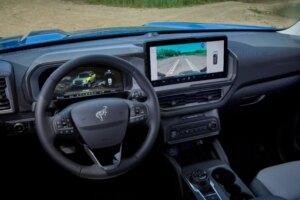
The GR Sport cabin provides the visual reminders expected from a performance-oriented trim. Its seats receive sportier shaping, red accents and GR identification, while the steering wheel, paddle shifters and aluminum pedals add some ceremony.
Every 2026 RAV4 receives a 12.3-inch digital instrument cluster. The GR Sport also uses the larger 12.9-inch Toyota Audio Multimedia display, with wireless Apple CarPlay and Android Auto, 5G connectivity, a customizable home screen and an updated voice assistant.
Toyota Safety Sense 4.0 is standard across the RAV4 range. The suite includes systems intended to help identify certain frontal hazards, maintain a selected following distance, support lane positioning, recognize road signs and operate the high beams automatically.
These remain driver-assistance technologies, not autonomous-driving technology. The person behind the wheel is responsible for observing the road, controlling the vehicle and understanding the limitations described in the owner’s manual.
The RAV4’s more important luxury may be its straightforward usefulness. Five seats, a broad cargo opening and folding rear seats make it suitable for family travel. Published specifications list approximately 33.5 cubic feet behind the second row and 63.5 cubic feet with the rear seats folded for the plug-in model, though buyers should verify the figures and physically test their own equipment before purchasing.
You may also enjoy: Toyota’s Most Overlooked Hybrid SUV Is Actually Brilliant
2026 Toyota Rav4 PHEV GR in Supersonic Red
Performance Tires Come With a Responsibility
Toyota makes summer performance tires available for the GR Sport, with all-season tires offered as a no-cost alternative. The distinction should not be treated as a minor ordering detail.
Summer tires are designed to provide stronger warm-weather grip and more immediate responses. They are not intended for snow, ice or sustained cold conditions. Drivers living in places such as Portland, Denver, Chicago or the Northeast should plan for appropriate seasonal tires or select the all-season fitment.
That decision may affect the character of the vehicle. The summer tires should help reveal more of the GR-tuned chassis, while all-season tires offer broader year-round flexibility. Neither option excuses neglecting inflation pressure, tread condition or rotation. NHTSA’s TireWise guidance explains government traction ratings, inflation checks and tread maintenance.
The GR Sport’s lower suspension and 7.5 inches of ground clearance also establish its priorities. This is the road-focused RAV4, not the version intended for rough trailheads. Buyers who need additional clearance and more rugged equipment should examine the Woodland.
2026 Toyota Rav4 PHEV GR in Supersonic Red
Price and Rival Comparison
At $49,950 before destination and options, the GR Sport is expensive for a compact Toyota SUV. It also occupies a space that few direct rivals address.
The Ford Escape Plug-in Hybrid and Hyundai Tucson Plug-in Hybrid emphasize efficiency and everyday comfort more than acceleration. The Ford is front-wheel drive, while the Hyundai provides all-wheel drive but substantially less output. Honda does not currently offer a U.S.-market CR-V plug-in hybrid directly matching this powertrain.
Premium plug-in SUVs from BMW, Mercedes-Benz, Volvo and Porsche may provide greater power, richer interiors or quicker acceleration, but they generally occupy a higher price class. Comparisons must also account for equipment, destination charges, incentives and the final transaction price rather than relying only on base MSRP.
The Toyota’s argument is not that it defeats every luxury performance SUV. It is that it delivers unusual speed, useful electric range and familiar RAV4 practicality without entering the most expensive end of the market.
Buyers should still ask whether they will plug it in. A plug-in hybrid carries the cost and weight of two propulsion systems. Owners who rarely charge may be better served by the less expensive conventional RAV4 Hybrid. The GR Sport makes the strongest case when its electric range becomes part of the daily routine.
You may also enjoy: 2025’s Best and Worst Plug-In Hybrid Cars Ranked
2026 Toyota Rav4 PHEV GR in Supersonic Red
2026 Toyota RAV4 GR Sport: Final Verdict
The 2026 Toyota RAV4 GR Sport does something a performance SUV should struggle to accomplish: it makes a rational case for itself.
It is quick enough to be entertaining, but not so aggressively tuned that every broken road becomes punishment. It provides up to 48 miles of electric driving, yet it can continue on gasoline during a long trip. It has performance tires and GR-tuned steering, but also five seats, folding rear seatbacks and useful cargo space.
The corrected price is $49,950 before destination rather than $48,500. Toyota’s official acceleration estimate is 5.4 seconds, while independent testing has produced results between 5.1 and 5.34 seconds. Those corrections do not weaken the story. They make the real achievement easier to see.
Toyota has built a RAV4 that can operate as a quiet electric commuter in the morning, a practical family vehicle in the afternoon and an unexpectedly rapid crossover when the road opens. Sensible shoes have apparently discovered how to run.