Volkswagen Mission Efficiency: What Buyers Should Watch
By Robert R Guio
Volkswagen Mission Efficiency posts striking EV records, but the buyer story is which aerodynamic and low-loss ideas can reach production cars.
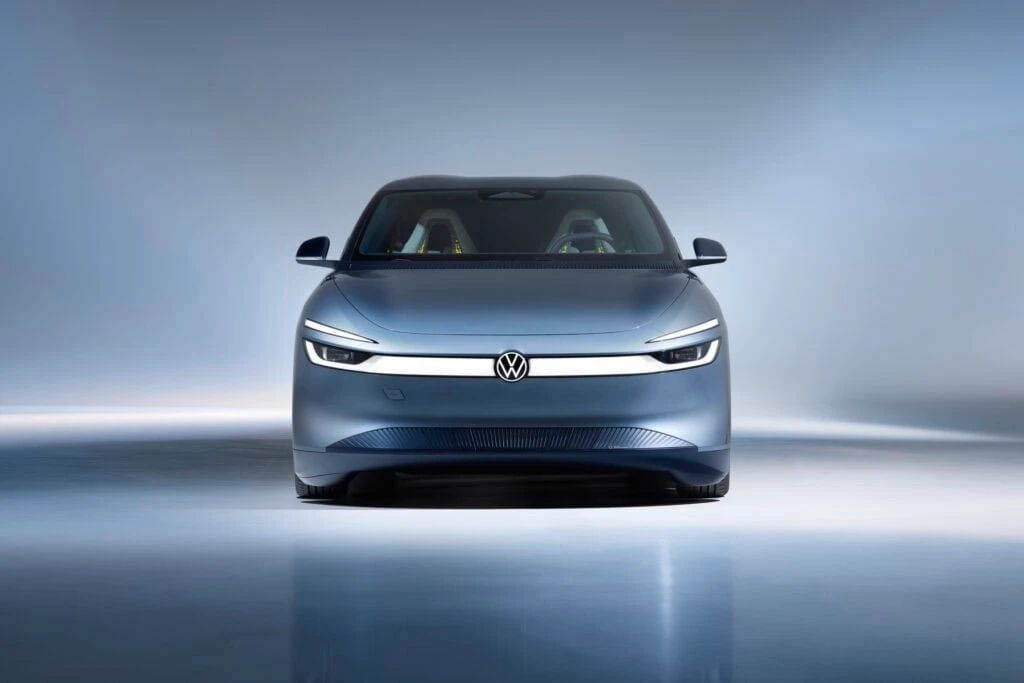
There is an easy way to misunderstand Volkswagen’s new efficiency experiment. Look at its 0.158 drag coefficient, its long-distance energy-consumption figures and its impossibly low silhouette, then assume the important news is that Volkswagen has designed a future showroom coupe.
It has not. Mission Efficiency is a concept, and Volkswagen explicitly says it is not for sale. For shoppers, the useful part is underneath the record-chasing body: the project borrows its front-wheel-drive MEB+ foundation, electric drive hardware and other components from the same technical family as the ID. Polo and ID. Cross. That makes this prototype a stress test for ideas Volkswagen may be able to spread into less exotic vehicles.
VW’s Concept Mission Efficiency Pushes the Envelope for an Efficient Vehicle
The question Test Miles would put ahead of every record number is simple: what survives when engineers have to add normal seats, normal manufacturing costs, long battery life, everyday tires, climate control, and owners who do not drive like a laboratory procedure?
Volkswagen Mission Efficiency is an ID. Polo technology test
Start with the least glamorous component, because it may matter most. Volkswagen says Mission Efficiency uses the 99-kW electric motor and high-voltage battery technology associated with the ID. Polo. The MEB+ architecture is front-wheel drive in this application, and Volkswagen says the system was developed for multiple compact EVs rather than created solely for the record car.
That distinction matters. A spectacular concept can prove almost anything if cost, manufacturability and passenger packaging are allowed to leave the room. A production-derived motor, battery system, front suspension and hydraulic front brakes are more interesting because improvements to those parts have a path into vehicles ordinary customers might actually buy.
Volkswagen also uses the project to revisit a philosophy it explored with the XL1, its ultra-efficient plug-in hybrid from the previous decade. Chief designer Andreas Mindt says, “The shape of the body itself is committed fully to functionality and thus the laws of aerodynamics.” He also links the new prototype’s character to the XL1.
VW’s Concept Mission Efficiency Pushes the Envelope for an Efficient Vehicle
The family resemblance is philosophical more than practical. Mission Efficiency is 4,775 mm long, or about 188 inches, yet only 1,392 mm tall, roughly 55 inches. It has four seating positions, but Volkswagen says the rear seats are intended for passengers up to approximately 1.60 meters, about 5 feet 3 inches. The luggage compartment holds 481 liters, close to 17 cubic feet.
That is enough packaging to prevent the prototype from being dismissed as a one-person streamliner, but it is not the shape of a mainstream American family car. Its real value is showing which pieces of the efficiency puzzle can be separated from the shape.
You may also enjoy: VW Showcases Audi’s Future and Scout’s U.S. Comeback
You may also enjoy: Volkswagen’s Hybrid Future & Platform Legacy
The record numbers need context before anyone shops by them
Volkswagen reports three records, but they are not three versions of the same test. The first is the 0.158 drag coefficient. The second is an “ideal trip” consumption result of 6.48 kWh/100 km. That run held speed at 68 km/h, about 42 mph, avoided uphill grades and switched off peripheral consumers, including air conditioning. It is a controlled demonstration of what the car can do when several real-world variables are removed.
The road-trip figure deserves more attention. Volkswagen says Mission Efficiency traveled 1,278.36 km, about 794 miles, from Wolfsburg through Poland and the Czech Republic to Vienna. Average speed was 67.72 km/h, again about 42 mph, while maximum speed reached 138 km/h, approximately 86 mph. The company reports 6.89 kWh/100 km without charging losses and 7.51 kWh/100 km with them.
VW’s Concept Mission Efficiency Pushes the Envelope for an Efficient Vehicle
Put into units many American EV owners use, that is roughly 9.0 miles per kWh before charging losses and about 8.3 miles per kWh when those losses are counted. Those conversions come directly from Volkswagen’s reported consumption numbers; they are not separate test results.
The battery detail is worth reading carefully. Volkswagen says the 54.9-kWh net pack was charged once during the trip and that 164 km, around 102 miles, of indicated range remained in Vienna. Simple arithmetic using the published consumption and distance implies the car used about 88 kWh from the battery side across the full journey and about 96 kWh when charging losses are included. In other words, this was never a claim of almost 800 miles on a single battery charge.
There is another caveat hiding in the footnotes. For the record attempt, software changed the usable net capacity from 52.0 to 54.9 kWh, according to Volkswagen. Its footnote says a series-production battery would retain a larger protective reserve in the interest of longevity. That is exactly the kind of distinction buyers should want a manufacturer to disclose.
The minimalist design and focus on lightweight construction are also reflected in the seats.
The record wording is specific as well. Volkswagen’s material identifies the Record Institute for Germany category as a “near-production four-seater electric vehicle suitable for everyday use.” That certification is meaningful within the stated category; it should not be inflated into a claim that no road vehicle in any category has ever achieved a lower energy figure.
For background on why charging losses and vehicle operating conditions affect the numbers owners see, the U.S. Department of Energy’s Alternative Fuels Data Center explains battery-electric vehicle efficiency and range factors. DOE has also published a broader explanation of how efficiently EVs convert stored energy into motion, including energy recovered through regenerative braking.
You may also enjoy: Volkswagen cost-cutting plans: what that means for buyers
The smartest gains come from air, tires and brakes
Mission Efficiency’s headline is its Cd number, but drag coefficient by itself does not tell the whole aerodynamic story. Frontal area matters, too. Volkswagen lists 2.08 square meters. Multiply that by the claimed 0.158 Cd, and the resulting CdA is about 0.329 square meters. That simple calculation helps explain why the car is both slippery and physically low.
The physics become especially important as speed rises. NASA’s drag equation shows aerodynamic drag depends on drag coefficient, frontal area, air density and the square of velocity. That last part is why freeway efficiency can punish tall, wide vehicles even when their electric motors are excellent.
VW’s Concept Mission Efficiency Pushes the Envelope for an Efficient Vehicle
Volkswagen’s comparison puts the prototype’s consumption at over 30 percent below the standard ID. Polo once speed exceeds 80 km/h. The company adds that running Mission Efficiency at 140 km/h takes roughly the energy the ID. Polo requires at 100 km/h. Those are manufacturer comparisons rather than independent Test Miles measurements, but they illustrate what Volkswagen is trying to prove: once the drivetrain is already efficient, body and wheel aerodynamics become major opportunities.
Its aero package includes closable cooling-air openings, smooth underbody cladding, shrouded rear wheels, flush-mounted handles and frameless side glass. The front wheel openings are drawn tightly around the tires. Volkswagen also developed patented deflectors inside the rims to prevent airflow from entering the wheel and churning into turbulence.
Tires are part of the same exercise. Working with Continental, Volkswagen created a concept tire based on the EcoContact 7 and reports rolling resistance of 4.9 kilograms per tonne, roughly one quarter under the cutoff Volkswagen cites for the EU tire label’s top efficiency grade. The European Commission’s official tire-efficiency guidance explains why rolling resistance is one of the properties included on the EU tire label, while EU Regulation 2020/740 sets the labeling framework.
Additional storage space behind the rear wheel cover.
Then comes the rear brake. Mission Efficiency keeps a conventional hydraulic system at the front but uses an electromechanical brake at the rear, developed with AUMOVIO. Volkswagen says it reduces friction, eliminates some hydraulic plumbing and brake fluid, permits variable brake-force distribution, and helps regenerative braking. Those benefits are less photogenic than a giant battery pack, which may be precisely why they are interesting.
For scale, our review of the three-row Hyundai IONIQ 9 discusses a drag coefficient of 0.259 with digital mirrors and 0.269 with conventional mirrors. That is not an apples-to-apples comparison: the Hyundai is a much larger family SUV, and the frontal area is different. It does show how extraordinary 0.158 is for a four-seat road-approved prototype.
You may also enjoy: 2026 Hyundai IONIQ 9 Review: The Three-Row Electric SUV That’s Quietly Redefining Family Hauling
Which ideas deserve a production future
The most visible extra feature may be the 370-watt photovoltaic system integrated into the roof glass and rear deck. Volkswagen says it supplies onboard electrical consumers and, depending on weather, season, and region, can increase real range by as much as 30 km, about 19 miles, in a day. That is a best-case manufacturer claim, not a guaranteed daily gain.
Solar assistance is appealing because it reduces accessory demand without asking the traction battery to do all the work. The catch is economics: photovoltaic area on a passenger car is limited, output varies enormously with conditions, and the added cost has to justify the energy recovered. Mission Efficiency is useful precisely because it lets Volkswagen measure the idea before anyone assumes it belongs on every roof.
VW’s Concept Mission Efficiency Pushes the Envelope for an Efficient Vehicle
The cabin is even more provocative. A portable Bluetooth speaker stands in for a conventional audio system, and a smartphone or tablet can replace a built-in infotainment display. Those choices save weight. They also reveal the line between engineering purity and customer expectation. Plenty of buyers complain about too many screens; fewer are likely to celebrate buying a new car that asks them to bring one from home.
The structure raises the same question. Volkswagen combines production components with a self-supporting aluminum structure and parts made from carbon-fiber-reinforced polymer and aramid composite. That is a credible way to reduce mass in a record-focused prototype. It is much harder to square with the company’s stated goal of affordable technology for large-scale vehicles.
VW’s Concept Mission Efficiency Pushes the Envelope for an Efficient Vehicle
This is where Mission Efficiency becomes genuinely useful to a shopper. Do not wait for the entire car. Watch the ID. Polo, ID. Cross and later MEB+ models for the transferable parts: lower-loss drive hardware, better wheel-air management, reduced rolling resistance, smarter braking and more disciplined control of accessory energy. Those are the ideas that can improve range without demanding a much larger battery.
Volkswagen’s broader American strategy also matters because product planning, cost control and platform decisions determine whether clever engineering reaches customers at a price they will pay.
You may also enjoy: Volkswagen’s American Reinvention Is Taking Shape
The solar-roof experiment also belongs in a larger industry conversation about using a vehicle’s exterior surfaces to harvest small amounts of energy rather than treating every watt as a job for the main battery.
VW’s Concept Mission Efficiency Pushes the Envelope for an Efficient Vehicle
You may also enjoy: Mercedes-Benz Vision Iconic: Heritage Meets Innovation
The verdict, then, is more measured than Volkswagen’s record headline. The reported 0.158 Cd is an impressive result within the stated RID category, and the documented road-trip consumption is striking. But buyers should be more interested in the pieces that do not look spectacular.
If Volkswagen can carry meaningful portions of the aerodynamic thinking, low-friction braking, tire development, and efficient MEB+ drive system into affordable production cars without compromising safety, tire grip, durability, cabin usefulness, or battery life, Mission Efficiency will have done something more valuable than win a record. It will have made the next normal EV a little less hungry for electricity.