Toyota Waymo Robotaxi: The Next Driverless Revolution
Toyota Waymo robotaxi production starts a new chapter in autonomous driving. Discover how the partnership could change cars and mobility in America.
For years, the autonomous-car business has attracted technology companies promising to reinvent transportation. Now Toyota, one of the world’s largest automotive manufacturers, is bringing its production expertise directly into the robotaxi business.
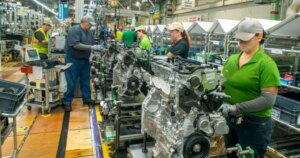
On October 30, 2026, Toyota and Waymo announced that the Japanese automaker will manufacture specially equipped bZ4X electric vehicles at its Takaoka plant in Toyota City, Japan. More importantly, the factory will integrate Waymo’s autonomous-driving hardware during production.
That last detail matters considerably. Building a vehicle designed for autonomous operation is quite different from taking a finished car and covering it with cameras, sensors and computers afterward.
It is the difference between making a robotaxi and making a car that happens to have become one.
You may also like this video:
Toyota Waymo Robotaxi Production Starts in Japan
The companies plan to begin initial testing and validation of the autonomous bZ4X fleet in Japan during 2027. Deployment in the United Kingdom and other markets already served by Waymo is planned for subsequent years.
Toyota will manufacture the base vehicle and install Waymo’s autonomous-driving equipment under one roof at its Takaoka facility in Aichi Prefecture.
That represents a potentially important change in the economics of autonomous transportation.
Retrofitting a conventional vehicle requires additional handling, integration work and validation. Installing the necessary equipment as part of a repeatable factory process could help reduce complexity and support higher production volumes.
However, neither company has publicly established how much cheaper this manufacturing method will make each vehicle. Nor has Toyota disclosed a production target, robotaxi purchase price, battery capacity, certified electric range or fleet operating cost for the specialized bZ4X.
Those numbers will matter when the companies move from demonstration to large-scale operation.
The vehicle’s name also deserves clarification. Toyota uses bZ4X in its international robotaxi announcement, while the electric SUV is marketed simply as the Toyota bZ in the current American lineup. The specialized autonomous vehicle should not be confused with a regular showroom model.
You may also enjoy: Toyota and Waymo Team Up to Test Self-Driving Taxis in Japan
Waymo Taxi
Why Toyota Could Change the Economics of Driverless Cars
Waymo, which began as Google’s self-driving-car project, already has substantial experience operating autonomous passenger services in the United States.
Its technology has been fitted to several different vehicle platforms, including the Jaguar I-PACE and vehicles supplied through other manufacturing partnerships.
The company has also partnered with Hyundai to develop autonomous IONIQ 5 vehicles.
The significance of the Toyota agreement is not simply another badge on a driverless car. It is another major manufacturer bringing industrial scale, quality control, vehicle engineering and production experience to the autonomous transportation business.
Producing a few hundred experimental vehicles is one challenge. Manufacturing thousands of vehicles that must operate reliably in commercial service is another.
These vehicles will still need cleaning, charging, repairs, tires, software maintenance, insurance and customer support. Removing the human driver does not magically eliminate the expenses involved in operating an automobile.
It simply moves those expenses around.
You may also enjoy: Hyundai Waymo Robotaxi: The Factory Is the Advantage
Waymo Taxi
What Makes the Toyota Robotaxi Different?
The autonomous Toyota bZ4X is being developed for Level 4 automated driving.
That means the vehicle’s automated system can perform the driving task without requiring a human driver to supervise it, but only within approved operating conditions and service areas.
That is fundamentally different from the driver-assistance systems currently available on conventional passenger vehicles.
The National Highway Traffic Safety Administration explains that Level 2 assistance still requires a human driver to supervise the vehicle continuously, even when the system controls steering and speed.
Level 4 automation makes the person inside a passenger rather than a driver while the vehicle operates within its designated conditions.
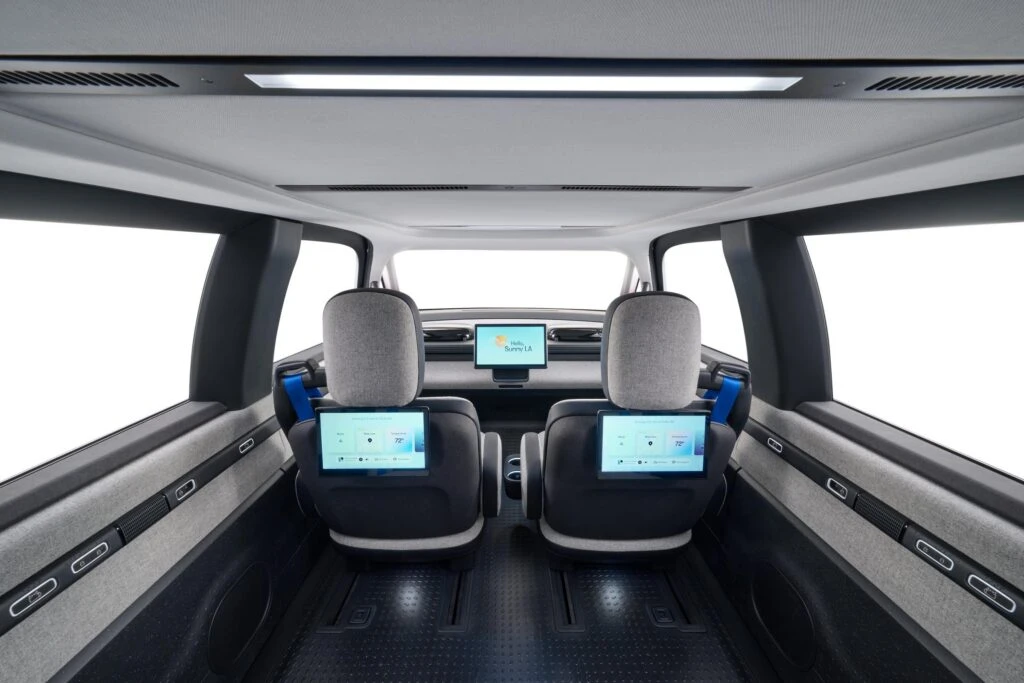
Toyota says the specialized bZ4X will feature generous rear legroom, automatic doors, a power liftgate and ambient interior lighting.
These are sensible priorities for a vehicle designed around passengers entering and exiting repeatedly throughout the day.
Automatic doors can make boarding easier. A power liftgate improves luggage access. A comfortable rear passenger compartment becomes particularly important when the people occupying the vehicle are no longer expected to drive it.
However, Toyota has not published final passenger-space measurements, cargo volume or wheelchair-accessibility specifications for this particular robotaxi.
For an industry promising transportation for everyone, those details will eventually be just as important as the computer doing the driving.
Waymo Taxi
Could Your Next Toyota Drive Itself?
Here is where the announcement becomes especially interesting for American drivers.
Toyota and Waymo say they will continue exploring the possibility of incorporating autonomous-driving technology into personally owned Toyota vehicles.
That is not a confirmed product launch. There is no announced American Toyota model, showroom date, price or consumer-ready Level 4 system arising from this partnership.
But the direction is significant.
Historically, automakers have developed driver-assistance systems and increasingly sophisticated automated-driving technology through their own engineering operations and suppliers.
Waymo approaches the problem from the opposite direction. It has developed an autonomous-driving system through real-world commercial operations and is working with manufacturers to supply vehicles capable of using it.
Combining the two approaches could eventually make advanced automation available to more consumers.
There is also a role for Woven by Toyota, the company’s software and mobility technology operation, which is exploring how information from autonomous vehicles and connected infrastructure could improve road safety.
Federal regulators are moving in parallel. NHTSA is developing automated-driving safety guidance and working toward additional performance standards for vehicles capable of operating without human control.
The technology may eventually arrive in private cars, but the evidence does not yet support telling buyers they will soon be able to purchase a fully driverless Toyota.
You may also enjoy: Toyota Doubles Down on Hydrogen, Adds Style to Camry, and Bets Big on Bots
Waymo Taxi
Is Waymo Actually Safer Than a Human Driver?
Waymo says its autonomous-driving system has demonstrated a rate of serious crash injuries up to 20 times lower than human-driver benchmarks in areas where it operates.
That is a company-reported comparison. It should not be interpreted as proof that every Waymo trip is 20 times safer under every driving condition.
Performance comparisons depend on mileage, crash definitions, geography, traffic conditions and the statistical methods used.
The National Transportation Safety Board has emphasized the need for transparent safety evaluations, effective risk management and reliable data recording in automated vehicles.
The agency has also investigated incidents involving developmental automated-driving systems, highlighting the challenges of recognizing hazards and responding to unusual road situations.
And there is an important distinction between a robotaxi that operates inside a mapped service area and a car capable of driving anywhere its owner chooses.
The latter is a far more ambitious problem.
According to recent federal automated-vehicle regulatory developments, regulators are working on standards that will better accommodate the growing commercial deployment of vehicles designed for automation.
That regulatory work is essential because the industry is advancing faster than many of the traditional rules governing vehicle design.
Waymo Taxi
Why This Matters to American Consumers
For Americans, the immediate impact is not a new Toyota they can purchase tomorrow.
It is a change in how autonomous transportation could be manufactured, deployed and eventually priced.
American cities already have experience with driverless commercial rides. As the technology improves and more manufacturers supply suitable vehicles, fleet operators could gain more choice over vehicle size, features, manufacturing location and operating costs.
That competition could eventually influence fares and service availability, although neither company has promised lower passenger prices from this Toyota partnership.
The manufacturing question is particularly interesting because Waymo is working with several automakers.
For example, its Chinese-manufactured Ojai platform demonstrates one approach to producing vehicles for American autonomous-driving services, while Hyundai’s IONIQ 5 program represents another.
Adding Toyota broadens Waymo’s options and creates additional competition among manufacturers seeking to supply autonomous fleets.
There is also the question of jobs. Vehicle assembly, specialized sensor integration, maintenance and fleet support create different employment opportunities from traditional ride-hailing.
Exactly how those economic benefits are distributed will depend on where future vehicles are manufactured and operated.
You may also enjoy: Waymo’s Chinese Cars Reveal a US Import Loophole
Waymo Taxi
The Robotaxi Race Has Become a Manufacturing Race
For much of the past decade, discussion about autonomous transportation has focused on artificial intelligence, sensors and the companies developing the software.
Those remain essential, but commercial success also requires reliable physical vehicles, repeatable manufacturing processes and practical service infrastructure.
Tesla is pursuing a vertically integrated approach through its Cybercab program. Other companies are working with established vehicle manufacturers and transportation platforms.
Toyota’s partnership with Waymo illustrates a different route: combine a specialist autonomous-driving developer with an automaker that already understands high-volume manufacturing.
The new Toyota bZ4X is not expected to begin testing until 2027, so there is still considerable validation work ahead.
There is also no announced date for the specialized vehicle to enter American Waymo service.
But the business direction is becoming unmistakable.
You may also enjoy: Waymo Airport Rides: Las Vegas Goes Driverless
Affiliate shopping: If you are shopping for all-weather floor mats, Shop OEDRO directly or Shop OEDRO on Amazon. Use code NIKM20 at the OEDRO official store. Check current code terms and vehicle fitment before ordering. Test Miles may earn a commission from purchases made through these affiliate links.
Waymo Taxi
The Test Miles Verdict
The most important part of Toyota’s new Waymo agreement is not that another electric SUV will eventually become a robotaxi.
It is that a global automotive manufacturer is preparing to build autonomous vehicles as integrated production products, rather than treating them simply as experimental technology projects.
Waymo brings its driving software and commercial operating experience. Toyota brings manufacturing expertise, vehicle engineering and the ability to build at scale.
The combination makes sense, although the real test will be whether the vehicles can operate safely, reliably and economically in everyday service.
And the possibility of bringing Waymo technology to privately owned Toyota vehicles adds a genuinely intriguing dimension.
For the moment, the important news is a manufacturing commitment, a 2027 testing program and a partnership with ambitions beyond Japan.
For American drivers, it is another indication that the race to build the driverless future is no longer confined to Silicon Valley.
It has reached the assembly line.