2027 Honda CR-V: The $230 Hybrid Decision
The 2027 Honda CR-V puts its Sport Hybrid just $230 above the gas EX-L, creating a clear choice between richer equipment and lower fuel use.
By Nik J. Miles
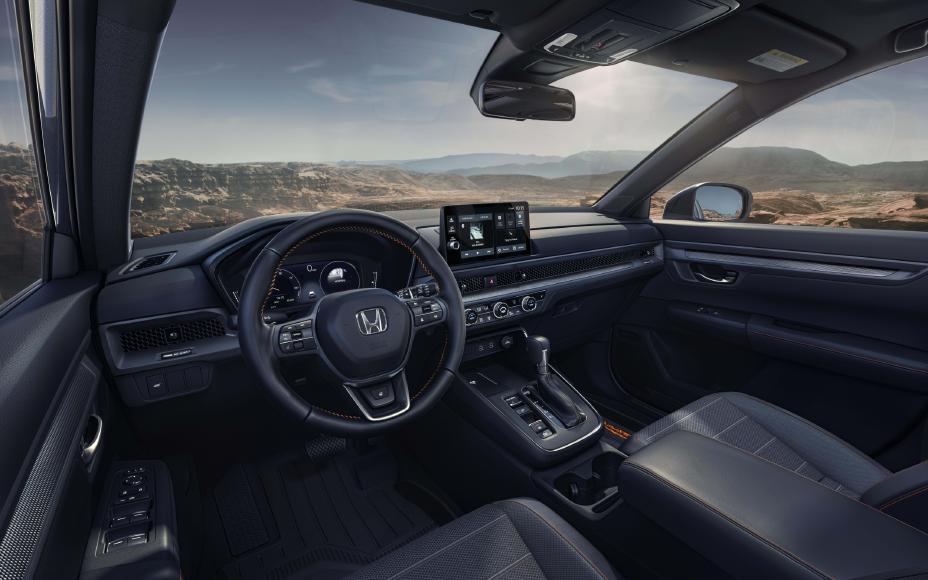
A $230 difference rarely settles a new-car decision. In Honda’s compact SUV lineup, it creates the most interesting one. The front-wheel-drive EX-L costs $37,350 with destination; the Sport Hybrid costs $37,580. One prioritizes comfort equipment. The other spends the money on a different powertrain and substantially better fuel economy.
There is now another complication. On November 12, Honda announced a redesigned, hybrid-only 2028 CR-V arriving in 2027. Buyers shopping the current model should know a replacement is coming. This 2027 Honda CR-V assessment uses verified U.S. pricing and specifications; it does not claim a first-hand road test.
You may also enjoy: 2026 Honda CR-V Review: Which Trim Should You Buy?
You may also like this video:
2027 Honda CR-V: Why the Sport Hybrid Stands Out
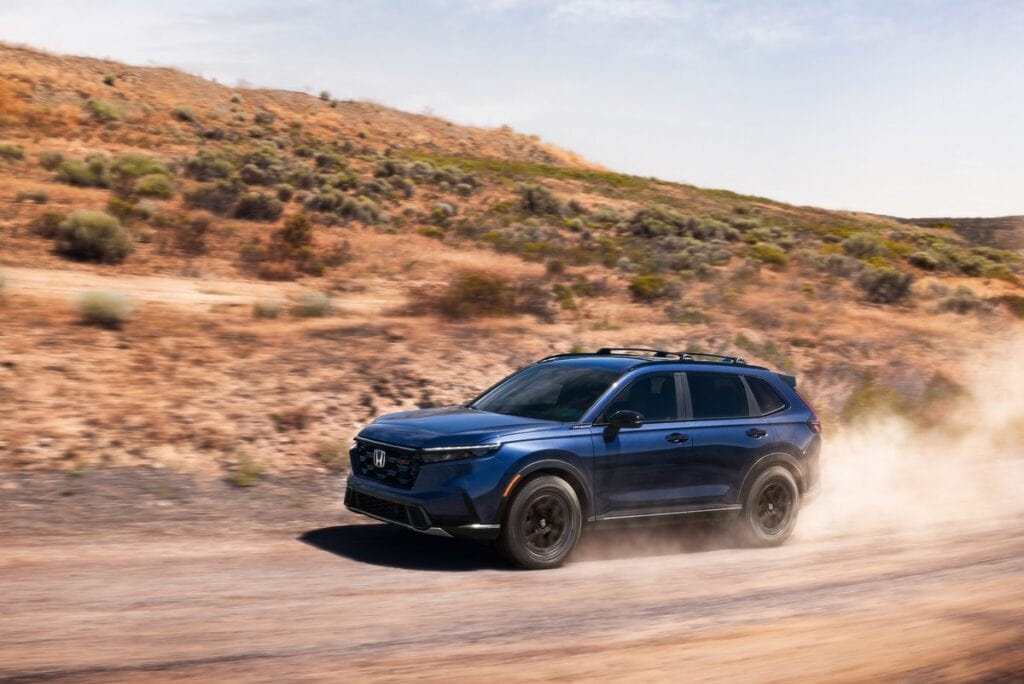
The Sport Hybrid is my starting recommendation for buyers covering regular commuting mileage. Honda lists 204 total horsepower and an EPA rating of 40 mpg combined with front-wheel drive, versus 190 horsepower and 30 mpg for the front-drive turbo models. It is a conventional hybrid vehicle, so there is no charging appointment to arrange.
That economy difference becomes clearer in gallons. At 12,000 miles annually, 30 mpg means 400 gallons; 40 mpg means 300. Using an illustrative $3.50 per gallon, the difference is $350 a year. These are calculations using the published combined ratings, not measured ownership results or a prediction of future gasoline prices.
Against the less expensive EX, the Sport Hybrid costs $2,480 more. Under those same assumptions, fuel savings alone would take about seven years to recover the premium, before financing or other ownership differences. Heavy urban mileage can strengthen the hybrid’s case; light use can leave the cheaper gasoline model looking sensible. The federal guide to fuel-economy factors explains why weather, speed and trip length change actual results.
Five Prices That Make the Lineup Easier to Read
Honda’s September 9 pricing update includes a $1,550 destination charge. That supersedes the earlier release’s $1,450 charge. The following prices include destination but exclude taxes, registration, options and dealer additions.
| Configuration | Price with destination | EPA combined |
|---|---|---|
| EX FWD | $35,100 | 30 mpg |
| EX-L FWD | $37,350 | 30 mpg |
| Sport Hybrid FWD | $37,580 | 40 mpg |
| TrailSport Hybrid AWD | $40,750 | 35 mpg |
| Sport-L Hybrid FWD | $40,675 | 40 mpg |
The EX-L versus Sport comparison is therefore an equipment decision as much as a fuel decision. EX-L brings leather upholstery, while Sport Hybrid uses cloth. Buyers who spend little time driving may reasonably value the richer cabin more. For someone spending hours in traffic each week, the hybrid deserves the closer look.
You may also enjoy: 2027 Nissan Rogue Hybrid Review: An EV Without a Plug?
TrailSport Charges for a Different Job
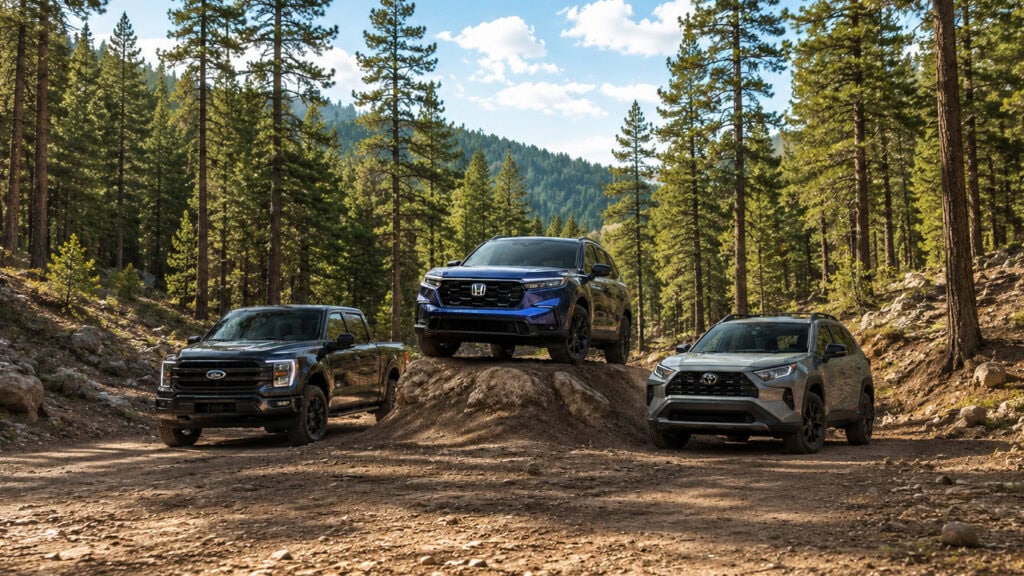
TrailSport adds standard AWD and all-terrain tires, but its 8.2-inch clearance matches other AWD CR-Vs. Its appeal is the equipment combination, rather than a dramatic suspension lift. Compare it with Sport-L carefully: the front-drive Sport-L costs $75 less, although adding AWD changes that comparison.
For buyers regularly using gravel access roads, the TrailSport specification has a purpose. For predominantly paved driving, its lower economy rating deserves attention. At the same 12,000 annual miles, 35 mpg consumes roughly 43 more gallons than 40 mpg. That is about $150 at the illustrative fuel price above.
Make the tire decision around your actual conditions. NHTSA’s tire guidance is useful for understanding maintenance and selection. An adventurous badge cannot tell you whether the fitted tires suit your winter route.
You may also enjoy: 2026 Subaru Forester Review: Premium Hybrid Wins?
The Hybrid Has Practical Compromises
Honda’s specification sheet lists 39.3 cubic feet behind the rear seat in gasoline versions, versus 36.3 in Sport, TrailSport and Sport-L hybrids. Hybrid towing is limited to 1,000 pounds, compared with 1,500 for the turbo models.
Those differences matter more than the horsepower advantage if your routine includes a trailer or a particularly large dog crate. Bring measurements to the showroom. Test your child seats in the rear and load your awkward luggage before assuming a published volume describes how your belongings will fit.
Likewise, use the dealer drive to judge brake response, seat support, noise and freeway acceleration. Specifications establish what Honda supplies; they cannot establish whether you find the vehicle comfortable. Honda Sensing assists the driver, and NHTSA’s driver-assistance guide explains the distinction between warnings and intervention.
You may also enjoy: 2027 Hyundai Tucson Adds Space and Smarter Hybrid Tech

Buy the 2027 or Wait for the 2028?
Honda’s next-generation announcement confirms a new platform and hybrid system. It does not establish a final purchase price or an independently tested improvement. Waiting makes sense if your current vehicle is serving you well and you want to compare the replacement before committing.
Buying now can also be rational. Ask for an itemized quote, compare financing and decline the assumption that an outgoing design automatically deserves a premium price. A future model announcement is a reason to negotiate carefully, not proof that discounts already exist.
You may also enjoy: Best cars for people who don’t know cars
My shortlist is the EX for restrained spending, Sport Hybrid for regular commuting, and Sport-L for buyers wanting hybrid efficiency with more comfort equipment. Choose TrailSport when its tires and AWD fit a recurring need. At $230 above EX-L, the Sport Hybrid makes an unusually persuasive argument. Whether that argument beats waiting for 2028 depends on how urgently you need the keys.