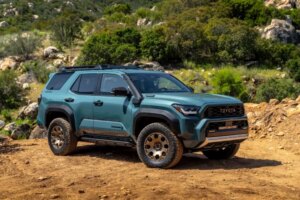
10 Plug-In Hybrid SUVs Under $50,000 That Actually Reduce Fuel Costs

As gas prices remain unpredictable and full electric vehicles still don’t fit every lifestyle, many drivers are turning to plug-in hybrid SUVs. These vehicles allow short daily trips on electricity while keeping a gas engine for longer drives, eliminating range anxiety without locking buyers into charging-only ownership.
What’s changed recently is availability. A growing number of plug-in hybrid SUVs now come in under $50,000, making them realistic options for mainstream buyers focused on fuel savings and flexibility.
Here are ten plug-in hybrid SUVs under $50,000 that stand out for how they balance efficiency, performance, and everyday usability.
1. Toyota RAV4 Prime
Why it stands out: Strong electric range, proven reliability, and excellent efficiency
The RAV4 Prime remains one of the most well-rounded plug-in hybrid SUVs available. It offers impressive electric-only driving for daily commutes while maintaining long-range flexibility for road trips.
Tradeoff: High demand can make availability limited in some markets.
2. Mitsubishi Outlander PHEV
Why it stands out: Long total range and family-friendly layout
The Outlander PHEV delivers one of the longest combined ranges in the segment and offers three-row seating, making it attractive for families.
Tradeoff: Interior materials feel less premium than some rivals.
3. Kia Sportage PHEV
Why it stands out: Strong efficiency with modern tech features
The Sportage PHEV combines solid electric range with a refined interior and advanced safety technology, making it a comfortable daily driver.
Tradeoff: Cargo space is slightly reduced compared to non-hybrid versions.
4. Hyundai Santa Fe PHEV
Why it stands out: All-wheel drive and roomy interior
For buyers needing more space and winter capability, the Santa Fe PHEV offers a good mix of practicality and efficiency.
Tradeoff: Electric-only range is shorter than some competitors.
5. Ford Escape PHEV
Why it stands out: Practical size and straightforward efficiency
The Escape PHEV focuses on simplicity and space, appealing to buyers who want fuel savings without a learning curve.
Tradeoff: No all-wheel-drive option on some trims.
6. Mini Countryman PHEV
Why it stands out: All-wheel drive with premium feel
The Countryman PHEV delivers strong efficiency in a compact, upscale package while retaining Mini’s distinctive driving personality.
Tradeoff: Smaller cargo area compared to traditional compact SUVs.
7. Dodge Hornet Plug-In Hybrid
Why it stands out: Performance-oriented plug-in hybrid
With quick acceleration and a sportier driving character, the Hornet PHEV appeals to drivers who want electrification without sacrificing fun.
Tradeoff: Ride quality can feel firm on rough roads.
8. Subaru Crosstrek Plug-In Hybrid
Why it stands out: Subaru durability and all-weather confidence
The Crosstrek PHEV maintains Subaru’s reputation for reliability and traction, making it appealing for outdoor-focused drivers.
Tradeoff: Lower electric range and power compared to newer competitors.
9. Hyundai Tucson PHEV
Why it stands out: Comfortable ride with modern safety features
The Tucson PHEV offers a smooth driving experience and a tech-forward interior, appealing to buyers prioritizing comfort.
Tradeoff: Performance is adequate rather than sporty.
10. Kia Sorento PHEV
Why it stands out: Three-row flexibility with plug-in efficiency
For buyers who need more seating without moving to a full-size SUV, the Sorento PHEV provides a rare combination of space and electrification.
Tradeoff: Higher trims can approach the $50,000 limit.
Why Plug-In Hybrid SUVs Still Make Sense
Plug-in hybrids occupy a unique middle ground. They reduce fuel costs for daily driving, avoid range anxiety, and require fewer lifestyle changes than full EVs. For many households, that balance matters more than chasing maximum electric range.
As charging infrastructure improves and fuel prices remain volatile, plug-in hybrid SUVs continue to offer one of the most practical paths toward lower ownership costs.