The New Wall Street Game: Betting on Everything
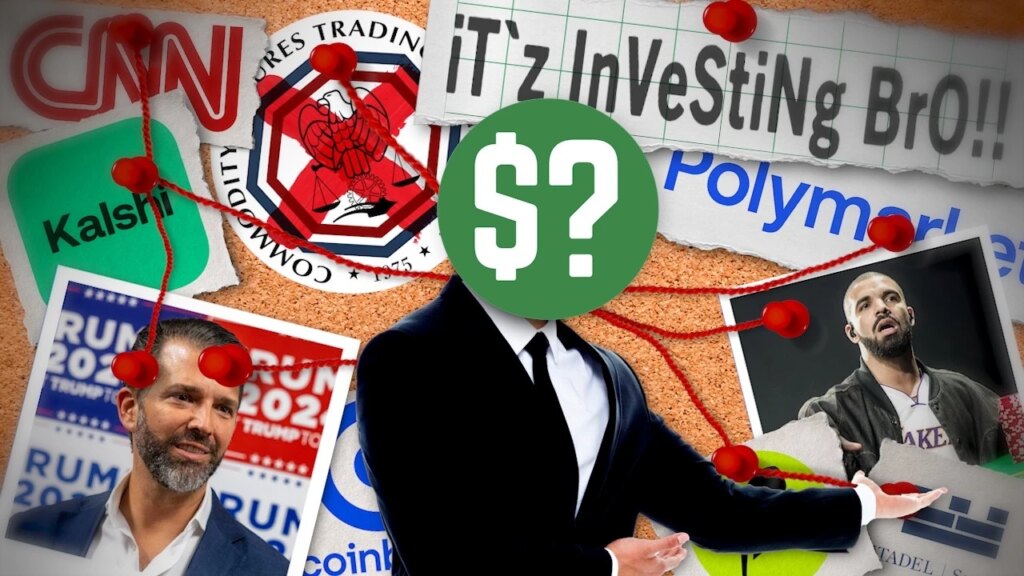
Prediction markets are having a moment, and it’s not a small one. What used to be a niche corner of the internet is now turning into a mainstream financial product complete with sleek apps, celebrity-level buzz, and billions of dollars flowing through contracts that let you “trade” outcomes like elections, economic data, sports, and even cultural events. It’s being framed as innovation. In reality, it’s something much simpler: betting got a business suit. And hedge funds are already sitting in the best seats in the room.
If you’ve never used one of these platforms, the concept is straightforward. You don’t buy a stock. You buy a “Yes” or “No” outcome on an event. Will inflation be above a certain number? Will a candidate win? Will a rate cut happen by a certain date? You pick a side, place your money behind it, and if you’re right, you get paid. If you’re wrong, you lose. It looks like trading, feels like trading, and gets marketed like trading but the emotional experience is closer to gambling.
And that’s exactly why prediction markets are growing so fast. They hit a sweet spot in modern finance: high engagement, low friction, and constant opportunities to act on opinions. People don’t want to wait ten years for a long-term investment to play out. They want a scoreboard today. Prediction markets deliver that instantly.
The biggest platforms in this space Kalshi and Polymarket have helped push prediction markets into the mainstream, and the numbers being thrown around are eye-catching. The headline growth is attracting attention from traditional finance and major consumer trading apps, which are starting to borrow the same playbook. When platforms like Robinhood and Coinbase begin experimenting with similar “event-based” trading models, it’s a signal that prediction markets aren’t staying on the fringe. They’re becoming part of the financial entertainment economy.
But here’s where the story gets uncomfortable: the real winners in prediction markets are not the average users placing bets. The system is designed to reward the intermediaries and the professionals. In other words, it’s built to extract value from retail behavior at scale.
Traditional sportsbooks make money by setting odds and taking the other side of your bet. Prediction markets don’t operate like that. These platforms don’t have to “take the bet” themselves. They function more like exchanges, matching buyers and sellers. That structure matters because it changes the economics. If a platform isn’t holding the risk, it doesn’t need the same capital reserves. It can scale faster. It can operate leaner. And in many cases, it can navigate a regulatory environment that looks more like financial derivatives oversight than state gambling regulation.
That classification financial derivative instead of gambling product—is one of the biggest reasons prediction markets can grow so quickly. It’s also one of the biggest reasons they’re controversial. Because while the platforms may be structured like exchanges, the behavior they encourage is often the same behavior regulators worry about in gambling: impulsive decisions, emotional trading, and repeat participation driven by dopamine instead of strategy.
Now let’s talk about the part most people miss: liquidity. For any market to work, someone has to be willing to trade against you. If you want to buy “Yes,” someone else has to sell “Yes” or buy “No.” In a perfect world, the crowd provides that balance naturally. In the real world, it doesn’t. Most retail traders don’t provide stable liquidity. They chase momentum. They pile into the same side of a trade. They get emotional when headlines shift. That creates gaps in pricing and moments where the market becomes unstable.
So, prediction markets rely on market makers to keep the machine running. Market makers are professional liquidity providers. Their job is to constantly quote prices on both sides buy and sell so there’s always a trade available. And they get paid for it through something called the spread.
The spread is the difference between the price you can buy at and the price you can sell at. It’s friction. It’s the cost of doing business. And in prediction markets, that friction can become a money-printing machine for the firms that provide liquidity.
This is where hedge funds enter the chat. Hedge funds and sophisticated trading firms love environments where retail behavior is predictable. And prediction markets are full of predictable behavior. Retail traders chase narratives. They overreact to breaking news. They trade emotionally. They size positions poorly. They double down when they should step back. They confuse confidence with edge.
A hedge fund doesn’t need to be “right” about the outcome to profit in that environment. They just need to be better at pricing risk, managing exposure, and exploiting inefficiencies. That’s what algorithms do best. They don’t panic. They don’t get bored. They don’t revenge trade. They just take advantage of what the crowd gives them.
And the crowd gives them a lot.
Prediction markets are especially vulnerable to what you might call “reckless liquidity.” Retail traders often trade in ways that create obvious opportunities: chasing late momentum, buying tops, selling bottoms, and treating contracts like entertainment instead of financial risk. That behavior creates spreads that market makers can widen, volatility they can monetize, and order flow they can systematically profit from.
The more chaotic the retail crowd becomes, the more profitable the ecosystem becomes for professionals.
That’s the core dynamic that makes prediction markets feel exciting for the average user, but structurally favorable for institutions. It’s not that retail traders can’t win. It’s that the playing field is tilted. The best technology, the fastest execution, the most disciplined risk management, and the deepest liquidity all belong to the firms that are built to extract value from markets.
And unlike traditional financial exchanges, which at least attempt to limit certain unfair advantages, prediction markets are still early enough that the rules, protections, and oversight are inconsistent. That creates a gap where sophisticated players can operate with fewer constraints. It becomes a playground for professional capital.
So what happens next?
If prediction markets continue on their current path, they’ll likely become more integrated into mainstream financial platforms. They’ll get packaged as “information markets” or “alternative investing.” They’ll be marketed as a way to “hedge risk” or “express a view.” And for some users, that will be true. But for most people, it will function like a new form of financial gambling with better branding. And that has societal consequences.
When betting becomes normalized across every category of life—politics, economics, culture, personal outcomes—it changes how people think. It shifts behavior from building long-term wealth to chasing short-term wins. It turns every headline into a trade. It makes anxiety profitable. It monetizes uncertainty.
The bigger concern isn’t just whether people lose money. It’s who the system is designed to serve. Because in the current structure, prediction markets scale by attracting retail volume, then stabilize themselves through professional market makers who profit from that volume. That’s not inherently evil, but it is inherently unequal.
So, if you’re participating in prediction markets, the most important thing you can do is be honest about what you’re doing. Are you investing? Or are you betting? Are you building wealth? Or are you paying tuition to the market for entertainment?
Because the hedge funds already know the answer. And they’re trading accordingly.