5 Vehicles That Miserably Refuse to Depreciate
If you’ve ever bought a new car only to watch its value evaporate faster than morning coffee, you get why this matters. Most vehicles lose a chunk of their worth before you’ve even memorized the owner’s manual. But a handful of SUVs and trucks don’t play along. They keep value remarkably well, and the reasons are worth knowing if you care about resale, depreciation, and not weeping into your trade-in offer.
Why does this matter right now?
Depreciation isn’t some abstract finance term reserved for accountants. It shows up at trade-in time, at insurance total loss valuations, and in how much equity you have in your vehicle if you decide to sell privately. In a market where the average new car can lose 30 to 40 percent of its value within a few years, the difference between a “normal” vehicle and one of these five is often thousands of dollars. That’s cash you can drive away with.
For anyone who buys and holds vehicles for a few years, resale value is a practical metric, not a theoretical one. It affects the long-term cost of ownership more than gas mileage or options packages do. That’s because even if two vehicles cost the same to run, the one that holds value better ends up cheaper in total.
It’s also why people get irrationally passionate about certain SUVs and trucks. This list isn’t about hype or brand loyalty. It’s about real dollar retention.
How does it compare to rivals or alternatives?
Most cars and crossovers follow the script: build new, sell new, immediately lose value. It’s the automotive equivalent of a new smartphone leaving the store and instantly having a lower resale price the next day. Sedans especially get hammered because used buyers prefer SUVs and trucks. Electric vehicles, for all their innovation, often depreciate faster unless they have unique scarcity or brand cache.
Here’s the thing these five vehicles prove: ruggedness, reliability reputation, and demand that outpaces supply matter more than flashy screens or fleeting design trends. A vehicle that solves a problem people actually care about , towing, off-road capability, long-term durability keeps a bigger piece of its value.
Compare that to typical crossovers that chase infotainment features and styling cues that feel dated in a year. When buyers compare a standard midsize SUV to a Toyota 4Runner in the used market, they aren’t just choosing vehicles. They’re choosing confidence.
Who is this for, and who should skip it?
If you buy a vehicle and plan to own it for a handful of years before selling or trading it in, this article is for you. If your main concern is the cost of ownership rather than monthly payments and features, you’ll find the logic here practical.
On the other hand, if you’re one of those people who buy a new car every couple of years because of “new car smell,” or you lease everything, depreciation isn’t going to sting you as hard. But that’s a tiny minority of the market. Most owners will eventually face the sticker shock of trade-in offers that don’t reflect what they think their cars are worth.
This list is also not a shopping list for everyone. It’s not about what’s newest or flashiest. It’s about what the market rewards with real money when you eventually move on.
What is the long-term significance?
Depreciation patterns aren’t random. They’re shaped by supply and demand, reputations built over decades, and the emotional and practical calculus buyers make in the used market. Vehicles that hold value aren’t just expensive because they’re desirable. They’re expensive because used buyers are willing to pay for confidence.
That’s a big deal in a world where the average car payment keeps climbing, and many people are stretched on household budgets. Anything that keeps more dollars in your pocket when you sell matters, even if it doesn’t show up in glossy brochures.
Below, we go through the five vehicles that beat depreciation at its own game. The list mixes rugged SUVs and trucks with one unexpected sports car. Each name on this list refuses to lose value at the typical rate, and there are good reasons why.
#5, Ford Bronco
The Ford Bronco consistently ranks in the top tier of SUVs for resale value. After three years, many trims retain roughly 65 to 70 percent of their original MSRP. Five years out, depreciation is still lower than many midsize SUVs that aren’t even marketed for serious off-road use.
A large part of that resilience comes down to demand outstripping supply. For years, buyers clamored for Broncos, and supply never quite caught up. That created an aura of scarcity that translates directly into resale value.
The Broncos also have a reputation for capability rather than luxury frills. Buyers in the used market tend to prize genuine off-road hardware over screens and gimmicks that look cool in a showroom. Two-door Broncos and those with the Sasquatch package hold value best. Interestingly, manual transmissions here depreciate less than automatics, a pattern you don’t see much elsewhere.
This is a lifestyle vehicle people search for, not settle for. Because of that, it depreciates more predictably than most SUVs.
#4, Toyota 4Runner
If you want a vehicle that laughs at depreciation, the Toyota 4Runner is in the conversation. Typical five-year retained value sits around 60 to 65 percent. That’s significant because the platform itself is older than many of its competitors. Yet buyers don’t care. Why?
One word: reliability. Toyota’s reputation here isn’t marketing fluff. It’s built on decades of real-world experience. Add a body-on-frame chassis, something most modern crossovers have abandoned, and you get a vehicle that feels tough and stays tough.
Used 4Runners often sell for prices that make accountants nervous because the numbers don’t add up the way they do for typical cars. Off-road-biased trims like the TRD Pro hold value especially well because they attract buyers who want that capability, not just think it looks good.
Toyota’s conservative engineering choices, no radical redesigns every few years, mean that older 4Runners don’t look or feel obsolete next to new ones. That’s a subtle factor that keeps resale strong.
#3, Toyota Tundra
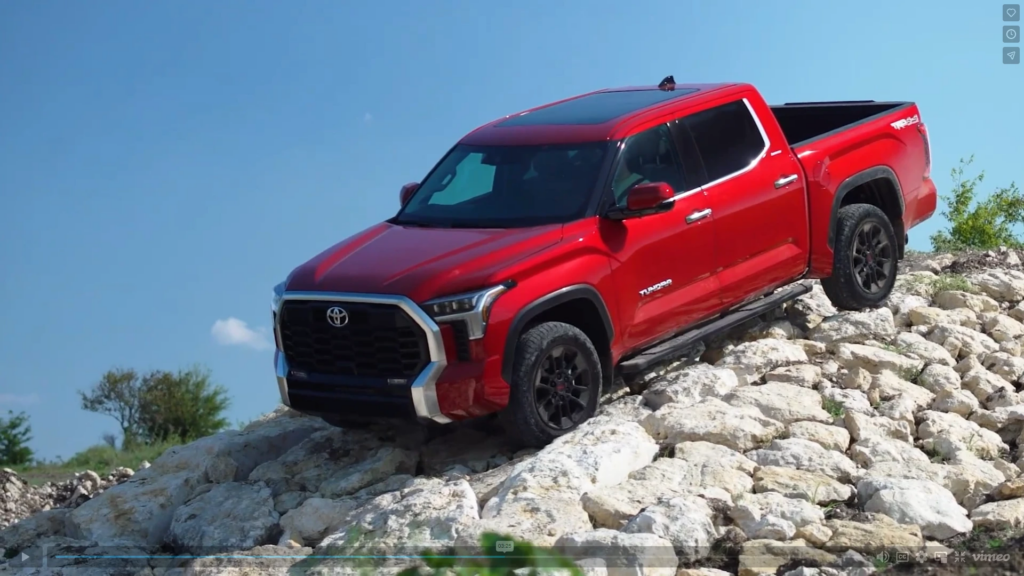
Yes, the one you’re driving. The Toyota Tundra is not just respected for reliability. In the resale world, it’s exceptional for a full-size pickup. After five years, many Tundras still retain around 60 percent of their original value. Full-size pickups typically depreciate less than cars, but the Tundra still outperforms many rivals in this regard.
Part of what keeps Tundras valuable is the perception that they age slowly in the used market. Buyers trust the drivetrain and overall durability, even in turbocharged versions. Special editions and higher trim packages, like the Rally package in the 2025 model, also tend to depreciate less than base models because they appeal to more specific buyer interests.
Used truck demand in the U.S. remains strong, especially when fuel prices aren’t spiking. That’s because trucks are tools for many buyers and emotional purchases for others. Either way, demand supports residual value.
This truck is a financial asset that just happens to be a fun toy.
#2, Toyota Tacoma
If there’s a poster child for strong resale value in mainstream vehicles, it’s the Toyota Tacoma. Typical five-year retained value sits around 65 percent, and in some studies, it ranks number one overall. A used Tacoma market stronger than the new one is almost unheard of.
Why does this matter? Because buyers pay premiums even for high-mileage Tacomas. That’s not normal. Most vehicles lose appeal as mileage climbs. Tacoma’s do not. Reliability reputation here is unmatched, and that keeps both private buyers and dealers competing for used examples.
Off-road trims like the TRD Off-Road and TRD Pro depreciate the least. Manual transmissions still have a loyal following in the Tacoma world, a niche that keeps certain examples more valuable.
Fleet buyers largely avoid Takoma’s, which helps keep retail resale strong. Without fleet saturation, the used supply is cleaner and more desirable.
Tacoma doesn’t chase trends. They wait patiently while everyone else loses money.
#1, Porsche 911
This is the one that makes financial analysts scratch their heads. The Porsche 911 is the least-depreciating production vehicle in America. After three years, some models retain over 90 percent of their original MSRP. In certain markets, they gain value.
That defies most automotive logic. Limited production means controlled supply. Strong enthusiast demand means buyers don’t flinch when they see the price tag on a used 911. Porsche also avoids radical design resets that make older models look ancient.
Because buyers trust long-term support and parts availability, owning a 911 can be shockingly safe financially. It’s expensive to buy new, yes, but the resale performance is so strong that depreciation becomes almost irrelevant.
This is depreciation’s natural enemy.
FINAL THOUGHTS
If resale value matters to you, the vehicles above offer a clearer lesson than any glossy ad campaign: buy what people actively search for, not what they merely tolerate. Depreciation isn’t random. It’s shaped by reputation, demand, platform longevity, and buyer confidence. Choose accordingly.