America’s $40 Trillion Debt Problem: Why No One Is Fixing It
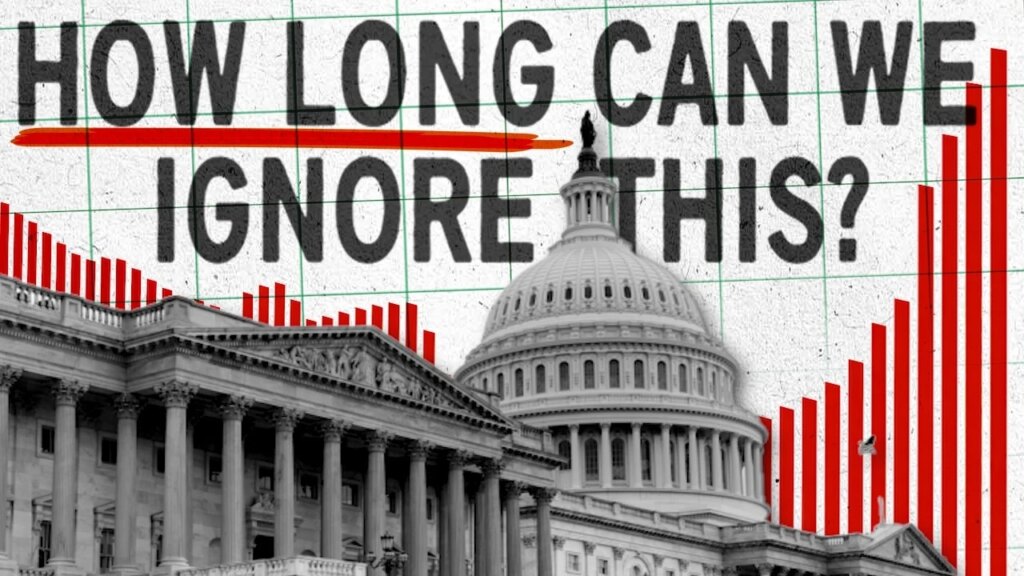
The United States is approaching a financial milestone that would have been unthinkable just a generation ago. National debt is nearing $40 trillion, now sitting at roughly 130% of GDP, and rising fast. While headlines often focus on political battles around the debt ceiling, the real story is far more structural and far more concerning.
For more than 25 years, economists, policymakers, and analysts have warned about the trajectory of U.S. debt. Yet despite repeated warnings, the pattern has remained the same. The debt ceiling is raised, political leaders debate responsibility, and then spending continues largely unchanged. The system moves forward not because the problem has been solved, but because addressing it would require difficult decisions that few are willing to make.
The pace of borrowing has accelerated dramatically in recent years. Roughly half of all U.S. debt has been accumulated in just the last six years. Over the past five years alone, the federal government has spent approximately $15 trillion more than it has collected in taxes. In just the past three months, another $1.4 trillion has been added. These are not gradual increases. They are exponential shifts in fiscal policy.
Understanding how this debt functions requires looking at the mechanics behind it. The Treasury General Account acts as the government’s primary checking account, often holding hundreds of billions of dollars at any given time. When the debt ceiling is reached, the government uses accounting maneuvers and surplus funds to continue operating temporarily. Eventually, however, the ceiling must be raised again to allow continued borrowing. That cycle has repeated itself many times, with near misses in 2011, 2013, and 2023 bringing the country within days of potential default.
Despite the dramatic language often used during these standoffs, an actual default remains extremely unlikely. The United States has both the capacity and the incentive to meet its obligations. However, that does not mean there is no risk. Even the threat of delayed payments or political dysfunction can ripple through global markets. U.S. Treasuries are the backbone of the global financial system, and any disruption in confidence can have far-reaching consequences.
One of the most immediate concerns is the cost of servicing the debt itself. As interest rates rise, so does the cost of borrowing. Today, interest payments alone consume roughly 20% of the federal budget, a figure that has nearly tripled over the past five years. This creates a dangerous feedback loop. Higher rates increase debt costs, which require more borrowing, which in turn raises future interest obligations. A sustained increase of just one percentage point in interest rates could reduce GDP growth by more than one percent due to the added burden of debt servicing.
Credit rating agencies have already begun to reflect these risks. The U.S. has been downgraded from its historical AAA rating to AA+ by agencies like Fitch, signaling growing concern about long-term fiscal stability. In some comparisons, U.S. debt is now viewed with similar caution to mortgage-backed securities prior to the 2008 financial crisis. That does not mean collapse is imminent, but it does suggest that the margin for error is shrinking.
So what can be done? In theory, there are only a handful of ways to address a debt problem of this scale. The government can grow its way out of it through strong economic expansion. It can inflate the debt away by reducing the real value of what it owes. It can raise taxes, cut spending, or simply delay action and continue borrowing. In practice, each of these options comes with significant trade-offs.
Economic growth has historically been the most palatable solution, but current trends suggest that may not be enough. The U.S. would need sustained growth of around 4% annually to outpace interest costs, yet recent growth rates have hovered closer to 3% or lower. Inflation can reduce the real value of debt, but it also erodes purchasing power and risks destabilizing the dollar’s role as the world’s reserve currency.
Raising taxes is politically contentious and often less effective than expected. Tax revenues as a percentage of GDP have remained relatively stable for decades, suggesting structural limits to how much additional revenue can be generated. Meanwhile, spending cuts face their own challenges. The largest portions of the federal budget—Social Security, healthcare, interest payments, and defense—are politically sensitive and difficult to reduce without significant reform.
Complicating matters further is how government spending flows through the economy. A growing share of federal spending is directed toward private enterprises through contracts, subsidies, and partnerships. Research has shown that this type of spending often benefits asset owners more than wage earners, contributing to widening wealth inequality. At the same time, the tax burden has increasingly shifted toward middle-income households, while wealthier individuals and institutions continue to play a central role in financing government debt through investments and capital markets.
Looking ahead, one possible outcome is a scenario similar to Japan’s economic model: low growth, low inflation, and persistently low interest rates used to stabilize a high-debt environment. While this approach can prevent a crisis, it often comes at the cost of long-term economic dynamism. For the United States, such an outcome would represent a significant shift from its historical growth-driven model.
The more likely path, however, is continued delay. Historically, major fiscal reforms have only occurred in response to crisis, not in anticipation of one. Political incentives favor short-term solutions over long-term discipline, and as long as markets remain relatively stable, there is little immediate pressure to act.
That doesn’t mean there are no opportunities. Periods of economic imbalance often create new investment dynamics. Understanding how debt, inflation, interest rates, and policy decisions interact can help investors position themselves more effectively. Whether through equities, real assets, or global diversification, those who understand the system tend to navigate it better than those who ignore it.
The U.S. debt story is not just about numbers on a balance sheet. It is about how the world’s largest economy manages its obligations, maintains confidence, and adapts to changing conditions. The risks are real, but so are the tools available to address them.
The question is not whether the system can continue. It is how long it can continue without meaningful change, and what happens when that change finally arrives.
All writings are for educational and entertainment purposes only and does not provide investment or financial advice of any kind.