How Much of Our Economy Is Just Keeping Boomers Alive? The Hidden Cost of America’s Broken Healthcare System
There’s an uncomfortable question starting to surface in conversations about the U.S. economy. Not loudly. Not politically. But persistently. How much of what we spend, build, and prioritize is simply about keeping people alive longer at any cost? Because when you step back and look at the numbers, the answer is: a lot more than most people realize. And nowhere is that more obvious than in the American healthcare system.
The Most Expensive System in the World With Middling Results
The United States spends more on healthcare than any other developed nation. Not slightly more dramatically more. Nearly double, by most comparisons. Yet the outcomes don’t match the investment. Life expectancy trails peers. Infant mortality is higher. Preventable deaths remain stubbornly elevated. At the same time, millions of Americans delay care not because it isn’t available, but because they can’t afford it. That contradiction sits at the heart of the system. We spend the most. We get less than expected.
Healthcare Is Becoming the Economy
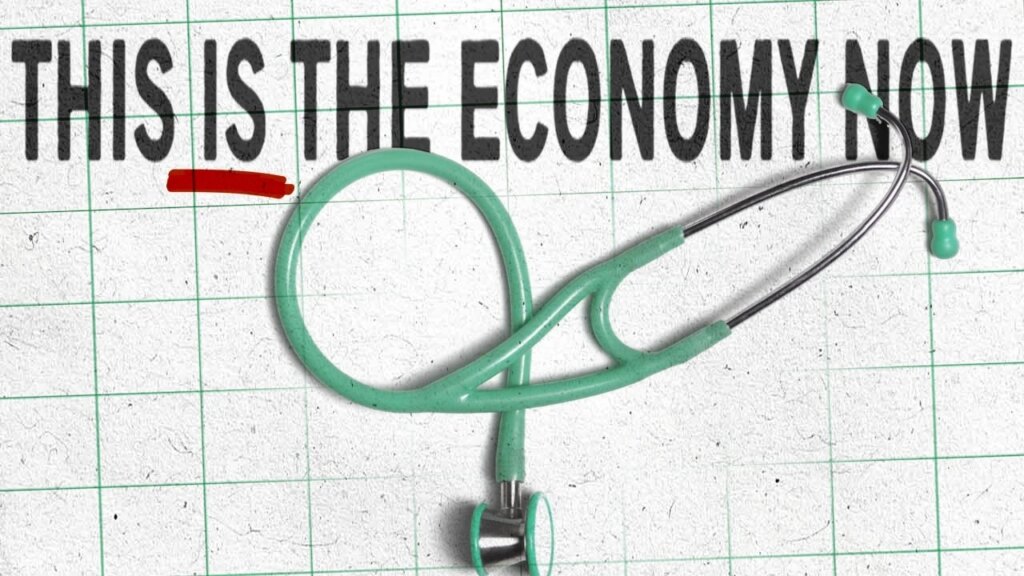
Healthcare is no longer just a sector it’s becoming a dominant force in the economy. Projections suggest it could account for over 20% of GDP within the next decade. That’s not just hospitals and doctors.
It includes:
• Insurance companies
• Pharmaceutical firms
• Administrative systems
• Billing infrastructure
• Compliance and regulatory layers
In fact, a surprisingly small percentage of that workforce is actually delivering direct patient care. The rest? Managing the system itself.
The Incentive Problem No One Wants to Fix
The deeper issue isn’t just cost, it’s incentives. Every major player in the system benefits from things staying exactly the way they are. Doctors earn high salaries, often justified by massive student debt and limited supply. Hospitals expand through mergers, reducing competition and increasing pricing power. Insurance companies profit by controlling access approving, delaying, or denying care. Pharmaceutical companies generate a disproportionate share of global revenue from U.S. patients. Even the structure of Medicare reinforces some of these distortions, often paying more for specialized procedures than for primary care. The result is a system where efficiency isn’t rewarded but complexity is.
The Hidden Driver: An Aging Population
Now layer in demographics. The U.S. is aging rapidly, with millions of Baby Boomers moving into their highest-cost healthcare years. This is where the question becomes unavoidable.
Older populations require more care:
• Chronic disease management
• Specialist visits
• Expensive treatments
• Long-term care
And a large portion of that spending is funded through programs like Medicare. In other words, a growing share of economic activity is tied directly to sustaining longevity.
Monopolies in Plain Sight
One of the least discussed drivers of rising costs is consolidation. Across the country, healthcare systems have quietly merged, expanded, and acquired smaller practices. The result? Regional monopolies. In many areas, patients don’t really have a choice. They go where the system tells them to go. Insurance companies are often forced into all-or-nothing contracts with large hospital groups, which drives prices even higher. And because pricing is opaque, patients rarely know what they’re paying until after the fact.
The Administrative Machine
The U.S. spends more per person on healthcare administration than any country in the world. Not treatment. Administration. Doctors spend hours on paperwork. Hospitals employ entire departments just to manage billing. Insurance approvals create delays that can stretch for weeks. This isn’t accidental. It’s a byproduct of a system designed around complexity rather than simplicity. And it employs millions of people. Which makes reform even harder.
Why Reform Feels Impossible
On paper, the solutions seem straightforward:
• Increase transparency
• Break up monopolies
• Align incentives with outcomes
• Reduce administrative overhead
But in practice, every one of those changes disrupts someone’s revenue stream. And healthcare is the most heavily lobbied industry in the country, with hundreds of millions spent annually to maintain the status quo. Even regulators often lack the technical expertise to fully oversee such a complex system.
A Global Comparison That Raises Questions
Countries like Australia offer a glimpse of what a different model might look like blending public and private systems while maintaining better outcomes at lower cost. But transitioning to something similar in the U.S. would come with trade-offs. Millions of jobs tied to the current system could disappear. Economic output tied to healthcare spending could shrink. In other words, fixing healthcare might actually reduce GDP in the short term.
The Bigger Economic Question
This brings us back to the original question. How much of the economy is tied to keeping people alive? And more importantly at what cost? Healthcare spending is not just about health anymore.
It’s about:
• Employment
• Corporate profits
• Government budgets
• Economic growth itself
That makes it uniquely difficult to change.
The Bottom Line
The U.S. healthcare system isn’t just expensive it’s structurally designed to be expensive. And as the population ages, that cost is only going to grow. A larger share of the economy will continue to be directed toward extending life, managing disease, and navigating a system built on complexity. The real challenge isn’t recognizing the problem. It’s deciding whether we’re willing to fundamentally change a system that so much of the economy now depends on.
All writings are for educational and entertainment purposes only and does not provide investment or financial advice of any kind.