Stop Working for Money You Will Never Spend
For so many people, retirement planning becomes a never-ending chase for a bigger number. A little more in the 401(k). A little more in the brokerage account. One more bonus. One more good market year. One more year of work. On paper, that sounds responsible. In reality, it can become one of the most expensive mistakes people make, because the cost is not always measured in dollars. Sometimes it is measured in missed trips, delayed dreams, and time that never comes back.
The truth is that many people are not working because they do not have enough. They are working because they have never built a real plan that shows them what “enough” actually looks like. Without that clarity, it is easy to keep moving the goalposts. What once felt like the finish line becomes the new starting point. A million dollars becomes two. Two becomes three. A paid-off home is no longer enough because now the portfolio must be bigger. The mindset quietly shifts from preparing for retirement to postponing it.
That is why one of the most dangerous phrases in retirement planning is, “Just one more year.” It sounds harmless. It sounds prudent. But in many cases, it is a way of avoiding the deeper work of deciding what retirement is supposed to be. One more year often turns into another year after that, then another. The issue is rarely just money. More often, it is uncertainty. People do not know how much they can safely spend, what their income will look like, how taxes will affect them, or whether their investments are structured to support the life they want. So instead of answering those questions, they keep working.
What makes this even more striking is that, for many households, the math is not the real problem. The real problem is mindset. People who have saved diligently over the course of their careers often assume retirement means clinging tightly to every dollar. They have spent decades learning how to accumulate wealth, control expenses, and delay gratification. Those habits helped them build financial security, but the same habits can make it surprisingly hard to enjoy the money once retirement arrives.
In fact, many retirees will likely end retirement with as much money as they started with, or even more. That sounds counterintuitive, but it reflects how conservative many spending patterns are and how long-term portfolios can continue to grow. Under common planning assumptions, a portfolio that is managed responsibly and withdrawn from sustainably may still appreciate over time. A retiree who starts with a sizable portfolio may discover that the fear of running out of money was much greater than the actual likelihood of it. The greater danger was not financial ruin. It was never giving themselves permission to use what they spent a lifetime building.
This is where retirement planning has to move beyond simple accumulation. The question is not just, “How much do I have?” The better question is, “What is this money meant to do for me?” Wealth is not a scoreboard. It is a tool. Its purpose is to support your life, your priorities, your security, and your freedom. If it is only being protected and never meaningfully used, then the plan is incomplete.
A strong retirement strategy also recognizes that spending is not flat throughout retirement. It tends to follow what many planners call a retirement spending smile. In the early years, spending is often higher. These are the go-go years, when health is better, energy is higher, and people are more likely to travel, socialize, pursue hobbies, or help family members. Later comes a slower period, when spending often declines because daily life becomes more settled and activity levels fall. Then, in the later years, expenses can rise again, often because of healthcare and support needs.
That pattern matters because it changes how retirees should think about spending. Many people assume they need a steady, unchanging income for the rest of their lives, but real life is not that simple. Retirement is dynamic. It shifts. The early years may be the most valuable for creating memories and enjoying the freedom that work once limited. Waiting too long to embrace that phase can mean losing the ability to do the very things retirement was supposed to make possible.
This is why time deserves a bigger place in the conversation. Money matters, of course. No one should dismiss the importance of financial security. But money is renewable in ways that time is not. Markets can recover. Spending can be adjusted. Work can sometimes be extended. Time does not operate that way. Health changes. Energy changes. Family dynamics change. Opportunities disappear. The vacation you keep putting off, the move you keep delaying, the grandchildren you mean to visit more often, the passions you swear you will pursue next year, those do not wait forever.
Too often, retirees are taught to fear running out of money above all else. That fear is understandable, but it can crowd out a more important question: what happens if you do not use your healthy years well? What happens if you preserve your balance sheet perfectly, but sacrifice the best window of your life to actually enjoy it? That is a different kind of loss, and for many people, it is the one they regret most.
The answer is not reckless spending. It is thoughtful planning. A comprehensive retirement plan should do far more than estimate a target number. It should map out the life you want and connect your resources to that vision. That means understanding your income sources, whether from Social Security, pensions, retirement accounts, or other investments. It means building an investment strategy designed for both stability and growth. It means developing a tax plan so withdrawals are made efficiently. It means evaluating healthcare needs, insurance coverage, and estate planning so that your future is protected from multiple angles.
When you have that kind of plan, the conversation changes. Retirement stops being a vague hope or a scary leap. It becomes a well-supported transition. You gain clarity not just on what you can save, but on what you can spend. That clarity is powerful. It gives people permission to live more fully. It reframes spending not as failure, but as the intended reward of years of discipline.
That shift can be emotionally difficult. Many people identify as savers. They take pride in being careful, responsible, and disciplined. Those qualities are admirable. But retirement asks for a new skill: learning how to spend wisely and confidently. It asks you to trust the plan. It asks you to see money as something that should serve your life, not dominate it.
At the end of the day, the goal is not to die with the highest possible account balance. The goal is to make sure your money helps you live the life you actually want. That includes protecting yourself, yes, but it also includes using your time in meaningful ways while you still can. A good plan helps you find that balance. It helps ensure you are not spending carelessly, but it also keeps you from wasting years working for money you may never truly need to spend.
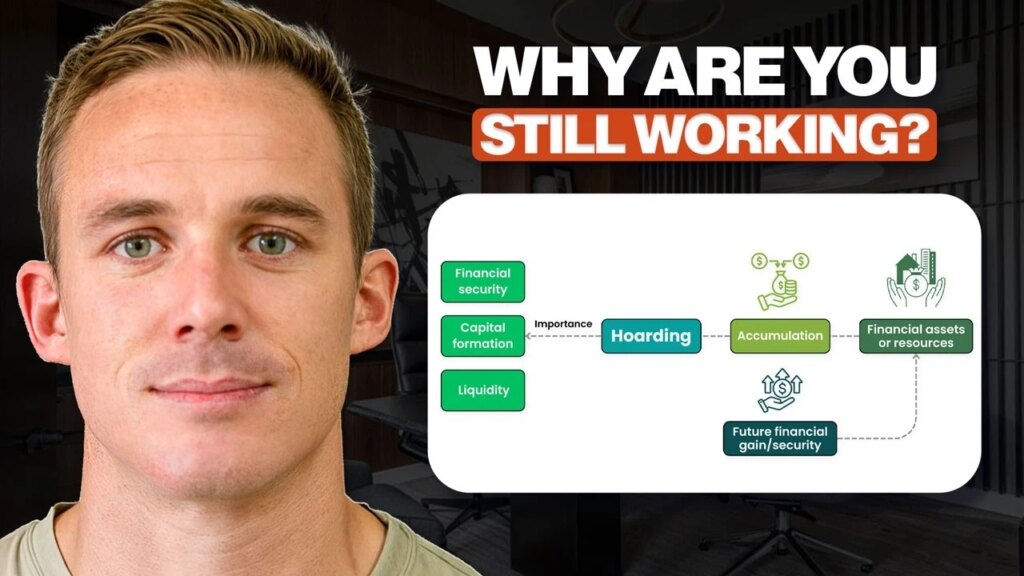
If there is one lesson that stands above the rest, it is this: most people are far more afraid of running out of money than running out of time. But time is the one asset you can never replenish. Once you begin to understand that, retirement planning becomes less about hoarding and more about aligning your resources with your values. That is when money starts to do what it was always supposed to do, support a life well lived.
You should always consult a financial, tax, or legal professional familiar about your unique circumstances before making any financial decisions. This material is intended for educational purposes only. Nothing in this material constitutes a solicitation for the sale or purchase of any securities. Any mentioned rates of return are historical or hypothetical in nature and are not a guarantee of future returns.
Past performance does not guarantee future performance. Future returns may be lower or higher. Investments involve risk. Investment values will fluctuate with market conditions, and security positions, when sold, may be worth less or more than their original cost.