The Washington Trading Game That Rigged Public Trust
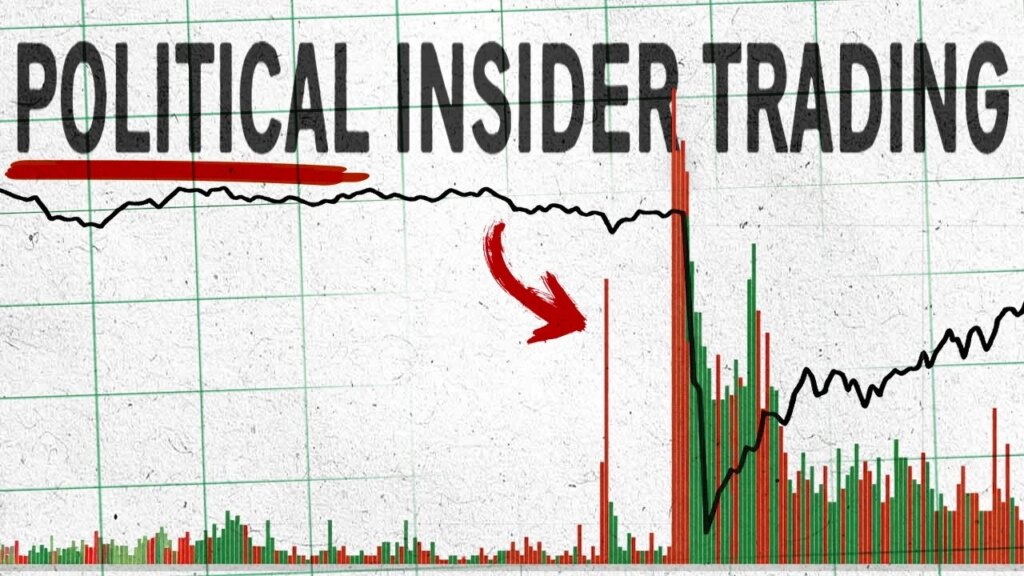
There is something deeply corrosive about the idea that the people helping shape markets may also be profiting from them at the exact moments ordinary investors are left in the dark. That is why the issue of insider trading by government officials continues to strike such a nerve. It is not just about whether someone made a well-timed trade. It is about whether access, influence, and power have created a financial system where the rules are different for the people at the top.
The outrage is not hard to understand. When major trades appear just minutes before a market-moving announcement, the public is left to ask the same question every time: was this luck, or was it knowledge the rest of the country did not have? Even when the answer is difficult to prove, the pattern itself damages trust. Markets are supposed to reward risk, discipline, and information that is publicly available. When political insiders seem to outperform not only average investors but even top professional money managers, it becomes harder to believe the game is fair.
That is what makes this issue bigger than a headline about a suspicious trade. It speaks to a much broader problem in Washington, where stock trading by elected officials and powerful insiders has become normalized enough that many people almost expect it. Trades worth millions can happen with astonishing timing. Public disclosures exist, but they are often difficult to parse, delayed, and buried in a way that makes meaningful accountability almost impossible for the average citizen. In theory, transparency is supposed to protect the public. In practice, it often feels more like paperwork than real oversight.
The deeper problem is not just the profit itself. It is the incentive structure it creates. If public officials can personally benefit from decisions related to interest rates, stimulus, trade policy, defense spending, or regulation, then the public has every reason to worry that policy is no longer being made solely on behalf of the country. Even the appearance of that conflict is dangerous. Once people begin to believe that leaders may be steering decisions through the lens of their own portfolios, trust in both government and markets starts to fracture.
That erosion of trust has real consequences. Financial markets depend on confidence. Investors need to believe that prices reflect legitimate forces, not hidden advantages enjoyed by a political elite. Citizens need to believe that laws and announcements are intended to serve the public, not enrich insiders. When that confidence weakens, cynicism grows. People stop seeing the market as a place where discipline and long-term planning are rewarded. Instead, they see a system tilted toward people with access, power, and advance notice.
What makes the problem even harder to contain is that the current rules appear too narrow and too easy to work around. The framework that governs congressional trading has never fully resolved the underlying conflict. Even where disclosure is required, delayed reporting and weak enforcement blunt the law’s impact. And the gaps matter. If some officials are covered while others are not, the public is left with the impression that the rules were written to preserve the appearance of reform without addressing the real channels of abuse. That kind of half-measure only deepens suspicion.
There is also a modern twist to all of this. Financial markets no longer move only through stocks and bonds. Cryptocurrency has created an additional layer of opacity and speed that makes questionable activity even harder to track. In markets that already struggle with transparency, digital assets can offer another route for people seeking to profit quietly from sensitive information. That possibility does not just raise ethical questions. It raises practical ones about whether enforcement has any hope of keeping pace with how quickly money can move.
The timing of announcements also matters more than most people realize. Markets are influenced not only by what government says, but when it says it. Positive developments released when trading attention is high can create one effect. Negative developments released late or buried at the edge of the news cycle can create another. If officials understand how headlines shape sentiment, then the boundary between governing and market management becomes thinner. That is one more reason the public grows skeptical. It begins to feel as if the flow of information itself is being choreographed in ways that benefit insiders first.
And this is where the issue stops being just a moral problem and becomes an economic one. When investors believe markets are distorted by politics, that distortion can ripple outward. It can affect how risk is priced, how capital is allocated, and how people respond to economic uncertainty. Over time, those distortions can feed volatility, weaken confidence in institutions, and contribute to a higher risk premium across the financial system. That means the cost of this behavior is not limited to a handful of well-connected traders getting rich. It can spill into borrowing costs, inflation expectations, and broader financial instability.
What makes the issue especially frustrating is that the pattern feels systemic, not accidental. The concern is not that one or two bad actors slipped through the cracks. It is that the structure allows too much room for abuse and too little fear of consequences. If punishment is weak, transparency is partial, and public outrage fades quickly, then there is little deterrent. The incentives remain in place. The opportunities remain in place. And the public is left watching a cycle that seems to repeat without meaningful reform.
At its core, this is a fairness issue. Ordinary Americans are told to invest carefully, diversify, think long term, and accept that markets come with risk. They do not get private briefings. They do not help shape legislation. They do not sit near major policy decisions that can move billions of dollars in minutes. When the people with that access are also free to participate in the market in ways that appear personally advantageous, it undermines the basic idea that everyone is playing by the same rules.
That is why outrage over political insider trading never really disappears. It is not just anger about money. It is anger about power. It is anger about the sense that influence can be converted into profit while accountability remains weak and reform remains cosmetic. Most of all, it is anger about what that says to the public: that the system may be working exactly as designed, just not for them.
If Washington wants to restore trust, it cannot treat this as a public relations problem. It has to treat it as a structural one. Real reform would mean stronger transparency, faster and clearer disclosures, broader coverage across government, and rules that eliminate the temptation entirely rather than merely documenting it after the fact. Because once people start to believe that markets are being influenced by those who govern them and traded by those who already know what is coming, the damage goes far beyond a portfolio. It strikes at faith in the integrity of the entire system.
All writings are for educational and entertainment purposes only and does not provide investment or financial advice of any kind.