Are Index Funds in a Bubble? The Hidden Risks No One Talks About
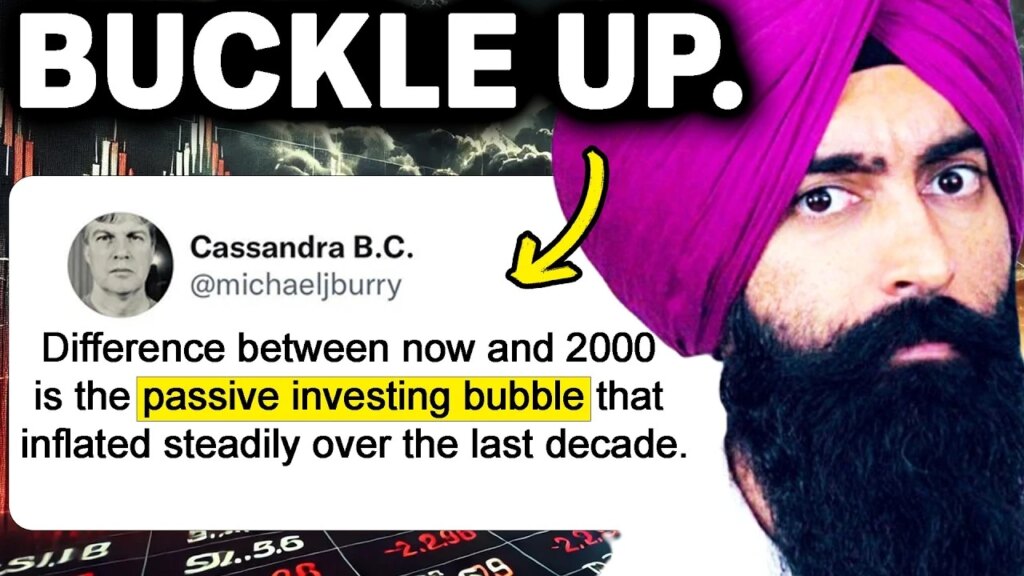
Index funds especially S&P 500 funds have become the default investment choice for millions of Americans. They’re simple, low cost, and historically effective. But the massive inflow of money into these funds has raised legitimate concerns about whether investors are unknowingly inflating a bubble. Even well-known figures like Michael Burry have warned that the structure of passive investing may eventually create systemic risks.
A major issue is concentration. Today, roughly 33% of the entire S&P 500 is represented by just seven companies Apple, Microsoft, Amazon, Alphabet, Nvidia, Meta, and Tesla. Nvidia alone accounts for about 7% of the index. When so much weight sits in so few companies, index fund investors are far more exposed to a handful of stocks than they might realize. These concentrations create a feedback loop: stock prices rise, index funds buy more, and prices rise again regardless of whether earnings justify it.
Another concern is price insensitivity. Passive investors generally don’t evaluate whether a stock is cheap or expensive; they buy because the index tells them to. Today, the S&P 500 trades at a PE ratio around 29, far above the long-term historical average of 20. When investors ignore valuations long enough, bubbles tend to form. And it’s not just the big names that may be overvalued. Many index fund investors don’t know anything about the smaller companies in their portfolios businesses like Matchgroup or Mosaic may receive inflows simply because they’re in the index, not because they’re performing well.
Inexperienced investors add another layer of risk. History shows that many panic when markets fall. We saw this in 2022 with a 20% drop and again during the pandemic with a 30% plunge. Selling during downturns and buying during peaks is the fastest way to destroy long-term wealth. Yet the irony is that even poorly timed investing can still create wealth if people stay invested. The biggest danger isn’t volatility; it’s abandoning a strategy during volatility.
Investors also need to understand the mechanics of opportunity. Downturns are when wealth transfers from impatient sellers to disciplined buyers. The mindset of “Always Be Buying” (ABB) helps investors avoid emotional mistakes and recognize undervalued opportunities. The idea behind POOP Panic → Overselling → Opportunity → Profit is simple but powerful: market fear often precedes market gains.
So, is there an index fund bubble? The concerns are real: heavy concentration, price-insensitive buying, asset ignorance, and a wave of inexperienced investors all create potential instability. But even in a fragile system, opportunities exist for disciplined, informed investors. Staying long-term focused, maintaining consistent investment habits, and viewing volatility as opportunity, not danger, remains the proven path to building wealth.
This conversation also highlights the broader financial crisis many Americans are facing. Most live paycheck to paycheck, lack savings, and carry significant debt. Financial education has never been more essential. Even in economic chaos, there are chances to improve financial outcomes often by avoiding common money traps and choosing steady, proven strategies over emotional reactions.
If you want this article turned into a carousel, social caption, reel script, or YouTube description, I can create those instantly.
Jaspreet Singh is not a licensed financial advisor. He is a licensed attorney, but he is not providing you with legal advice in this article. This article, the topics discussed, and ideas presented are Jaspreet’s opinions and presented for entertainment purposes only. The information presented should not be construed as financial or legal advice. Always do your own due diligence