Audi and Adidas Launch Official F1 Collection Ahead of 2026 Formula One Debut
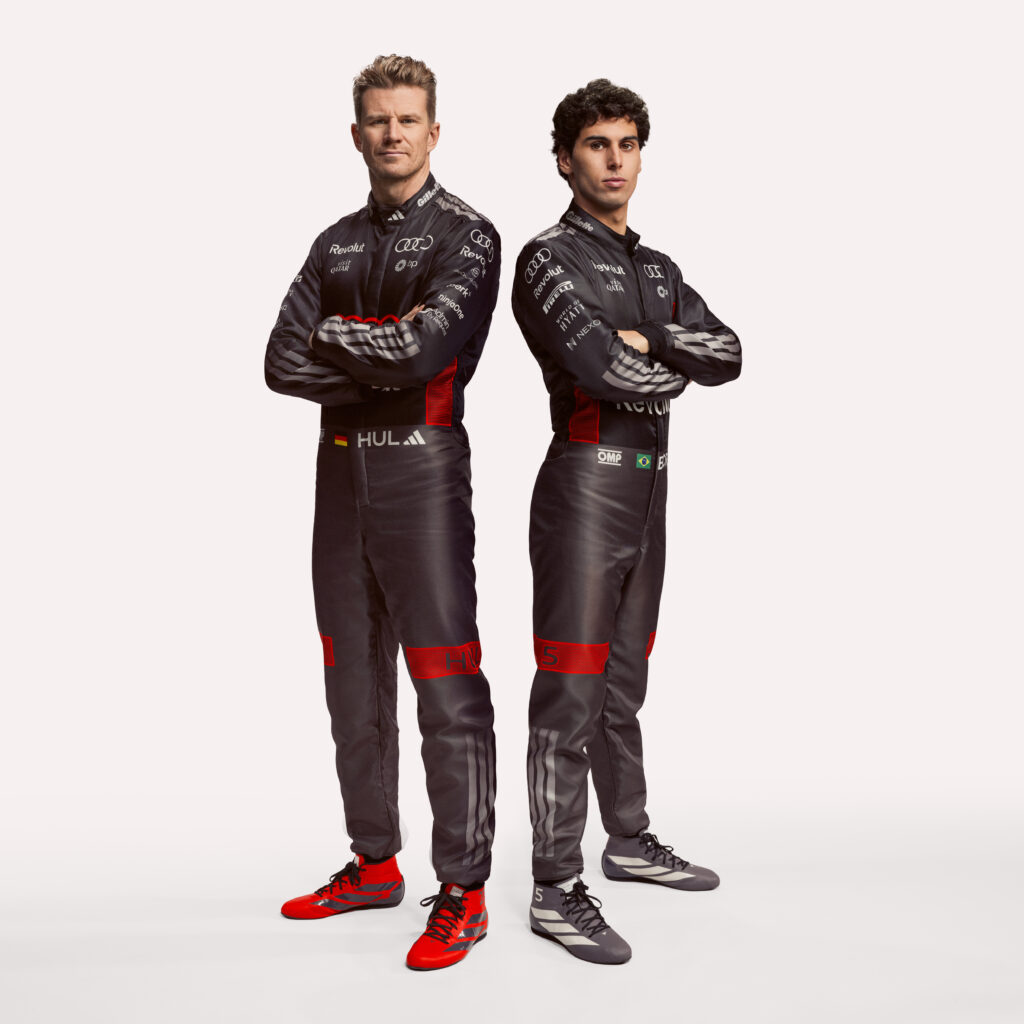
2026 Launch - Studio Photography: Race suits
I have always found the build-up to a new Formula 1 factory team more revealing than the debut itself. Not because the first race is unimportant, but because the months leading up to it tell you what the brand thinks Formula 1 is really for. Some manufacturers treat F1 like a billboard with downforce. Others treat it like a long game: engineering, identity, community, and global credibility, all working together.
Audi’s move this week sits firmly in that second camp.
Audi will enter Formula 1 with its own factory team starting in March 2026, and on February 19, it launched the inaugural adidas x Audi Revolut F1 Team collection. This is not a token run of caps and a couple of shirts. The opening drop includes more than 160 different items across apparel, footwear, and accessories, with both official teamwear and lifestyle-oriented fanwear.
If you are a fan, that matters. If you are not yet a fan, it still matters because it tells you how Audi plans to introduce itself to the world’s biggest motorsport stage.
Why does this matter right now?
Audi’s timing is the story.
The team is about to debut in the pinnacle of motorsport, and this merchandise launch arrives just in time for that moment. The message is straightforward: if Audi is going to build a global community around its Formula 1 effort, it cannot wait until the first podium, or the first controversy, or the first heroic comeback in the rain. It needs people emotionally invested from day one.
That is why the collection is structured the way it is. It gives fans a choice between official teamwear and a lifestyle fanwear collection. Those are different audiences with different needs. Teamwear is for the part of the community that wants to feel close to the inner workings of an F1 operation, where everyone has a role, a uniform, and a purpose. Fanwear is for the broader group that wants the identity, but in a form that fits normal life.
Audi also makes its ambition clear in plain language: inspire people around the world, win new fans for the brand, and build a global community beyond motorsport. That is not a small goal. And you do not reach it with a single hoodie.
So Audi and adidas are treating this like a season-long content strategy, not a one-off launch. This first release is positioned as the first of many drops throughout the year, including limited-edition special drops that expand the collection and lean into style and culture as the team’s identity evolves.
From a practical standpoint, it is also simply well timed. When a new team arrives, there is a brief window where curiosity is high, loyalty is still forming, and people want to take a side. Audi is meeting that moment with a product that is ready to buy now, not “coming soon.”
How does it compare to rivals or alternatives?
Most Formula 1 merchandise falls into predictable patterns: loud branding, replica looks, and products that feel like they are meant for a race weekend crowd. That is not inherently bad. Plenty of fans want that. But it can also be limiting, because it assumes the only place your identity matters is a trackside grandstand.
Audi and adidas are taking a wider view. They are offering official teamwear with functional intent, and a fanwear range designed explicitly for everyday wear, not just race weekends. That is a small detail with big implications. It suggests the team wants to exist in the spaces fans actually live in: airports, cafés, offices, school pick-up lines, and weekend errands, not just a circuit once a year.
The fanwear lineup itself is built like a wardrobe, not a souvenir rack. It includes T-shirts, hoodies, jackets, caps, shoes, and more. It is broken into distinct sub-ranges that make sense for different styles and levels of fandom. The DNA Range is the foundation, focusing on essential pieces built around core styles and the team’s primary colors to clearly express the team identity. The Elevated Fanwear Range takes a different approach: clean design, comfort, subtle branding, and a modern everyday look.
That is smart. Some fans want the logo. Others want the signal without the shout.
There is also a driver element, which is important in Formula 1 because drivers are often the entry point for casual audiences. This collection includes exclusive merchandise tied to the team’s two drivers, Nico Hülkenberg and Gabriel Bortoleto. That gives fans an easy way to connect with the human side of a project that otherwise risks feeling corporate and remote.
On the teamwear side, Audi and adidas are emphasizing that the clothing is designed around roles. Drivers get performance-driven athletic wear. Engineers get garments designed for long days at the racetrack, with an ergonomic focus. Mechanics get durable, function-optimized pieces built for demanding work.
Again, this is more thoughtful than most launches. It turns “teamwear” into something closer to the real team, rather than just a branded outfit.
Even the design story is deliberate. The subtle gray and chalk tones are derived from the titanium-colored paintwork of the Audi R26. Red accents provide continuity with Audi’s broader visual identity in Formula 1. If you know what to look for, you will understand what you are seeing. If you do not, it still reads as a cohesive design language.
Who is this for, and who should skip it?
This collection is for three types of people.
First, the committed Formula 1 fan who wants to support a team early and be part of the story from the beginning. Audi is entering in March. The merchandise is available now. That means the first wave of supporters can show up already dressed like they belong to the team’s orbit.
Second, it is for the casual fan who likes the idea of Formula 1 more than the logistics of following every practice session. The lifestyle fanwear range is designed for everyday use. That matters if you want something that looks good without feeling like you are wearing a costume.
Third, it is for the brand-curious person who has never cared about Formula 1 but does care about design, sport culture, and what Audi is trying to become next. Audi is explicitly aiming to build a global community beyond motorsport. Merchandise is one of the simplest bridges between spectatorship and participation. You do not need to understand tire strategy to wear a well-designed jacket.
Who should skip it?
If you are the type of collector who only wants scarce, hard-to-get items, the core collection may feel too accessible. Audi does promise limited-edition special drops throughout the season, but the central strategy here is breadth and reach, not exclusivity.
If you want immediate performance validation before you buy in, you may also want to wait. This launch is about identity and enthusiasm ahead of on-track results. That is part of what makes it interesting, but it is not for everyone.
What is the long-term significance?
Audi’s Formula 1 entry is not just a racing program. It is an organizational commitment with real infrastructure behind it.
The project is based across three locations. Audi Formula Racing GmbH, founded specifically for the project, is developing the power unit in Neuburg an der Donau in Germany. Hinwil in Switzerland is home to race car development, plus the planning and operation of races. And the Audi Motorsport Technology Centre UK in Bicester provides a foothold in the heart of Motorsport Valley, giving access to top-level talent and strategic partners.
That matters because it signals permanence. This is not a short-term sponsorship or a casual experiment. Audi is building a long-term capability set.
The wider industry context supports that interpretation. Formula 1 is regarded as the pinnacle of motorsport and one of the most important sports platforms in the world because of its global reach. And the timing of Audi’s entry is shaped by regulation. The new FIA regulations for 2026 include sustainable fuels and increase the electric share of the hybrid drive unit to almost 50 percent.
That is a clear technological direction, and Audi is aligning itself with it.
Now, step back and look at the merchandise launch again. It is not just about selling clothes. It is about building a visible, portable identity around a factory program that will be judged by results, engineering credibility, and cultural relevance all at once.
A collection with more than 160 items signals scale. Multiple drops throughout the season signal a sustained plan. Teamwear tailored for specific roles signals authenticity. Lifestyle fanwear designed for everyday wear signals ambition beyond the race weekend.
And if Audi succeeds, this merchandise becomes an early marker of belonging. People will look back and say, “That’s when it started.” If Audi struggles, it still serves a purpose: it keeps the community engaged while the team builds.
Either way, it is a reminder of what modern Formula 1 has become. It is not just a competition. It is a global platform where engineering meets culture, and where fans want more ways to participate than simply watching from the sofa.
Audi seems to understand that.
And for a brand stepping onto the grid for the first time with its own factory team, understanding the moment is half the battle.