Driving the Polestar 4 on Ice: How This Electric SUV Handles Winter
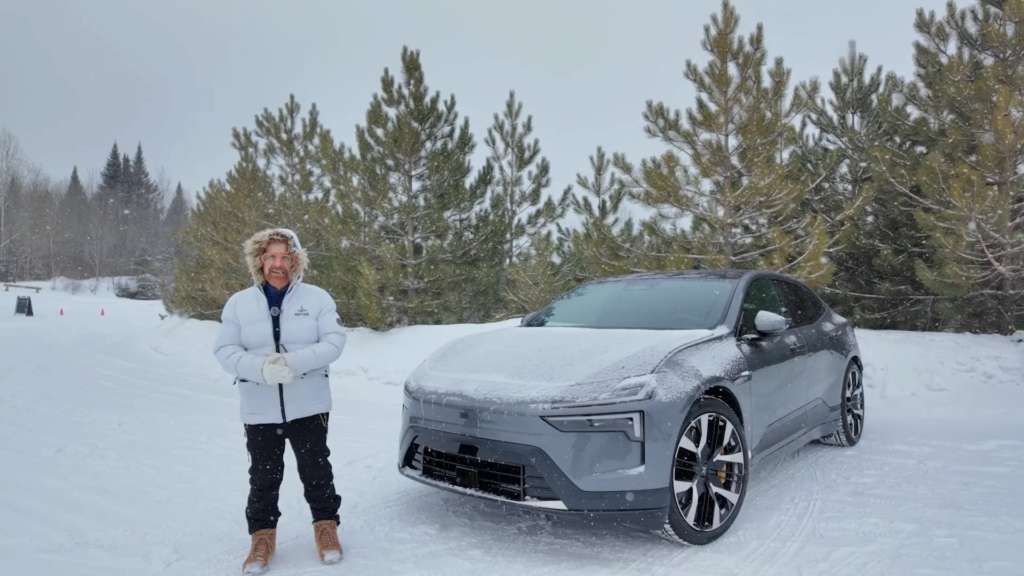
Electric vehicles are often praised for instant torque and smooth acceleration, but winter driving introduces a different test entirely. Ice, snow, and freezing temperatures can expose weaknesses in traction, battery performance, and vehicle stability. The Polestar 4 electric SUV was recently put through those conditions on a frozen racetrack to see how well it handles real winter driving.
Despite weighing more than 5,000 pounds, the Polestar 4 performs surprisingly well on ice. Much of that stability comes from the vehicle’s design. The large battery pack sits low in the chassis, lowering the center of gravity and distributing weight evenly across the vehicle. That configuration increases tire contact with the road surface and helps keep the SUV balanced when traction is limited.
Electric vehicles also deliver power differently than traditional gasoline cars. The Polestar 4’s dual-motor all-wheel-drive system reacts instantly when a wheel begins to slip. Instead of waiting for mechanical systems to catch up, the vehicle’s software rapidly adjusts torque between wheels to maintain traction and stability.
This quick response is particularly noticeable when cornering on ice. The vehicle allows controlled sliding without feeling unstable or unpredictable. Drivers can even initiate gentle drifts while the system quietly manages power output to prevent the vehicle from spinning out. On extremely low-friction surfaces like ice, that balance between driver control and electronic assistance becomes critical.
The SUV’s weight actually becomes an advantage in certain situations. A heavier vehicle presses the tires more firmly against the surface, improving grip compared to lighter vehicles that may feel skittish on slick roads. Combined with the battery’s low placement, the Polestar 4 feels planted and stable through turns, even on narrow icy tracks with steep banking.
Stopping on ice still requires caution. Like any vehicle, once momentum builds on a slippery surface, braking distances increase dramatically. However, the Polestar’s stability systems help manage power and traction quickly enough to keep the vehicle composed even when conditions are challenging.
Cold weather can also affect electric vehicle range, typically reducing it by 10% to 30%. The Polestar 4 addresses this through careful battery temperature management. Its thermal system keeps the battery within an optimal operating range, helping maintain consistent performance even when temperatures drop below freezing.
The dual-motor version of the Polestar 4 produces up to 544 horsepower, but on ice that power is carefully controlled. Rather than delivering aggressive acceleration that could overwhelm traction, the system prioritizes smooth launches and balanced corner exits. The result is strong performance that still feels predictable and safe.
Beyond performance, the Polestar 4 is designed with comfort features that matter in cold climates. Heated seats, a heated steering wheel, and a spacious cabin make winter driving more manageable. Despite its coupe-style SUV design, the vehicle offers generous rear legroom and a flat floor thanks to the battery pack mounted beneath the cabin.
The overall driving experience reflects the brand’s Scandinavian design philosophy. Winter driving in Nordic countries often involves icy roads and unpredictable conditions, so vehicles are engineered to behave calmly and predictably. Instead of overwhelming the driver with sudden corrections or aggressive electronic interventions, the Polestar 4’s systems work quietly in the background to maintain control.
Testing the SUV on a frozen racetrack demonstrates how well those systems translate into real-world driving. While most drivers will never intentionally drift an electric SUV across a sheet of ice, the ability to remain stable under extreme conditions suggests the vehicle is well suited for everyday winter driving.
For drivers living in colder regions, winter performance can be just as important as range or acceleration. The Polestar 4 shows that with the right combination of battery placement, software-controlled all-wheel drive, and careful engineering, electric vehicles can handle icy conditions with confidence.