Ineos Grenadier: The Anti-SUV America Didn’t Expect
Most new SUVs are trying to charm you. Soft edges, hidden hardware, “premium” lighting, and a screen the size of a family pizza. The Ineos Grenadier is doing something else entirely. It’s showing up like a factory tool that accidentally got license plates. And right now, that feels oddly relevant because the market is drowning in vehicles that look different but drive the same, and most of them are terrified you’ll notice how much is sealed, plastic-covered, and software-dependent.
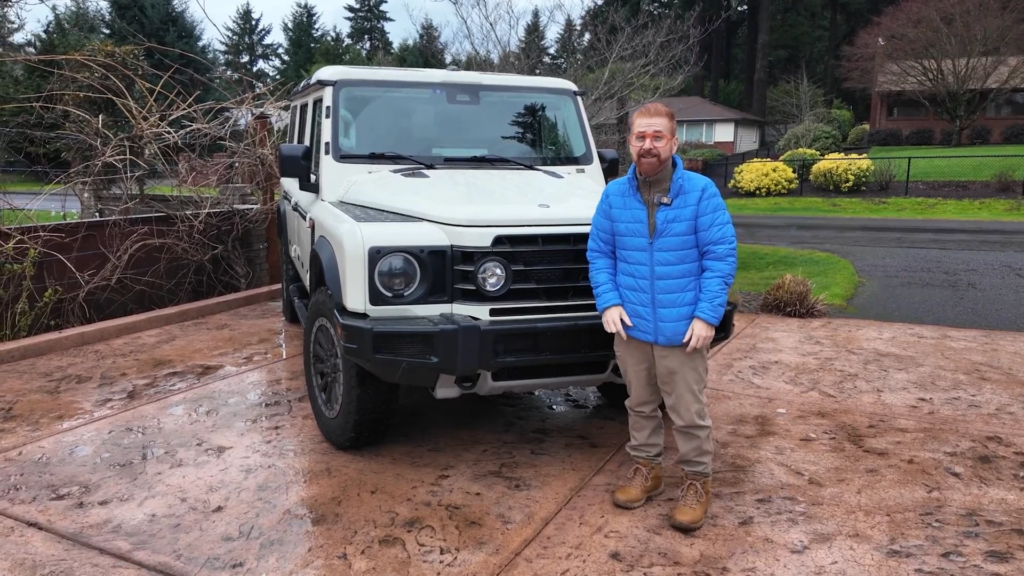
The Grenadier’s entire personality is the opposite. It doesn’t try to hide what it is. It puts the engineering right in front of you. Hinges, latches, visible fasteners, chunky handles, panels that look like they came off industrial equipment rather than a lifestyle mood board. It’s a vehicle that wants you to understand it, not just finance it. That’s a rare stance in 2026 America, where even your heated seats want a monthly subscription and half the cars are basically rolling app stores.
On camera, the first line is easy: “This might be the weirdest and most wonderful car you can buy in America today.” The more interesting part is why it lands. The Grenadier is weird on purpose. It’s the stubborn counterargument to the modern SUV: less gloss, more hardware. Less theatre, more utility. And it’s wonderful because it’s honest about its trade-offs, which is the opposite of how most vehicles are marketed.
Why does this matter right now?
Because we’re in an era where vehicles are increasingly designed to be sealed, smoothed over, and digitally mediated. Modern SUVs often hide their working bits behind plastic covers and design language. Even when the hardware is solid, the presentation is “trust us, don’t touch.” The Grenadier flips that. It makes a point of being legible.
That matters for two reasons.
First, there’s a growing fatigue with digital everything. Touchscreen controls are fine when you’re parked and caffeinated. They’re less charming when you’re wearing gloves, it’s cold, or the cabin is muddy, and you’re trying to do one simple thing without turning your dashboard into a quiz show. The Grenadier’s cabin feels like it was designed by people who’ve actually used a vehicle outside. Overhead aircraft-style switches. Big physical buttons. Controls spaced so you can operate them without precision finger ballet. Everything is clearly labeled. Everything is doing one job.
Second, the Grenadier is a small rebellion against the idea that convenience is the only measure of progress. Progress, in most modern vehicles, looks like hiding complexity. In the Grenadier, progress looks like making complexity serviceable. You can access things. You can see what you’re dealing with. It’s not trying to be clever. It’s trying to be useful, and it’s not ashamed of looking like a tool while doing it.
On the outside, the “overbuilt” feeling is the point. Heavy-duty latches. Exposed hinges. A sense of structure that reads more commercial than crossover. It’s designed by excess rather than efficiency, which is an odd thing to say as a compliment, but here it fits. Most owners will never need that kind of robustness. The Grenadier seems to respond: correct, and you’re welcome.
It also makes the ownership relationship feel different. Many SUVs feel like appliances you’re renting from the future. The Grenadier feels like a machine you could keep. Sit in the driver’s seat for thirty seconds, and the philosophy clicks. High seating position, clear sightlines, simple gauges. The cabin doesn’t beg for applause. It helps the driver make decisions. It feels mechanical and intentional in a world obsessed with updates and hidden menus.
How does it compare to rivals or alternatives?
If you’re cross-shopping honestly, the Grenadier lives in the same general orbit as the Jeep Wrangler, Ford Bronco, Land Rover Defender, and Toyota’s more off-road-credible offerings. They’re all different flavors of “I might actually leave pavement.”
The Wrangler is the icon. It’s the one everyone recognizes, and it has a deeply developed culture around it. The Bronco is the modern American counterpunch, more mainstream-friendly while still playing the rugged card. The Defender is the posh interpretation, with a lot of capability wrapped in a very modern, very premium interface. Toyota’s off-road-oriented models tend to trade some drama for a reputation of durability and long-haul sensibility.
The Grenadier’s difference is attitude and execution. It’s less lifestyle performance and more industrial straightforwardness. Where the Defender might impress your passengers, the Grenadier seems built to impress the part of you that hates fragile things. Where a Bronco or Wrangler can be a daily-driver compromise with a lot of personality, the Grenadier leans harder into the idea that you adapt to it.
That becomes obvious in normal life. Drive-thrus feel awkward. Parking lots feel tight. The turning circle reminds you this wasn’t shaped around suburban convenience. Yes, there are cupholders, but the vibe is that someone remembered them late in the process, like an apology.
So the rivals win on a day-to-day basis, especially if you’re honest about how much time you’ll spend in traffic, parking garages, and school drop-off lines. The Grenadier wins when you care about tangible hardware, clear usability under rough conditions, and the feeling that the vehicle wasn’t designed primarily to look good in a mall parking lot.
If your “adventure” is mostly a vibe with occasional gravel, you may be happier with something that pretends to be rugged while being easier to live with. If your definition of “good” includes access, serviceability, and honest utility, the Grenadier is one of the few new vehicles that feels aligned with that mindset.
Who is this for and who should skip it?
This is for the person who misses physical controls and doesn’t want their car to feel like a phone accessory. It’s for someone who looks at hidden plastic covers and sealed systems and thinks, “That’s going to be annoying later.” It’s for drivers who like machines that communicate what they are.
It’s also for the buyer who wants something unapologetically different. In a sea of SUVs that share the same interior architecture and the same design habits, the Grenadier stands almost alone because it has the courage to be weird. It’s a niche product, but it’s a deliberate niche.
You should skip it if you want plush luxury, whisper-quiet isolation, or the kind of tech experience that feels like a rolling smartphone. If your daily routine is tight parking, drive-thrus, and lots of city maneuvering, the Grenadier will make you work for it. If you want the vehicle to adapt to you in every situation, this is not that relationship.
The Grenadier is better understood as a statement of priorities. Utility over ease. Visibility over hidden complexity. Driver clarity over passenger theatre. That won’t fit everyone, and it shouldn’t. The whole point is that it doesn’t try to be everything.
What is the long-term significance?
The Grenadier is a signal, not just a vehicle. It’s a sign that the market has room for counter-programming.
Long term, the industry is moving toward more software-defined experiences, more sealed systems, and more “it just works” design philosophies that are great until they don’t. At the same time, buyers are getting more skeptical. They’re noticing that higher prices don’t always buy more durability, and that convenience sometimes means dependence. The Grenadier lands as a reminder that there’s another way to design a vehicle: make it legible, make it robust, and assume the owner might actually use it.
It also reflects a cultural swing. Outdoor culture, overlanding culture, and the broader “buy fewer, better things” impulse are not going away. Even if most people never go far off-road, the desire for capability and honesty is real. The Grenadier doesn’t fake that desire with plastic cladding and marketing copy. It leans into practical features like cleanability, access, and a cabin that seems designed for real conditions, not curated ones.
It’s also a quiet challenge to the idea that cars must keep getting more complicated to be “advanced.” Sometimes advancement is making the basics work better, more clearly, and for longer. In that sense, the Grenadier is almost old-fashioned, but in a way that feels future-proof. You don’t need to drive it to understand it. You sit in it, and you get it.
The funniest part is the closing question: “Would you daily drive it, or is that missing the point?” Because that’s the Grenadier’s trick. It makes you interrogate what you actually want from a vehicle. Convenience, polish, and digital comfort? Or something mechanical, deliberate, and a bit defiant?
In 2026, that’s not just a personality choice. It’s a philosophical choice. And the Grenadier is one of the few vehicles brave enough to make you pick.