Inside the New York Auto Show: The Best Cars Ever Built… at the Worst Possible Time
This Isn’t a Car Show Anymore. It’s a Reality Check
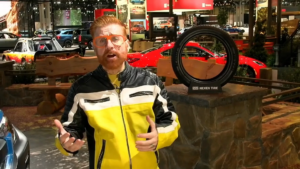
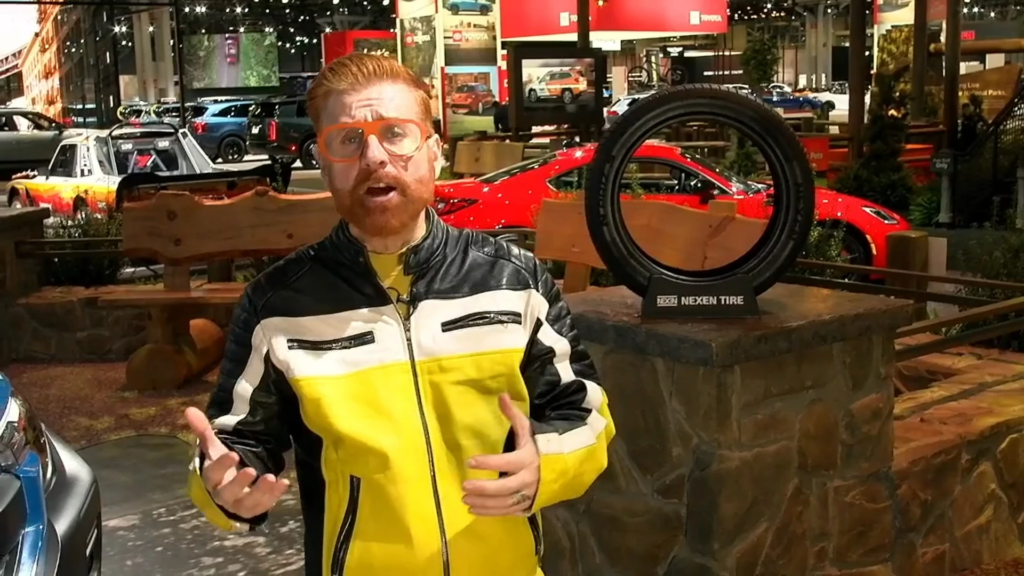
After 19 years of standing on the floor of the New York International Auto Show, hosting live television for Nexstar stations across the country, one thing is clear. This is no longer just a showcase of cars. It has become a reflection of an industry trying to find its footing in real time. The tone has shifted from celebration to recalibration, and this year, that shift feels more pronounced than ever.
The Best Cars Ever. At the Most Uncertain Time
What makes this moment so fascinating is the contrast. On one hand, automakers are producing some of the most advanced, capable, and well-engineered vehicles we’ve ever seen. On the other, the industry itself is navigating a period of genuine uncertainty. Profit margins are tightening, consumer confidence is uneven, and the traditional rules that governed automotive success for decades no longer apply in quite the same way.
No One Knows What Comes Next
There was a time when the direction of the industry felt predictable. Gasoline-powered vehicles improved steadily, then electrification arrived and promised a clear and decisive future. Today, neither path feels dominant. Internal combustion remains essential, electric vehicles continue to evolve, and hybrids have quietly emerged as the most practical solution for many consumers. The reality is that no single powertrain has taken control, and that lack of consensus is shaping nearly every decision being made across the show floor.
Hybrids Aren’t the Backup Plan. They’re the Strategy
One of the most telling trends this year is the resurgence of hybrids, not as a niche offering, but as a central strategy. The 2027 Subaru Forester Hybrid Wilderness is a perfect example of this shift. It delivers up to 25 percent better fuel economy than its non-hybrid counterpart while increasing total system output to 194 horsepower. More importantly, it does this without asking consumers to change their habits.
Subaru has taken what it already does well, symmetrical all-wheel drive, off-road capability, and practical design, and enhanced it with a hybrid system that feels purposeful rather than experimental. For many buyers, this represents the ideal balance. It’s not about choosing between old and new technology, but about blending both in a way that makes everyday life easier.
Electric Cars Are Brilliant. But Buyers Are Hesitating
Electric vehicles, meanwhile, continue to push forward with impressive technical achievements. The all-new 2027 Subaru Getaway is one of the most ambitious vehicles on display this year. With more than 300 miles of range, 420 horsepower, and seating for up to seven passengers, it represents a significant step forward for the brand.
On paper, the Getaway checks every box. Dual electric motors, a substantial battery pack, rapid acceleration, and access to an expanding charging network all position it as a serious contender. But consumers are still weighing the realities of EV ownership, from infrastructure to long-term costs, and those considerations continue to shape adoption.
Concept Cars Are Telling You What Automakers Won’t Say
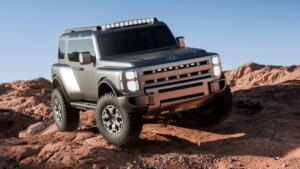
If there is a single vehicle that captures the uncertainty of the moment, it is the Hyundai Boulder Concept. Unveiled as a bold design study, it previews Hyundai’s future entry into body-on-frame trucks and SUVs, a segment deeply rooted in American automotive culture.
What stands out is what Hyundai chose not to say. There is no defined powertrain. That omission reflects a broader strategy of maintaining flexibility. Automakers are keeping options open, waiting to see where the market ultimately lands before committing fully.
The Real Innovation Isn’t Glamorous. But It Matters
Beyond passenger vehicles, the show also highlights how mobility itself is being rethought. Honda’s Fastport eQuad may not grab headlines, but its significance is substantial. Designed to operate between traditional delivery vans and e-bikes, it offers a solution tailored for dense urban environments.
With zero emissions, swappable battery packs, and real-time telematics, it addresses the logistical challenges of modern cities. In places like New York, where millions of packages move daily, this kind of innovation may prove more impactful than any headline vehicle.
Behind the Bright Lights, the Numbers Are Tight
The economic pressures facing the automotive industry are impossible to ignore. Profit margins are shrinking, tariffs continue to disrupt global supply chains, and some manufacturers are stepping back from certain markets altogether because the numbers simply no longer work.
At the same time, recalls are increasing for some brands, adding further strain. This is an industry under pressure, even as it presents its most polished face to the public.
Car Buyers Are Thinking Twice. And Waiting Longer
Consumers are feeling that pressure as well. High interest rates have fundamentally changed how people approach vehicle purchases, with monthly payments becoming the deciding factor. Add in fluctuating fuel prices and broader economic uncertainty, and many families are reconsidering when and how they buy.
This hesitation is reshaping demand in ways that automakers are still trying to fully understand.
The Auto Show Itself Is Changing
The show floor tells its own story. Some brands have reduced their presence, while others have opted out entirely, choosing digital reveals or private launches instead. The traditional auto show model is evolving, and not all manufacturers see it as essential in the same way they once did.
Even the Media Is Moving On
Within the media, there is a noticeable shift. Longtime industry veterans are stepping away, retiring early, or moving directly into roles with automakers. The lines between journalism, marketing, and product development are becoming increasingly blurred.
This is not just a changing industry. It is a changing ecosystem.
These Really Are the Best Cars We’ve Ever Made
And yet, despite all of this uncertainty, there is something undeniably positive happening. The vehicles themselves have never been better. Performance, safety, efficiency, and technology have reached extraordinary levels.
The Subaru Getaway delivers sports car-level performance. The Forester Hybrid Wilderness blends efficiency with capability. The Hyundai Boulder hints at a bold future, and Honda’s eQuad redefines mobility in cities. These are meaningful advancements, not incremental steps.
The Winners Will Be the Ones Who Stay Clear and Focused
In times like these, clarity becomes the most valuable asset. The automakers that are succeeding are not necessarily the ones betting everything on a single technology. They are the ones delivering strong products, communicating clearly, and meeting consumers where they are.
Progress matters. But execution matters more.
After 19 Years, This Is the Biggest Shift Yet
After nearly two decades covering this show, the change is undeniable. But so is the opportunity. The New York Auto Show is no longer just a stage for unveiling new vehicles. It is a reflection of an industry redefining itself in real time.
The future may be uncertain, but it is also wide open. And that, perhaps, makes this one of the most interesting moments the automotive industry has ever faced.