THE 2026 NISSAN QASHQAI e-POWER EXPLAINS WHY HYBRIDS ARE GETTING INTERESTING AGAIN
Why this caught my attention
There’s a growing disconnect in the car world right now.
A lot of people genuinely like how electric vehicles drive. Smooth, quiet, instant. What they don’t like is planning their lives around charging cables, apps, and public chargers that may or may not work when they get there. Traditional hybrids help, but many still feel like mechanical compromises rather than modern solutions.
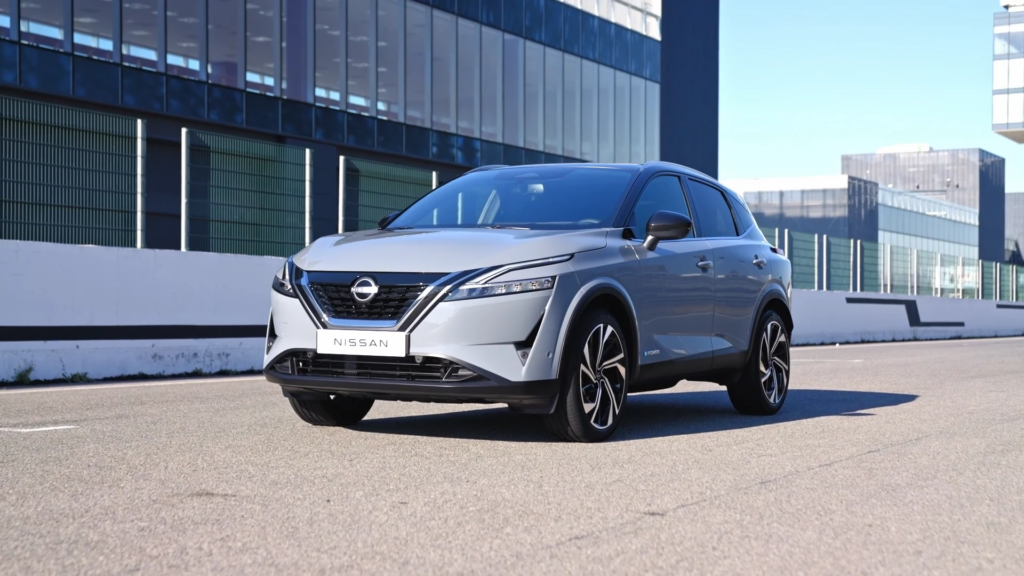
That’s why Nissan’s third-generation e-POWER system matters. Not because it shouts about the future, but because it quietly fixes a very current problem. The 2026 Nissan Qashqai e-POWER doesn’t ask you to rethink how you live. It simply makes everyday driving feel better.
Why does this matter right now?
Fuel prices remain unpredictable, charging infrastructure is inconsistent, and many buyers are stuck between curiosity and hesitation. They want the benefits of electric driving without the friction that still comes with full EV ownership.
The Qashqai e-POWER approaches this differently from most hybrids. The petrol engine never drives the wheels. It exists solely to generate electricity. The wheels are always powered by an electric motor. That single decision changes the entire driving experience.
Throttle response is immediate. There are no gear changes because there is no gearbox. Acceleration is smooth and uninterrupted. In town, it behaves like an EV. On the motorway, it stays relaxed and refined without the high-rev strain found in older range-extender systems.
This third-generation setup is not a mild update. Nissan redesigned nearly everything beneath the skin. A new 1.5-liter turbocharged three-cylinder engine uses STARC combustion technology and achieves 42 percent thermal efficiency. Engine speed drops by around 200 rpm at highway cruising speeds, reducing noise and improving efficiency.
Fuel consumption improves to 4.5 L/100 km on the WLTP cycle. CO₂ emissions fall to 102 g/km, a 12 percent reduction over the previous system. Real-world testing shows fuel economy gains of up to 16 percent overall and 14 percent on the highway, translating to real-world range comfortably above 1,000 kilometers on a full tank.
That matters because true convenience isn’t about charging or refueling. It’s about not thinking about energy at all.
How does it compare to rivals or alternatives?
The Qashqai e-POWER doesn’t slot neatly into the usual hybrid comparison chart.
The Toyota Corolla Cross Hybrid is efficient and dependable, but its powertrain still feels mechanical. You notice the engine, the transitions, and the compromises. It does its job without feeling particularly modern.
The Kia Niro Hybrid leans heavily into design and technology. It’s clever and well equipped, but once optioned, it becomes expensive quickly. And like most hybrids, its driving feel constantly reminds you there’s a petrol engine involved.
The Honda CR-V Hybrid delivers a solid ride and confident steering, but the cabin can feel busy, and its hybrid behavior is very clearly hybrid rather than electric.
The Peugeot 3008 Hybrid stands out visually, but infotainment consistency and real-world efficiency vary depending on configuration and driving style.
What separates the Qashqai is consistency. Because the electric motor always drives the wheels, the experience doesn’t change with speed, traffic, or load. It always feels smooth, predictable, and calm. It also avoids plug-in complexity entirely. No charging schedules, no tax-credit math, no remembering to plug in overnight. You refuel normally and get EV-like behavior every time you drive.
Who is this for and who should skip it?
This car makes the most sense for drivers who value smoothness, efficiency, and low daily stress.
If you live in a city or suburb, spend most of your time commuting, running errands, or taking weekend trips, and like the idea of electric driving without infrastructure headaches, this fits beautifully.
It also works well for families. The rear seats are adult-friendly, the cargo area handles real grocery loads, and the floor height is dog-friendly, especially for older pets. Visibility is good, doors open wide, and maneuvering in tight spaces is easy.
Who should skip it? Drivers chasing performance thrills won’t find them here. If you already have reliable home charging and enjoy full EV ownership, a battery electric vehicle may still make more sense. And if towing heavy loads is part of your routine, this segment isn’t designed for that job.
The Qashqai e-POWER isn’t trying to excite enthusiasts. It’s trying to improve daily life.
Where this leaves us
Nissan is clear that e-POWER isn’t the final destination. It’s a bridge.
The system is designed to ease the transition toward full electrification by delivering the driving feel people like about EVs without forcing immediate lifestyle changes. That strategy scales globally. Production begins in the UK, with rollout across Europe first, followed by Africa and Oceania, and then North America and Japan in fiscal year 2026.
Extended service intervals now stretch to 20,000 kilometers. Mechanical complexity is reduced. The battery remains small and light at 2.1 kWh, minimizing resource use while preserving the electric driving experience.
The 2026 Nissan Qashqai e-POWER doesn’t try to dazzle. It simply works. It’s smoother, quieter, more efficient, and more refined than before, and it delivers progress without pressure.
Sometimes the smartest evolution is the one that fits seamlessly into real life.