The ETF Strategy That Has Built More Wealth Than Stock Picking for Most Investors
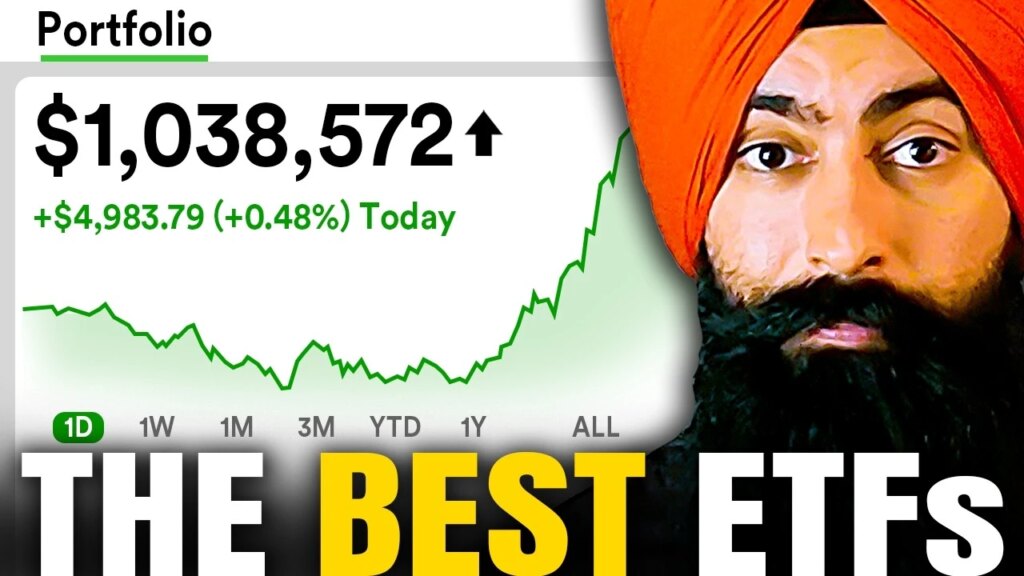
For many investors, the fantasy of building wealth begins with finding the next Amazon before the rest of the market does. The reality is less glamorous. Most people do not identify the next great stock early enough, hold it long enough, or survive the volatility required to capture its full gains. That gap between fantasy and behavior is one reason exchange-traded funds, or ETFs, have become one of the most reliable engines of long-term wealth creation.
The appeal is not mystery. It is structure. An ETF allows investors to buy a basket of companies at once, spreading risk across dozens or even hundreds of businesses instead of betting heavily on a single name. That diversification does not eliminate volatility, but it does remove one of the biggest threats to long-term returns: being wrong about one company in particular.
This is why ETFs have become such a practical answer for investors who want growth without turning wealth-building into a full-time research project. Rather than trying to guess which stock will dominate the next decade, investors can own the businesses that are already dominating the market, along with the mechanism that replaces weaker companies as they fade. In effect, the index does some of the decision-making for them.
The clearest example is the S&P 500 ETF, represented here by VOO. It offers exposure to the 500 largest publicly traded U.S. companies, giving investors a stake in some of the country’s biggest and most resilient businesses. Its power lies partly in what it removes: the need to pick winners one by one. When companies stumble, shrink, or disappear, the index eventually replaces them. That process matters more than many investors realize. Since the 1950s, the vast majority of the companies that originally made up the S&P 500 are no longer there. Yet the index itself has continued moving forward because it evolves with the economy.
That self-renewing quality helps explain why the S&P 500 has remained one of the most effective tools for ordinary investors. The outline points to Warren Buffett’s well-known wager in 2007 that a low-cost S&P 500 fund would beat hedge funds over time. It did. After fees, the broad market delivered stronger annualized returns than the hedge fund group it was measured against. The lesson was not just about fees, though those matter. It was also about the difficulty of consistently outperforming a simple, disciplined strategy built around broad ownership of American business.
For investors who want a different kind of exposure, dividend-focused ETFs such as SCHD offer another path. The emphasis here is not on explosive growth, but on quality, income, and durability. Companies in these funds are generally selected for a record of paying dividends over many years, which tends to favor established businesses with stronger cash flow and more stable operating models. That makes dividend ETFs especially appealing to investors who want their portfolios to generate income as well as appreciate over time.
There is a psychological advantage here too. Dividend payments can make investing feel less abstract. They provide visible cash flow, which can reinforce the sense that the portfolio is doing real work even when markets are choppy. For retirees or near-retirees, that can matter. For younger investors, reinvesting dividends can quietly accelerate compounding. The result is not usually the kind of dramatic headline return associated with speculative tech investing, but for many households it is a steadier and more sustainable form of wealth building.
Then there is the more aggressive side of the ETF spectrum, represented by QQQ, the Nasdaq-100 fund. Here the appeal is growth. QQQ gives investors exposure to many of the largest non-financial companies listed on the Nasdaq, a group heavily tilted toward technology and innovation. Over the past decade, that positioning has produced striking returns, handily outpacing broader-market benchmarks in strong periods for tech. But higher returns do not come free. They are purchased with higher volatility.
This is the tradeoff investors often underestimate. Growth-heavy ETFs can compound wealth rapidly over long stretches, but they can also fall hard when markets turn. The outline notes that during the dot-com collapse, QQQ dropped by more than 75%. That kind of drawdown is not a technical inconvenience. It is a behavioral test. Many investors say they want higher returns, but far fewer are prepared to endure the kind of decline that can accompany them. QQQ may offer more upside than a broad-market fund, but it also requires more emotional tolerance and a stronger commitment to staying invested when sentiment turns ugly.
That leads to the more important point, which is not really about choosing the single best ETF. It is about building a repeatable system. The outline’s strongest argument is that successful investing depends less on timing the market than on participating in it consistently. Trying to wait for the perfect entry point is usually another form of hesitation. Investors sit in cash, watch markets move without them, and mistake caution for discipline. In practice, long-term wealth tends to favor those who keep buying through the noise.
That is why automatic investing remains such a powerful idea. Set contributions on a schedule. Keep buying when markets are rising, falling, or moving sideways. Allow downturns to become opportunities to accumulate more shares instead of invitations to panic. This approach lacks the drama of market calls, but it benefits from something more valuable: repeatability. The investor does not need to guess what happens next week or next quarter. They only need to keep the system running.
The outline describes this mindset as “always be buying,” and while the phrase sounds simplistic, it captures an important truth. Over 10, 20, or 30 years, short-term disruptions matter far less than many people think. Tariffs, political headlines, sudden corrections, recessions, and sentiment swings can jolt the market violently in the moment, but long-term investors are typically better served by staying engaged than by trying to predict every shock. The danger in market volatility is not volatility itself. It is the decision to step away from compounding because the headlines became uncomfortable.
That discipline becomes especially important in moments of apparent crisis. The outline points to tariff-driven market turmoil and sharp swings tied to political decisions, but the broader principle applies across cycles. Markets fall. Narratives get dark. Selling feels prudent. Then the market recovers faster than expected, and the investor who waited for clarity ends up chasing higher prices. This pattern repeats often enough that it has become one of the defining mistakes of individual investing.
The best ETF strategy, then, may not be the one with the flashiest past return. It may be the one an investor can actually hold through a full cycle. For some, that will be the steady breadth of the S&P 500. For others, it will be a dividend-oriented approach that pairs growth with income. For more aggressive investors, it may include technology-heavy exposure despite the volatility. The right choice depends partly on risk tolerance, time horizon, and behavior under pressure.
What should be clear, though, is that ETFs have changed the wealth-building equation for ordinary investors. They offer diversification, lower stock-specific risk, and a framework that rewards consistency rather than prediction. In a market culture that still glorifies the hunt for the next big winner, that may be their greatest strength. They turn investing away from guessing and toward owning.
For most people, that is not a compromise. It is an advantage.
Jaspreet Singh is not a licensed financial advisor. He is a licensed attorney, but he is not providing you with legal advice in this article. This article, the topics discussed, and ideas presented are Jaspreet’s opinions and presented for entertainment purposes only. The information presented should not be construed as financial or legal advice. Always do your own due diligence.