How Zero-Commission Apps Really Make Money
Stock trading has never been easier. A few taps on a phone can buy shares in a company, trade options, or move money between assets in seconds. For a generation of new investors, this accessibility feels like progress. But the shift from traditional brokerage fees to commission-free trading has not made trading free it has simply changed how the bill is paid.
To understand where things stand today, it helps to look at how trading used to work. Not long ago, placing a stock trade often meant calling a broker and paying a fixed commission that could run $50 or more per trade. For small investors, those fees were a major barrier. A $100 investment could be eaten alive by transaction costs, making frequent trading impractical and long-term investing the only sensible route.
Technology changed that. Automation, electronic exchanges, and app-based platforms dramatically lowered costs. Then came the headline shift: zero-commission trading. Platforms such as Robinhood popularized the idea that anyone could trade stocks with no visible fees. Millions of new investors entered the market as a result.
But “no commission” does not mean “no revenue model.”
Many commission-free brokers rely heavily on payment for order flow (PFOF). Instead of sending trades directly to a public exchange, orders are often routed to large market makers who pay the broker for that order flow. The market maker profits from the spread—the small difference between buy and sell prices while the broker earns a rebate for directing trades their way. For an individual trade, the cost difference may look tiny, but across millions of trades, it becomes meaningful.
There are also less visible trading venues, often referred to as dark pools, where large volumes of trades can occur outside public exchanges. While these venues serve legitimate institutional purposes, they also add complexity and reduce transparency for everyday investors trying to understand how their trades are executed.
The bigger issue, however, may not be trade routing at all. It may be behavior.
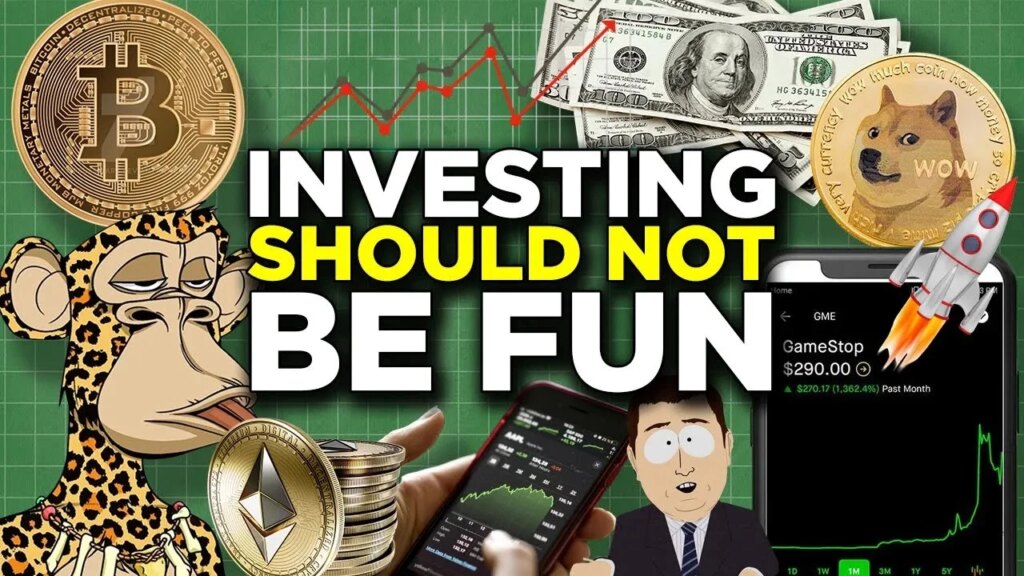
Modern investing apps are designed to be intuitive, colorful, and engaging. Notifications, confetti animations, instant approvals, and slick interfaces can make investing feel closer to a game than a long-term financial discipline. This “gamification” lowers psychological barriers to trading frequently. The problem is that frequent trading has historically been associated with lower returns for the average investor.
Research across decades has shown a consistent pattern: the more individuals trade, the more their returns tend to lag the broader market. Emotional decisions, trend chasing, and attempts to time short-term moves often replace patient, diversified investing. Some estimates suggest the average investor earns materially less than long-term market averages largely because of behavior, not market structure.
Compounding makes this gap expensive. A modest difference in annual returns over decades can translate into hundreds of thousands of dollars in lost wealth. Missing strong market days, jumping in and out of positions, or concentrating bets can quietly erode long-term outcomes.
Financial literacy plays a role here. Many new investors enter the market without a clear understanding of risk, diversification, or time horizons. Trading on headlines or social media buzz can feel productive but often substitutes activity for strategy. Investing is not supposed to be exciting; it is supposed to be effective.
None of this means commission-free platforms are inherently bad. In many ways, they have democratized access to markets and reduced unnecessary friction. The real risk lies in misunderstanding the incentives and confusing ease of trading with a path to wealth.
Long-term investing still rests on familiar principles: diversification, low costs, discipline, and time in the market. A simple portfolio held consistently often outperforms a hyper-active strategy driven by short-term signals.
“Free” trading is a powerful tool. But like any tool, its value depends on how it is used. The true cost is not the missing commission line on a statement it is the potential return sacrificed when investing turns into entertainment instead of a plan.
All writings are for educational and entertainment purposes only and does not provide investment or financial advice of any kind.