The Mercedes-Benz GLE Gets Smarter, Faster, and Slightly More Opinionated
There is a moment when a luxury SUV stops being just transportation and starts behaving like a system. Not a vehicle. Not a machine. A system. And with the latest Mercedes-Benz GLE, that moment arrives somewhere between the 27 sensors quietly scanning your surroundings and the realization that your headlights are now doing computational efficiency calculations.
This is not a redesign in the traditional sense. It is more of a recalibration, one that leans heavily into software, intelligence, and a slightly unapologetic belief that technology should do more of the thinking.
At the center of it all is Mercedes’ new MB.OS architecture. Think of it less as an infotainment system and more as the operating system for the entire vehicle. It is designed to evolve over time through over the air updates, which means the GLE you buy today is not quite the same GLE you will own a year from now. That is either reassuring or mildly unsettling, depending on how you feel about your car behaving like your smartphone.
Inside, the most obvious shift is visual. The MBUX Superscreen is now standard. Three 12.3-inch displays sit under a single sheet of glass. It stretches across the dashboard in a way that feels less like separate screens and more like a continuous digital surface.
Mercedes has gone a step further here. When no one is sitting in the passenger seat, the system does not just sit idle. It fills the space with ambient visual content. It is a small detail, but it speaks to a broader philosophy. The cabin is no longer just functional. It is curated.
The digital experience extends beyond aesthetics. The MBUX Virtual Assistant introduces avatar-based interaction, augmented reality navigation overlays, and deeper integration with Google Maps. It is designed to anticipate needs rather than simply respond to commands, though whether it gets your route preferences right is still very much a human versus machine negotiation.
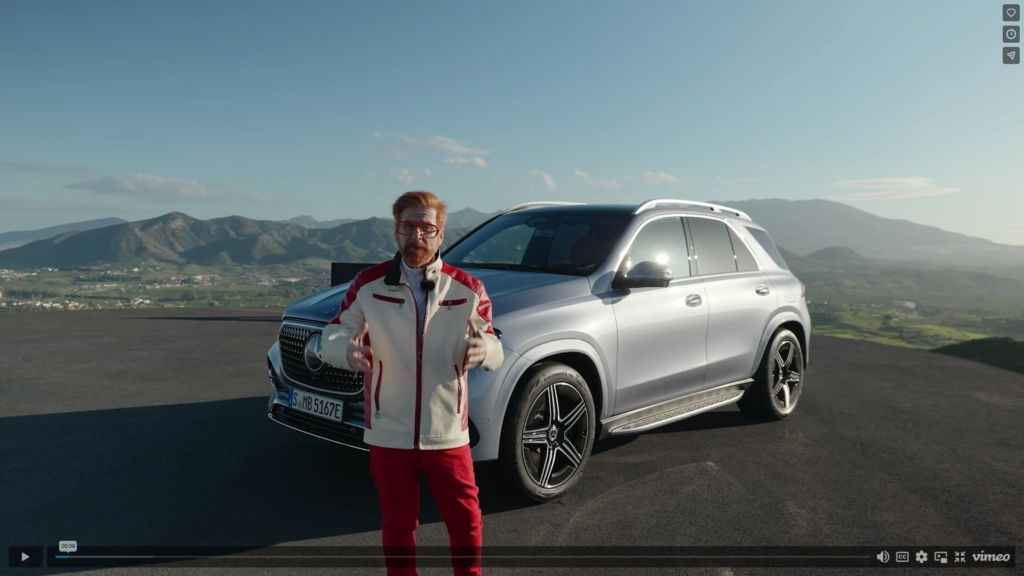
Outside, the changes are more subtle but deliberate. The front end gets a larger grille, an optional illuminated star, and lighting elements that lean heavily into brand identity. Mercedes is not chasing understatement here. The GLE wants to be recognized.
The new DIGITAL LIGHT system reinforces that approach. Using micro LED technology, it expands its illumination field by roughly 40 percent while consuming up to 50 percent less energy. It can also project symbols onto the road surface for guidance, warnings, or visual cues depending on regulations in your market. It is part lighting system and part communication tool.
Then there is comfort. Not just soft materials and a quiet cabin, although those are present. This is something more calculated.
E ACTIVE BODY CONTROL analyzes the road up to 1,000 times per second. That is not marketing language. It is engineering intent. The system adjusts suspension forces at each wheel independently, reducing body roll, pitch, and squat in real time. Combined with AIRMATIC air suspension and predictive inputs from connected vehicle data, the GLE prepares for the road ahead rather than simply reacting to it.
In practical terms, it means fewer interruptions, fewer jolts, and less fatigue.
Space remains a strong suit. Rear passengers get over 41 inches of legroom, and cargo capacity reaches up to 72.6 cubic feet with the seats folded. The second row adjusts by 18 degrees, and there is an optional third row for smaller occupants. It is a reminder that despite all the technology, this is still a family vehicle at its core.
Towing capacity sits at 7,700 pounds when properly equipped, which places the GLE firmly in recreational territory. Trailer stabilization systems monitor sway and apply corrective braking if needed, while the suspension adapts automatically when a trailer is connected.
Under the hood, the lineup covers a wide range of priorities.
The GLE 350 4MATIC delivers 255 horsepower and reaches 60 miles per hour in about 7.1 seconds. It is measured and likely sufficient for most buyers. The GLE 450 steps up to 375 horsepower and cuts that time to around 5.2 seconds. Then there is the GLE 580, producing 530 horsepower and 553 pound feet of torque, with a 0 to 60 time of approximately 4.4 seconds. That is less about necessity and more about capability.
For those leaning toward electrification, the plug in hybrid GLE 500e pairs a 322 horsepower inline six with a 181 horsepower electric motor. Combined output delivers a 0 to 60 time of roughly 5.5 seconds, with a WLTP rated electric range of 106 kilometers. U.S. figures will differ, but the intent is clear. Meaningful electric driving without sacrificing long distance usability.
Mercedes has also refined NVH characteristics by adding acoustic insulation throughout key structural areas to reduce engine and road noise. It is a quiet kind of luxury, one that becomes noticeable over time.
Air quality also gets attention. ENERGIZING AIR CONTROL refreshes cabin air roughly every 90 seconds using a multi stage filtration system that ionizes fine particles. Sensors monitor external conditions and adjust airflow accordingly. It is not a headline feature, but it is one you will appreciate during allergy season.
The audio system, if selected, delivers 710 watts through 15 speakers with Dolby Atmos support. It is immersive without being overwhelming, and the system can tailor sound profiles based on user preferences through a guided setup process.
Not everything is included as standard. Some features fall under Mercedes’ Digital Extras ecosystem, which means software enabled functions that may require activation or subscription over time. It is a shift in how vehicles are packaged and sold, and one buyers will need to understand.
The GLE also comes in two distinct personalities.
The SUV prioritizes space and versatility. It is the logical choice that fits most lifestyles without compromise.
The Coupe trades some practicality for a more athletic stance. It rides on a slightly shorter wheelbase and features a more direct steering ratio for sharper responses. It is less rational but arguably more expressive.
And that is really the point of the new GLE.
It is not trying to reinvent the luxury SUV. It is redefining how it behaves. More intelligent, more adaptive, and slightly more involved in the driving experience than you might expect.
Three screens. Nearly 30 sensors. Up to 530 horsepower.
It is competent. Slightly excessive. And unmistakably Mercedes.