Why the GMC Sierra EV Might Be the Most Practical Electric Truck Yet
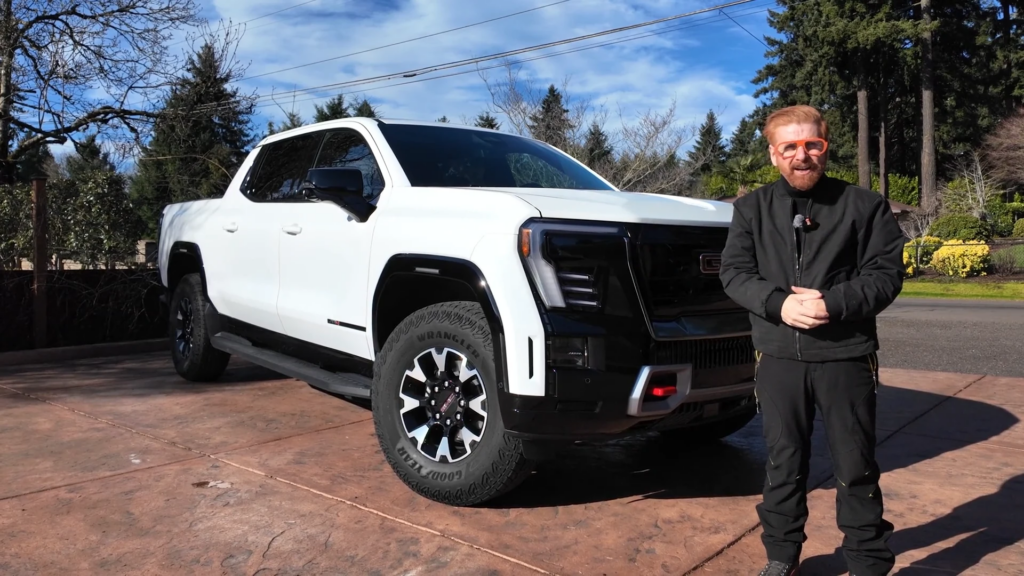
GMC Sierra EV makes the case that the best electric truck is not the flashiest one. It is the one that quietly solves everyday problems.
There is a strange habit in the electric vehicle business. We keep talking about performance numbers as though the average buyer wakes up in a cold sweat wondering whether their truck can reach sixty in absurd time. Most people are not shopping for bragging rights. They are shopping for fewer headaches. They want a vehicle that fits into the rhythm of work, family, weather, dogs, gear, and the endless pile of things real life throws in the bed, the back seat, or the driveway.
That is why the GMC Sierra EV is more interesting than some of the louder electric entries on the market. It is not trying to be a meme. It is not trying to win a spreadsheet war with teenagers on the internet. It is trying to be useful. In 2026, that may be the most mature and important thing happening in the EV space.
The broader market context matters here. Electric vehicle hesitation in America is no longer mostly about whether people understand the technology. Buyers understand it well enough. The problem is that many still do not trust the ownership experience to be simple. Cost still feels high. Public charging still feels unpredictable. Long-distance convenience still feels just a bit too theoretical for many households. In that environment, the EVs that matter most are not the ones with the wildest launch-control tricks. They are the ones that lower stress.
The Sierra EV does that by leaning into the familiar logic of a truck. It gives you range that feels comfortably excessive. It gives you fast charging that starts to make public charging sound less like an ordeal and more like a coffee stop. It gives you useful packaging, real maneuverability, exportable power, and a cabin that does not treat the driver like a beta tester trapped inside a tablet.
Why does this matter right now?
Because the EV conversation is growing up. The early phase of electric adoption was dominated by novelty. Buyers wanted to know whether these vehicles were fast, futuristic, and different enough to justify the switch. That chapter is ending. The next chapter is about whether they are easy to live with.
The Sierra EV lands in that exact moment. Its range is the first clue. Once an electric vehicle gets far enough past the four-hundred-mile mark, the owner’s psychology changes. The vehicle stops feeling like something that needs managing and starts feeling like something you simply use. That matters more than many manufacturers would like to admit, because anxiety is rarely about the absolute number. It is about whether the vehicle asks you to think differently every day.
GMC appears to understand that. The Sierra EV’s top-range figures move the vehicle out of the fragile zone where every side trip feels like a planning exercise. That is particularly important for truck buyers, because truck buyers do truck things. They tow. They haul. They drive longer distances than urban commuter EV marketing decks usually imagine. They head to campsites, worksites, mountain roads, and hardware stores. They carry dogs, coolers, ladders, and the occasional piece of lumber that should have been measured first.
Then there is charging. Quick charging is not just a technical feature. It is a psychological one. Owners are far more forgiving of charging when it feels short, reliable, and predictable. The Sierra EV’s fast-charging capability helps shift the ownership experience from waiting to resuming. That is a massive difference. A ten-minute stop feels like life. A forty-minute mystery feels like punishment.
The other reason this matters right now is that buyers are no longer rewarding EVs simply for being electric. They want an electric vehicle to be better at something tangible. The Sierra EV has a clear answer. It is better at integrating electricity into utility. That is the smart play. Not because it sounds glamorous, but because glamour fades quickly when the power goes out, the bed is full, and the job still needs doing.
How does it compare to rivals or alternatives?
Compared with many electric trucks, the Sierra EV feels less performative and more settled. Some rivals lean hard into visual drama, oversized personalities, or futuristic theatrics. That can be entertaining, but entertainment and daily ownership are not always friends. GMC has gone another direction. The Sierra EV is still bold-looking, still clearly expensive, and still very capable, but its core pitch is calmer. It is an electric truck designed by adults for other adults.
Against smaller EV crossovers, the Sierra EV obviously occupies a different universe in size and mission, but it also exposes a larger truth about the market. Many crossovers ask buyers to compromise in order to go electric. Maybe cargo is limited. Maybe road-trip confidence is marginal. Maybe fast charging is good on paper but not reassuring in practice. The Sierra EV’s combination of long range, big usable space, four-wheel steering, and serious exportable power means it solves more problems without introducing as many new ones.
Against gasoline trucks, the comparison gets more interesting. The old argument for combustion trucks was convenience. Fueling was quick. Range was strong. Capability felt proven. The Sierra EV chips away at each of those advantages. Electric torque makes towing response smoother and more immediate. The low battery placement helps the truck feel planted. The cabin is quieter. The ride is more composed than many traditional body-on-frame trucks. And exportable power turns the truck from transport into infrastructure.
That last point matters more than it first appears. A truck with enough onboard power to run tools, camp gear, tailgate equipment, or essential home circuits is doing something a conventional truck cannot do without extra hardware. That changes the ownership equation. You are no longer merely buying transportation. You are buying a large mobile battery with a truck attached to it, which is a much better sentence than it sounds.
The Sierra EV is not perfect, of course. It is large, heavy, and costly. For some buyers, a smaller hybrid truck or efficient crossover will still make more sense. For others, a less expensive EV may cover commuting and errands just fine. But among full-size electric trucks, the GMC’s balance of range, maneuverability, cabin calm, cargo flexibility, and practical power output gives it one of the most coherent real-world cases in the segment.
Who is this for and who should skip it?
This truck is for the buyer who wants an EV to disappear into normal life rather than dominate it. It suits people with long suburban or rural drives. It suits families who need space and do not want every road trip to become an energy management seminar. It suits dog owners, outdoor types, contractors, hobbyists, and anyone who regularly moves awkward cargo without wanting to tow a trailer for every oversized purchase.
It is also for buyers who like trucks but are tired of trucks becoming costumes. The Sierra EV does not need to scream. Its luxury is quiet, its cleverness is practical, and its best features are the ones you would actually use. Four-wheel steering helps in parking lots. The Midgate helps with long cargo. Fast charging helps on travel days. Exportable power helps when weather or work turns inconvenient.
It is a particularly strong fit for someone who has been EV-curious but not EV-convinced. If you have admired electric drivetrains but worried about range, public charging, or the loss of utility, this truck makes a persuasive argument. It says you do not need to choose between usefulness and electrification.
Who should skip it? City dwellers with tight parking and no real need for a full-size pickup should skip it. People who rarely carry cargo and never tow should skip it. Buyers mainly chasing low monthly payments should almost certainly skip it. And if your idea of a vehicle is something tidy, simple, and easy to thread through an urban parking garage built during the Truman administration, this is not your answer.
There is also a category of buyer who should at least pause before jumping in: the person who thinks every truck purchase must be justified by image. The Sierra EV is less interested in posturing than some alternatives. That is precisely why it works, but not everyone shops with that priority.
What is the long-term significance?
The Sierra EV matters because it points toward the next phase of electric adoption in America. The vehicles that will move the market forward are not necessarily the ones that shock people. They are the ones that reassure them.
For years, EVs have often been framed as ideological purchases, tech statements, or performance objects. That framing helped get attention, but it also narrowed the conversation. The real breakthrough comes when an EV is evaluated less like a gadget and more like an appliance in the best possible sense. Does it work? Is it dependable? Does it reduce friction? Does it make daily life easier instead of more complicated?
The Sierra EV answers those questions better than many rivals because it treats electricity as a tool, not a personality. Its range reduces mental load. Its charging speed reduces downtime. Its packaging solves genuine cargo problems. Its onboard power opens new use cases. Its truck form makes the whole proposition legible to Americans who still see a pickup as one of the most rational household vehicles available.
That does not mean every future EV should be a giant truck. Quite the opposite. It means every future EV should learn the same lesson: usefulness scales. A great electric sedan, crossover, van, or hatchback will win for the same reason. Not because it is theatrical, but because it is easy to trust.
And that is the quietly important thing about the GMC Sierra EV. It is not just another electric truck. It is evidence that the market is maturing past spectacle and toward adulthood. There is something rather comforting in that. The best EVs are no longer the ones that demand your attention every minute. They are the ones that let you get on with your life.
That may not sound revolutionary. In this business, it probably is.