2027 Toyota Tundra: The Towing Tech Changes Everything
By Robert R Guio
The 2027 Toyota Tundra brings intelligent trailer assistance, a new Trailhunter package and useful technology that could transform pickup ownership.
There is a particular moment in pickup truck ownership when horsepower becomes considerably less important than judgment. Usually, it involves reversing a trailer while several people watch, occasionally offering contradictory instructions.
Toyota appears to understand this. Its updated 2027 Tundra brings an unusually interesting collection of towing technologies, and they may prove considerably more valuable than another round of impressive performance figures.
Starting at $42,890, the refreshed Tundra introduces automated trailer recognition, improved reversing assistance, a new Trailhunter package and a standard 14-inch touchscreen.
There is plenty here to interest pickup enthusiasts. The bigger question is whether Toyota has made an already capable truck substantially easier to live with.
2027 Toyota Tundra Towing Technology Tackles the Hard Part
The Tundra’s most consequential new feature may be Automated Trailer Detection. Toyota says cameras and rear radar sensors can identify a trailer, estimate its dimensions and enter the information into the truck’s Trailer Garage settings.
That matters because towing assistance works best when the vehicle understands exactly what is attached behind it. An incorrectly configured trailer profile can undermine the usefulness of otherwise sophisticated features.
The new Trailer Blind Spot Monitor extends coverage beyond the pickup itself, accounting for the trailer’s length. This addresses an important limitation of conventional blind spot visibility, particularly when changing lanes with a large camper.
2027 Toyota Tundra Trailhunter
You may also enjoy: 2026 Toyota Tundra Review: Start With the SR5
The enhanced Trailer Backup Guide adds dynamic guidelines and semi-automated steering support. Toyota also says the system can help identify potential jackknife risks. Whether it handles an awkward campground entrance as convincingly as the description suggests will require independent testing.
Trailer Lane Trace Assist adds steering support during certain towing conditions, including selected road irregularities and wind disturbances. It builds on the broader category of driver assistance technologies described by the National Highway Traffic Safety Administration.
None of these features increases the truck’s legal or mechanical towing limits. Owners still need to check trailer weight, tongue weight, payload and the specific vehicle configuration before setting off.
Trailhunter Could Be the More Sensible Off-Road Choice
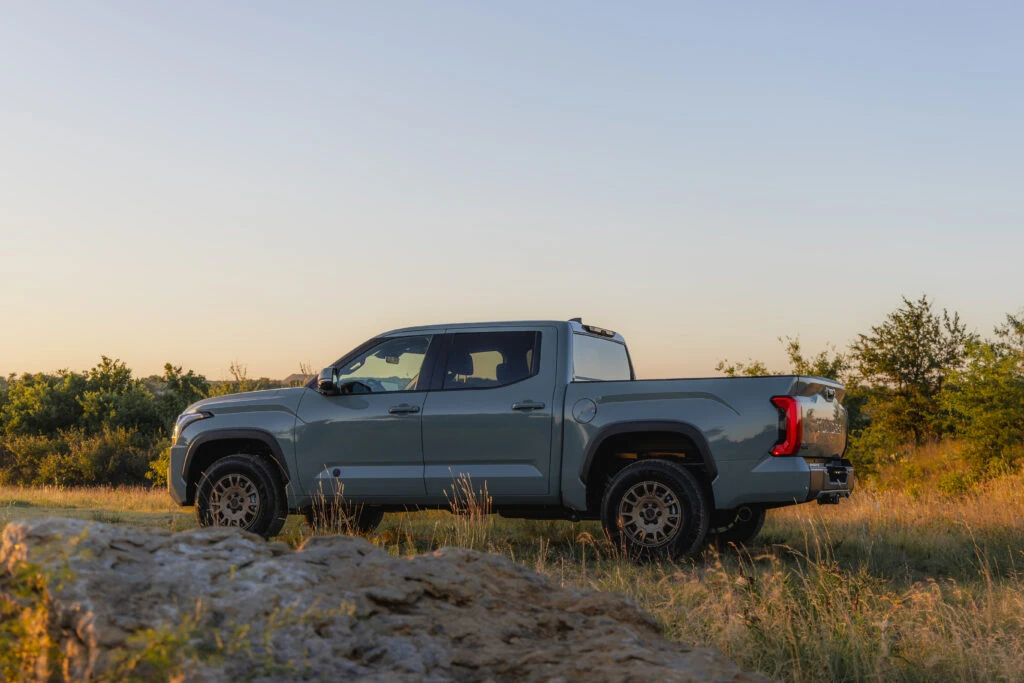
Toyota has another potentially clever move: introducing Trailhunter as a package based on the SR5 rather than making every interested buyer purchase a particularly expensive luxury truck.
The equipment includes an Old Man Emu suspension, Michelin LTX Trail tires, underbody protection, recovery hooks, four-wheel drive and a locking rear differential. Crawl Control and Multi-Terrain Select provide additional control when conditions deteriorate.
2027 Toyota Tundra Trailhunter
These are meaningful mechanical additions. A locking differential helps when traction is uneven, while underbody protection matters when obstacles threaten components beneath the vehicle.
The Michelin tires deserve particular attention. Tire selection influences traction, wear, noise and road behavior. NHTSA provides useful information on tire performance and safety, an important consideration for anyone balancing long highway journeys with off-road excursions.
You may also enjoy: 2025 Toyota Tacoma Trailhunter Review: Worth the Hype?
My preference would be to examine Trailhunter before automatically selecting TRD Pro. The former appears focused on practical exploration equipment, while the latter emphasizes more specialized off-road suspension performance.
That does not automatically make Trailhunter the better purchase. Toyota’s package pricing, actual ride behavior and equipment differences will determine its value.
The Hybrid Has Power, but Don’t Assume Huge Fuel Savings
The available i-FORCE MAX hybrid continues with 437 horsepower and 583 pound-feet of torque. Those numbers are substantial, particularly the torque figure, which helps explain why Toyota regards electrification as useful for truck performance.
Unlike a plug-in hybrid, this hybrid electric powertrain combines a gasoline engine with electric assistance without requiring the owner to recharge from an external electrical outlet.
Toyota quotes a maximum towing figure of 12,000 pounds, but that number should never be applied indiscriminately to every Tundra on the dealership lot.
2027 Toyota Tundra Trailhunter
Different powertrains, drivetrains and equipment combinations can produce different towing and payload ratings. A heavily equipped off-road model may also have different practical load limits from a truck configured primarily for hauling.
You may also enjoy: Toyota Texas Expansion: What It Could Mean for Tacoma Buyers
The standard 32.2-gallon fuel tank is welcome, especially for people traveling through regions where filling stations are scarce. However, a large tank is not a substitute for good fuel economy. Buyers should compare official EPA fuel economy ratings when the applicable 2027 configurations are available.
The 2.4-kilowatt inverter option is also useful for camping and work equipment, provided owners understand its electrical output limitations.
A Standard 14-Inch Screen Is More Important Than It Sounds
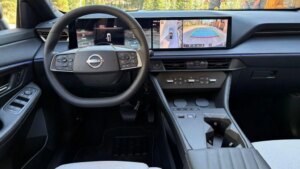
The new multimedia system brings a standard 14-inch display and 12.3-inch digital instrument cluster to every Tundra. For a vehicle expected to manage cameras, towing settings and navigation, that is a practical improvement.
One of my favorite additions on paper is the integrated Drive Recorder. Toyota says the system uses exterior cameras to capture 20-second clips, which can then be reviewed on the touchscreen.
2027 Toyota Tundra Trailhunter
That could provide useful context after a parking incident or an unexpected event on the road. Drivers should still understand what triggers recording, what footage is retained and what the system cannot capture.
You may also enjoy: 2026 RAV4 Debuts Toyota Audio Multimedia With 5G
Enhanced Digital Key technology adds convenient smartphone access, but its dependence on an eligible Remote Connect trial or subscription deserves attention. Five years of included connected services sounds generous; what happens afterward matters to long-term ownership costs.
TRD Pro Gets Serious Suspension Changes
The TRD Pro receives Tundra-tuned FOX QS3 adjustable shocks for 2027, along with red tow hooks, improved auxiliary lighting and available ISO-dynamic seats.
These changes should interest drivers who regularly travel over demanding terrain. Adjustable suspension hardware can provide a broader range of responses to different driving conditions, although Toyota’s performance claims still need real-world evaluation.
2027 Toyota Tundra Trailhunter
Higher-end buyers also gain revised Adaptive Variable Suspension technology. A combination of adaptive suspension and air suspension is available for owners who want load-leveling assistance along with more refined ride comfort.
You may also enjoy: Inside Toyota and Mazda’s American Manufacturing Operations
Another important change is Toyota Safety Sense 4.0, now standard across the range. Its equipment includes updated pedestrian detection, adaptive cruise control, lane assistance and an Emergency Drive Stop System.
Should You Buy the 2027 Toyota Tundra?
My starting point would be the SR5, particularly for customers who want real truck capability without paying for equipment they will rarely use. Trailhunter then becomes worth considering for serious camping and off-road travel.
TRD Pro makes greater sense for owners who expect to use its specialized suspension, while buyers focused on highway comfort and luxury should investigate the upper trims and available adaptive suspension.
The missing piece is the complete price comparison. A $42,890 starting MSRP establishes the entry point, but it does not tell us how much buyers will spend for Trailhunter equipment, the hybrid powertrain or the advanced suspension combinations.
2027 Toyota Tundra Trailhunter
There is also a distinction between an impressive technology presentation and a system that works reliably in difficult conditions. Trailer recognition, automated steering assistance and sophisticated cameras will all need proper evaluation with real trailers attached.
That is where this Tundra has the opportunity to distinguish itself. Toyota has concentrated on the complicated jobs owners actually perform, rather than simply chasing numbers on a specification sheet.
The best pickup truck is not necessarily the one that can theoretically accomplish the biggest task. It is the one that makes the jobs you genuinely need to do easier, safer and less stressful.
If Toyota’s new towing systems deliver on their promise, the 2027 Tundra could become substantially more appealing without needing another horsepower contest.