What Trump’s USMCA Move Could Really Mean for Prices
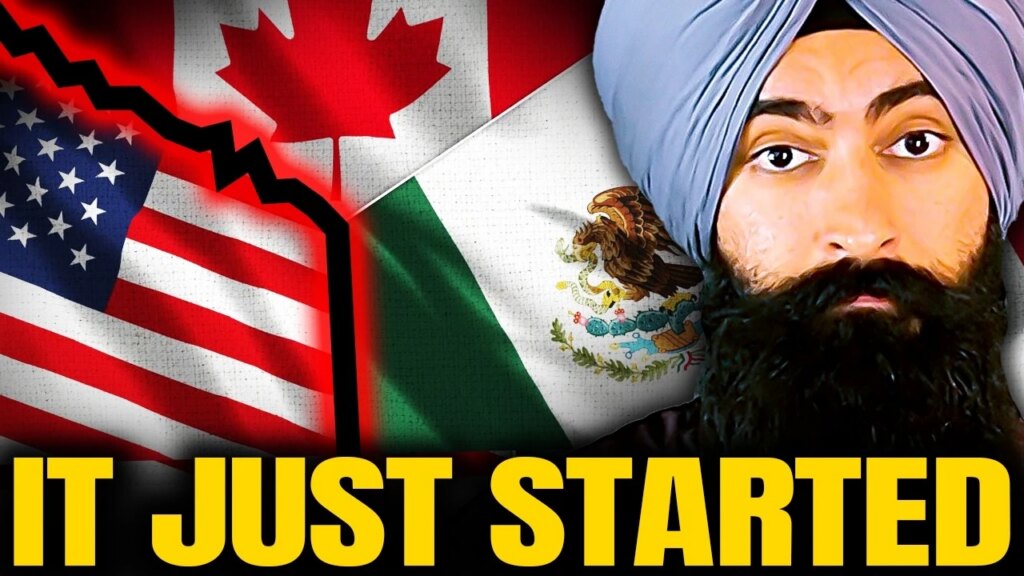
Trade agreements rarely become kitchen-table issues until they start showing up in grocery bills, car prices, and homebuilding costs.
That is why the latest U.S. move on the U.S.-Mexico-Canada Agreement matters. On July 1, the Trump administration declined to renew USMCA in its current form during the pact’s scheduled six-year review, beginning a process that could eventually lead to the agreement’s expiration in 2036 unless the three countries agree on revisions. The pact remains in force for now, but the decision adds a new layer of uncertainty to the North American trade system that underpins roughly $1.6 trillion in annual trilateral commerce.
That distinction is important.
The administration did not suddenly eliminate duty-free trade overnight. What it did was tell businesses, investors, farmers, manufacturers, and consumers that the rules may change materially and that the future of the agreement is now subject to annual review and intense renegotiation. Mexico’s economy minister has already said the country is trying to address U.S. concerns in the new talks, while industry groups in all three countries have warned that prolonged uncertainty could damage supply chains and raise costs.
This matters because trade policy does not affect prices only through formal tariffs. It also affects prices through hesitation.
When companies do not know whether the next shipment of steel, auto parts, produce, lumber, or industrial inputs will face a different tariff regime six months from now, they do not behave as though everything is normal. They build in buffers. They delay investment. They shift suppliers. They raise prices to protect margins. Uncertainty itself becomes a cost. And right now, the U.S. is layering that uncertainty onto an economy that is already dealing with 4.2% inflation, the fastest consumer-price growth in three years.
That is what makes this moment more dangerous than a standard trade dispute.
The outline is right that prices on everyday goods are exposed here. USMCA has helped keep a large share of North American agricultural and industrial trade moving with lower friction since it replaced NAFTA in 2020. Reuters has reported that the current debate centers especially on stricter rules for autos and on U.S. complaints about trade imbalances and Chinese goods entering North American supply chains. Autos, steel, aluminum, and copper are already under tariffs imposed by Trump, with 25% duties on many Canadian and Mexican vehicles and components and 50% duties on steel, aluminum, and copper from those countries.
Those tariffs do not stay trapped inside factories.
They move outward into car prices, repair costs, construction costs, and manufacturing expenses. If stricter content rules or wider tariffs are imposed during the next phase of negotiations, the inflationary effects could spread further into consumer goods, especially products that rely on North American cross-border assembly or raw materials. That would come on top of the energy-driven inflation already pushing households harder at the gas pump and in food distribution. Reuters reported that May CPI inflation accelerated to 4.2% largely because the Iran conflict pushed up gasoline and other energy costs.
This is where the inflation story and the trade story merge.
Inflation is not only about central banks or wages. It is also about friction. Every time a supply chain becomes more expensive, more politicized, or less predictable, more of that cost gets embedded into what consumers eventually pay. In a world where oil has already made transportation more expensive, adding more trade friction to Canada and Mexico, the two largest U.S. trade partners, risks keeping those price pressures alive longer than they otherwise would be.
Supporters of the move would argue that this is the point.
If higher tariffs and tougher rules push more production back into the United States, domestic steelmakers, parts suppliers, and onshoring plays could benefit. Some companies already positioned to produce locally may gain pricing power or win new business. The administration’s stated logic is that reshoring manufacturing and reducing dependence on foreign inputs justifies the disruption. U.S. Trade Representative Jamieson Greer has explicitly linked the current review to reducing trade deficits and tightening North American sourcing rules.
That may produce some winners. It does not erase the cost of transition.
Reshoring tends to be slower and more expensive than political messaging suggests. A company cannot instantly replace an integrated continental supply chain simply because tariffs make imports less attractive. New factories require capital, land, permits, labor, utilities, and time. In the meantime, businesses still have to buy inputs somewhere. That often means passing along higher costs before the promised domestic gains are fully in place.
This is why markets tend to react so sharply to tariff news.
Investors know that tariffs can create both inflation and slower growth at the same time, which is one of the worst combinations for the Federal Reserve. If prices rise because trade becomes more expensive, the Fed has less room to ease policy. If the resulting uncertainty slows business investment or consumer demand, growth weakens anyway. That tension is one reason trade conflicts can be so destabilizing even when they are sold as pro-growth or pro-industry moves.
The longer-term effects will depend on how far the administration actually goes.
If the next round of talks results mainly in revisions to rules of origin and a tougher but still functioning North American trade zone, the disruption may stay manageable. If the annual reviews become a prolonged threat hanging over the agreement, or if tariffs widen substantially, the cost pressure could become much more visible in groceries, autos, housing inputs, and industrial production. Reuters has already reported warnings from automakers and farm groups that preserving a workable trilateral framework matters deeply for pricing and supply continuity.
That is why the most important economic effect of this move may not be the headline itself.
It may be the message underneath it: at a time when inflation is already hot, the U.S. just made one of the most important trade relationships in the world less predictable. And in economics, less predictable usually ends up meaning more expensive.
Jaspreet Singh is not a licensed financial advisor. He is a licensed attorney, but he is not providing you with legal advice in this article. This article, the topics discussed, and ideas presented are Jaspreet’s opinions and presented for entertainment purposes only. The information presented should not be construed as financial or legal advice. Always do your own due diligence.