Why Companies Want You to Subscribe to Everything
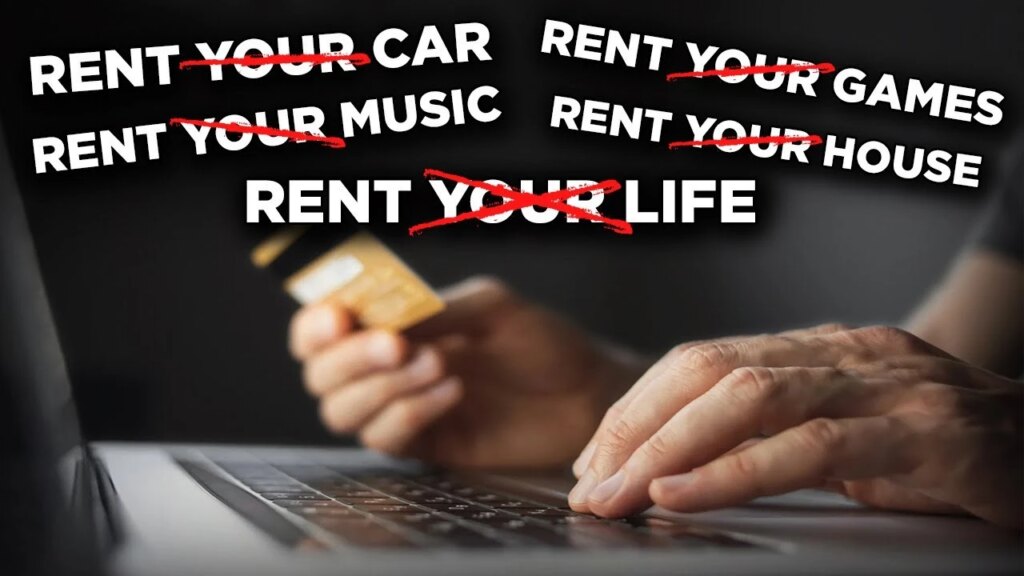
There was a time when buying something meant owning it.
You bought a movie, a software program, a car feature, a gym membership, or a tool, and the transaction was largely finished. The company made its sale, and you walked away with the product. That model still exists, but it is no longer the one many businesses prefer.
They prefer subscriptions.
That shift is one of the most important changes in the modern economy because it changes not only how companies make money, but how consumers relate to the things they use. What used to be sold as property is increasingly sold as access. What used to be purchased once is now paid for indefinitely. And what used to feel like ownership is now often a monthly relationship.
From the company’s perspective, the appeal is obvious.
Subscription models create recurring revenue, and recurring revenue is one of the most attractive things a business can have. It is predictable, easier to plan around, and generally more valuable in the eyes of investors than one-time sales. A company that knows what a large share of next month’s revenue will be before the month begins can hire, invest, market, and expand more aggressively than one that has to start each month from zero.
That predictability changes the business itself.
It also changes how investors value it. A subscription company can be treated less like a seller of products and more like a machine that produces ongoing cash flow. That tends to support higher valuations because the revenue stream appears more durable and scalable. Investors do not just see current sales. They see a customer base that may keep paying for months or years, often with very little friction.
That is one reason subscription businesses became so fashionable in the first place.
The model also makes expensive products easier to sell. A large upfront cost can feel painful. A smaller monthly payment often feels manageable, even when the long-term cost is higher. This is one of the oldest psychological truths in consumer finance, and subscription businesses use it constantly. Spreading payments across time lowers resistance, increases conversion, and makes products feel more accessible than they might if buyers had to pay in full.
That is not always bad for the consumer.
Subscriptions can offer genuine convenience. They lower upfront barriers, allow people to test products, and often come with ongoing updates or improvements. This is especially true in software, where companies can argue, with some justification, that a recurring payment supports continual development, maintenance, and support. Adobe’s move from boxed software to subscriptions is one of the clearest examples of this logic. The company did not just change how customers paid. It changed the entire relationship between user and product.
That is the optimistic version of the subscription economy.
The less flattering version is that subscriptions can also turn consumers into annuities.
A person who once spent money deliberately now spends passively. Small monthly charges disappear into the background. The individual service may not feel expensive, but the total often does. This is where the subscription model becomes so financially slippery. A few dollars here, a few dollars there, and soon a household is carrying a meaningful monthly burden that does not feel large in any single category but adds up to a real drag on cash flow.
That hidden accumulation is part of what makes subscriptions so effective.
People are much more likely to underestimate recurring small payments than they are to underestimate a one-time major purchase. That is especially dangerous because subscriptions often become easiest to ignore precisely when they are least valuable. The customer forgets. The charge continues. The company wins through passivity.
This matters even more when subscriptions move beyond entertainment and software into more essential parts of life.
A streaming service is one thing. A vehicle feature locked behind a monthly fee is something else. Housing-related subscriptions, recurring fees for product functionality, and software-controlled access to physical goods all push the economy further away from ownership and closer to conditional use. The consumer may legally possess the object, but control over its full function can still remain with the company.
That is where the subscription model begins to feel more troubling than convenient.
Because once enough of life is monetized as access rather than owned outright, the household becomes more fragile. A person who loses income does not just cut luxuries. They may lose layers of functionality, comfort, and continuity all at once. The problem is not merely that subscriptions cost money. It is that they create a lifestyle built on continuous payment rather than durable possession.
That can be especially harmful for lower-income households.
People who cannot afford large upfront purchases are often the most attracted to monthly payment models, but they are also the least able to absorb the long-term drain. What looks affordable in the short run can become much more expensive over time. In that sense, subscriptions can function as a kind of quiet extraction system, smoothing revenue for businesses while increasing dependence for consumers.
Even from the company side, the model is not invincible.
The subscription economy depends on growth, retention, and customer inertia. Once markets become saturated, those advantages begin to weaken. Consumers become more selective. They start auditing their subscriptions. They cancel more aggressively when budgets tighten. And higher interest rates make future recurring revenue less attractive than it looked in the cheap-money era. A subscription model that once looked almost unbeatable can start to look fragile if growth slows and churn rises.
That is one reason the market has become more skeptical of subscription-heavy businesses when conditions tighten.
The larger issue is not whether subscriptions are inherently bad. It is whether consumers understand what they are trading away when everything becomes a service instead of a possession.
Ownership creates permanence. Subscriptions create dependence. Ownership may require more money upfront, but it often offers more long-term control. Subscriptions may feel lighter at first, but they keep the meter running. The more categories of life they enter, the more they reshape spending behavior and the more they tilt power toward the company maintaining the relationship.
That is why the subscription economy is about more than billing cycles. It is about a deeper shift in how modern capitalism wants to be paid. Not once. Not occasionally. But continuously. And that is exactly why companies want you to subscribe to everything.