Why the Global Car Business Suddenly Looks So Broken
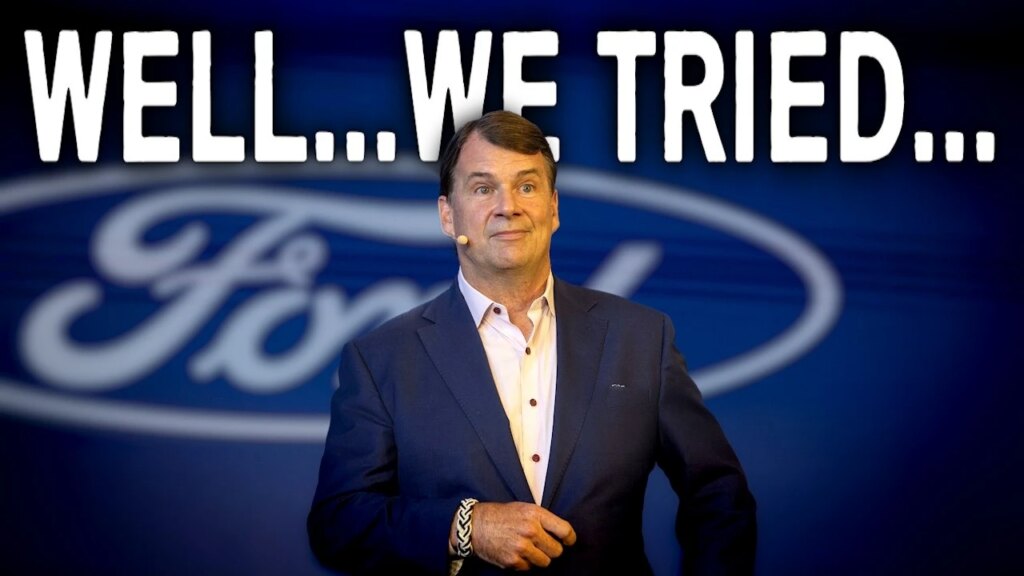
The global car industry is starting to look like an industry that got too many things wrong at once.
For years, automakers were told the future would be electric, software-driven, premium-priced, and easy to finance. Instead, they are now facing collapsing margins, giant write-downs, rising debt pressure, weaker affordability, and a market where competition is getting more brutal just as differentiation is getting harder.
That is why the recent losses across the sector matter so much. They are not isolated bad quarters. They are signs that the economics of the business are under serious strain.
What makes this moment especially striking is that it is not only weak companies struggling. The pain is reaching across the industry. High-volume manufacturers, luxury brands, old-line global names, and companies once thought to be protected by prestige are all dealing with some version of the same problem: the product is getting more expensive to make, harder to distinguish, and more difficult for the average consumer to afford.
That is a dangerous combination in any industry. In autos, it is especially severe because the business is so capital-intensive.
The electric vehicle transition is a big part of the story.
Automakers spent years pouring money into EV plants, dedicated platforms, battery facilities, software systems, and public commitments that now look far more ambitious than the market was ready to support. The problem is not that EVs are going away. The problem is that the industry built as though the transition would move in a straight line. It did not. Demand proved softer than expected beyond the first wave of early adopters. Customers did not all want to move on the same schedule. Infrastructure remained uneven. And once the market became crowded, the pricing power many companies expected simply failed to show up.
That is why so many companies are now writing down assets.
A plant designed around an EV future only has the value the future gives it. If output is lower than expected, if the business plan changes, or if the market no longer supports the volume assumptions behind the investment, the asset must be marked down. That is not just an accounting event. It is an admission that real capital was committed to a vision that is now being scaled back or delayed.
The luxury market is facing a different but related problem.
For decades, high-end brands could rely on performance, engineering mystique, and badge value to defend extraordinary margins. But technology has flattened some of those distinctions. In an EV world, extreme acceleration and huge horsepower are no longer as exclusive as they once were. When multiple cars can deliver astonishing performance, often at lower prices, the case for paying a massive premium starts shifting away from engineering and toward status. That can work for a while. It becomes harder when economic pressure rises and consumers start asking tougher questions about value.
That is part of why even elite brands are looking more fragile than they used to.
At the lower and middle ends of the market, the pain is even more direct. Cars have simply become too expensive for too many households. The average new vehicle transaction price has risen sharply since 2019, and monthly payments now consume a level of cash flow that leaves many buyers exposed. Loans are longer. Interest costs are higher. Negative equity is widespread. More buyers are rolling old debt into new loans, which turns car ownership into a chain of compounding financial weakness rather than a clean replacement cycle.
That is one reason delinquency rates matter so much.
Auto lending tends to reveal financial strain early because cars are essential for work and daily life, yet still heavily financed. When delinquencies rise, it is usually a sign that household budgets are breaking under the weight of inflation, rates, and payment burdens. The car market is therefore not just an auto story. It is one of the clearest real-economy stress signals available.
There is also the problem of debt inside the manufacturers themselves.
A heavily indebted automaker can survive when margins are healthy and volume is steady. It becomes much more vulnerable when capital costs rise and profits shrink. Interest expense then starts competing directly with investment capacity, product development, and strategic flexibility. In that environment, companies have less room to adapt just when adaptation is most necessary.
Chinese competition is making all of this worse.
China’s EV industry has reached a scale and cost structure that is reshaping the global market. The weakest firms have already been washed out. The survivors are stronger, cheaper, and increasingly capable of competing not just on price but on features, engineering, and speed to market. That is a major challenge for European and American automakers because they are now facing a competitor that is not only lower-cost, but often more aligned with the realities of the current market.
That challenge is especially severe in China itself, where local brands have become more attractive to domestic buyers and where foreign premium brands no longer enjoy the same unquestioned prestige. Once a company loses pricing power in its most important growth markets, the damage spreads quickly.
The larger problem, then, is not any one trend. It is the collision of all of them.
EV overinvestment. Weaker-than-expected demand. Price fatigue. Rising financing costs. Longer loan terms. Negative equity. Chinese competition. Fading luxury differentiation. Heavy corporate debt. Shrinking margins. None of these would be easy on its own. Together, they create a market that looks less like a temporary downturn and more like a structural reset.
That is why the current auto turmoil should not be dismissed as just another cycle.
Cars have always been cyclical. This feels deeper than that. The industry is being forced to rethink its assumptions about technology, affordability, competition, and what consumers are actually willing or able to pay for. Some companies will adapt. Some will shrink. Some will hide the pain through accounting for a while. But the old model, premium pricing, easy financing, strong differentiation, and endless confidence in the EV timeline, is clearly under strain.
And once an industry starts losing both its margins and its narrative, the recovery usually takes longer than expected.