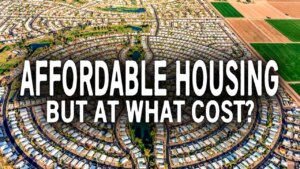
The Global Housing Boom Is Unwinding and Governments Are Changing the Rules

For years, homeowners and investors operated under a reassuring assumption: Governments might complain about housing affordability, but they would ultimately protect property values.
That assumption is beginning to look less dependable.
Housing markets across several major economies are correcting after years of low interest rates, restricted construction and extraordinary pandemic-era demand. The declines are far from uniform, and the world is not experiencing a single synchronized housing crash. Yet a common shift is emerging. Governments increasingly appear willing to tolerate slower price growth—and, in some cases, falling prices—if that is the cost of making housing more affordable.
The change has significant consequences. Lower prices can help first-time buyers and renters when they result from new construction and greater competition. They can also weaken household finances, damage heavily indebted developers and place recent buyers in negative equity.
The defining question is no longer simply whether home prices are falling. It is why they are falling—and whether the financial system can withstand the adjustment.
America’s Housing Market Is Losing Momentum
The U.S. housing market remains expensive by historical standards, but the direction of travel has changed.
The national median listing price fell 2.4% from a year earlier in May 2026, to approximately $429,500, according to Realtor.com. It was the seventh consecutive annual decline and the steepest drop in the company’s records dating to 2017. Prices per square foot fell in 35 of the country’s 50 largest metropolitan areas. By June, national asking prices were down 2.5% from the previous year.
Those figures measure asking prices rather than completed sales, and they do not mean every homeowner has lost money. Values in many markets remain substantially higher than before the pandemic. The declines nevertheless show that sellers are losing some of the pricing power they enjoyed when inventory was scarce and mortgage rates were near record lows.
The correction has been most visible in pandemic-era boom markets where builders added supply and buyers are now confronting higher ownership costs. Austin, Texas, recorded an 8.3% annual decline in listing prices per square foot in May, while its typical home took 10 days longer to sell than a year earlier. Memphis, Buffalo and Los Angeles also posted sizable declines in median listing prices.
Higher mortgage rates remain one of the most powerful forces restraining demand. A buyer’s maximum affordable loan can fall sharply when the interest rate rises, even if the buyer’s income and down payment remain unchanged. That has created an unusual stalemate: Many owners do not want to surrender older, lower-rate mortgages, while would-be buyers cannot afford current prices at current financing costs.
Insurance is adding another constraint. Premiums have risen rapidly in areas exposed to hurricanes, flooding, wildfires and other natural hazards. In the most vulnerable markets, the cost and availability of insurance can influence a buyer’s decision as much as the mortgage payment.
These pressures do not necessarily point to a 2008-style collapse. They do suggest that some regional markets must adjust through lower prices, slower sales, seller concessions or a combination of all three.
Washington Is Prioritizing Supply Over Price Protection
Federal housing policy is also moving in a direction that could gradually weaken the forces supporting high prices.
Congress passed the 21st Century ROAD to Housing Act in June 2026, a broad bipartisan package intended to increase construction, reduce regulatory barriers and expand access to lower-cost housing. Among its provisions are changes affecting manufactured and modular homes, including the removal of the federal permanent-chassis requirement from the definition of a manufactured home.
Supporters argue that the chassis rule added unnecessary construction expenses after a home had already been transported and installed. Estimates of the potential savings vary, but some advocates say eliminating the requirement could reduce the cost of certain manufactured homes by as much as $10,000.
The legislation also seeks to accelerate environmental reviews, encourage local zoning reform and restrain purchases of single-family homes by large investment firms. Its immediate effect on national prices is likely to be limited because new housing takes years to plan and build. Over time, however, additional supply could place pressure on rents and values in markets where construction responds meaningfully.
That would represent a policy success for buyers, even though it could disappoint existing owners who expect housing to appreciate faster than incomes.
Large investors are unlikely to disappear from the market entirely. Institutional ownership remains concentrated in particular metropolitan areas rather than evenly distributed nationwide. Restrictions on future purchases could nevertheless reduce competition for some entry-level homes and encourage major landlords to sell properties they no longer view as strategically attractive.
More inventory would improve affordability, but the transition may be uncomfortable. Homeowners who purchased recently with small down payments have less protection against even a modest decline. A 5% drop can erase much of the equity of a buyer who made a 3% down payment once transaction costs are considered.
China Shows the Risks of Deflating a Property Bubble
No major housing downturn is more consequential than China’s.
For decades, property development was central to China’s economic growth model. Developers borrowed heavily, local governments depended on land sales, and households treated apartments as a primary store of wealth. Construction expanded far beyond what population growth and household formation could support in some regions.
Beijing began imposing its “three red lines” restrictions in 2020 to limit borrowing by highly leveraged developers. The campaign reduced speculative excess, but it also exposed a development model that depended on continuously rising sales and easy access to credit.
By early 2026, property prices had declined for 31 consecutive months, while property investment had fallen from roughly 12% of gross domestic product to about 6%. Offshore creditor losses associated with developer restructurings had exceeded $50 billion.
The downturn has continued. New-home prices fell 0.2% in May 2026 from the previous month and 3.5% from a year earlier. Resale prices across 100 cities declined another 0.42% in June, according to a private survey.
The collapse of China Evergrande became the most visible symbol of the crisis. Developers had accepted deposits for apartments that were not yet completed, leaving households exposed when projects stalled and companies defaulted.
China has avoided a replay of the 2008 global financial crisis in part because its financial system, banks and capital flows are more directly controlled by the state. That does not mean the damage has been minor. Falling property wealth has weakened consumer confidence, encouraged precautionary saving and left local governments with less revenue from land sales.
China’s broader economy has continued to grow while shifting investment toward manufacturing, electric vehicles, artificial intelligence and advanced technology. The transition demonstrates that a major economy can survive a severe property adjustment, but it also shows how long the consequences can persist when housing represents a large share of household wealth.
Canada’s Condo Glut Is Testing Developers
Canada illustrates another version of the housing correction: a sharp slowdown in investor-oriented condominium markets.
Years of population growth, investor demand and presale construction produced a large pipeline of new units in Toronto and Vancouver. Higher interest rates then made mortgages more expensive, while rents failed to rise enough to cover ownership costs for many investors.
Toronto condominium sales had fallen roughly 75% from 2022 levels by the first quarter of 2025, according to figures cited by the Canada Mortgage and Housing Corp., while Vancouver sales were down 37%. The supply of unsold preconstruction units increased dramatically as investors withdrew and developers struggled to meet presale targets.
The Greater Vancouver condo market is expected to remain under pressure. TD Economics projects that prices could decline approximately 15% from their 2023 peak by 2027, which would be the region’s steepest correction in the available data going back to 2005.
A condominium glut can benefit buyers who previously had few choices. It can also create broader risks. Developers frequently need to presell a certain percentage of a project before lenders will finance construction. If buyers disappear, projects can be delayed or canceled, reducing the future supply that affordability advocates want.
Government efforts to acquire distressed or unsold units for affordable housing may help convert excess inventory into rental supply. Such programs require careful pricing, however. Paying too much can protect developers from losses while transferring the risk to taxpayers. Paying too little may not resolve the financing problems preventing projects from being completed.
The distinction between housing policy and a developer bailout depends on who absorbs the loss.
New Zealand Is Allowing More Homes to Be Built
New Zealand experienced one of the developed world’s most dramatic pandemic housing booms, followed by a substantial correction.
National home values remained roughly 14% below their early-2022 peak in nominal terms in 2026. After accounting for inflation, the decline was closer to 27% to 29%, illustrating how a market can lose considerable real value even when its headline price index appears relatively stable.
The country has responded by loosening rules that previously limited construction. Local governments are being pushed to permit denser development near public transportation and to provide enough building capacity for future population growth. Beginning in January 2026, qualifying standalone dwellings of up to 70 square meters could be built without a conventional building consent, subject to design, engineering and safety requirements.
These changes do not guarantee inexpensive housing. Land, labor, financing and infrastructure remain costly. They do make it harder for existing homeowners to use restrictive rules to prevent competing homes from being built nearby.
That may be the most important policy shift occurring across global housing markets. Governments are increasingly treating limited supply as a structural problem rather than viewing rising property values as an uncomplicated sign of prosperity.
Australia Is Challenging Property’s Tax Advantages
Australia has long offered powerful tax incentives to property investors.
Negative gearing allows investors to deduct eligible rental-property losses against other taxable income. Investors have also benefited from a capital-gains discount on assets held for more than a year. Together, these policies encouraged households to treat residential property not merely as shelter but as a tax-advantaged investment.
The Australian government announced significant changes in May 2026. Beginning July 1, 2027, negative gearing will generally be restricted to newly built homes, while existing investments will be grandfathered. The government also plans to replace the broad 50% capital-gains discount with a system based partly on inflation-adjusted gains and a minimum tax on net capital gains.
The goal is to redirect investor capital toward new construction rather than competition for existing homes. If the policy succeeds, it could expand supply while giving owner-occupiers a better chance of purchasing established properties.
The near-term impact may be more complicated. Investors could sell homes before or after the rules take effect, adding listings to the market. Others may decline to purchase rental properties, potentially tightening rental supply unless new construction increases quickly enough to compensate.
Australian prices had already begun weakening by mid-2026 as interest rates and tax changes affected demand. Forecasts remain uncertain because the country has little recent experience with such a large simultaneous change to property taxation and borrowing conditions.
Not Every Housing Decline Is a Crisis
Falling home prices are often described as inherently dangerous, but the economic effect depends on the cause.
A modest decline produced by increased construction can improve affordability without causing widespread distress. Buyers gain more choices, renters face less competition and employers can recruit workers who previously could not afford to live near available jobs.
Denver offers the type of adjustment policymakers often say they want: more supply, weaker rent growth and somewhat lower prices after years of rapid appreciation. A gradual reset can bring housing costs closer to local incomes without destroying the region’s employment base.
A decline caused by job losses, population flight or financial panic is different. Detroit’s historic housing collapse was not a success for affordability; it reflected decades of economic contraction and neighborhood abandonment. Cheap homes provide little benefit when residents cannot find stable employment or obtain financing.
The 2008 crisis also demonstrated that housing losses become especially dangerous when they interact with excessive leverage and fragile financial products. Falling home values were the trigger, but poorly underwritten mortgages, complex securities and inadequate bank capital transformed the correction into a global emergency.
Today’s U.S. mortgage market is generally better capitalized and most existing homeowners hold fixed-rate loans. That reduces the likelihood of the specific chain reaction seen in 2008. Risks remain concentrated among recent purchasers, highly leveraged investors, troubled developers and regions facing rapidly rising insurance or ownership costs.
Homeowners Should Prepare for a More Normal Market
The era in which homeowners could expect double-digit annual appreciation may be ending in many markets.
That does not mean a global collapse is inevitable. It means buyers should stop assuming that every property will appreciate quickly enough to compensate for a high purchase price, expensive financing or weak rental income.
Prospective buyers need to evaluate the complete monthly cost of ownership, including mortgage principal and interest, taxes, insurance, association fees, maintenance and future repairs. A home that appears affordable based solely on the listing price may become burdensome once those costs are included.
Owners planning to remain in a property for many years may be able to tolerate temporary declines. Those expecting to sell within a short period have less room for error because commissions, closing costs and moving expenses can consume much of their equity.
Investors face an even greater need for discipline. A rental property should not depend exclusively on appreciation to produce an acceptable return. The property’s rent, financing, operating expenses, vacancy risk and tax treatment must support the investment without assuming that another buyer will pay substantially more in a few years.
Housing still plays an important role in household wealth, retirement planning and economic stability. The mistake is treating permanently rising prices as a policy guarantee.
Governments once appeared willing to protect housing demand almost regardless of the affordability consequences. Now, many are experimenting with additional construction, zoning reform, restrictions on large investors and reduced tax advantages for speculation.
The result may be a healthier housing system over the long term. Getting there could be painful for households and businesses that built their finances around the belief that property values only move in one direction.