How Corporate America Turns Failure Into a Career Credential
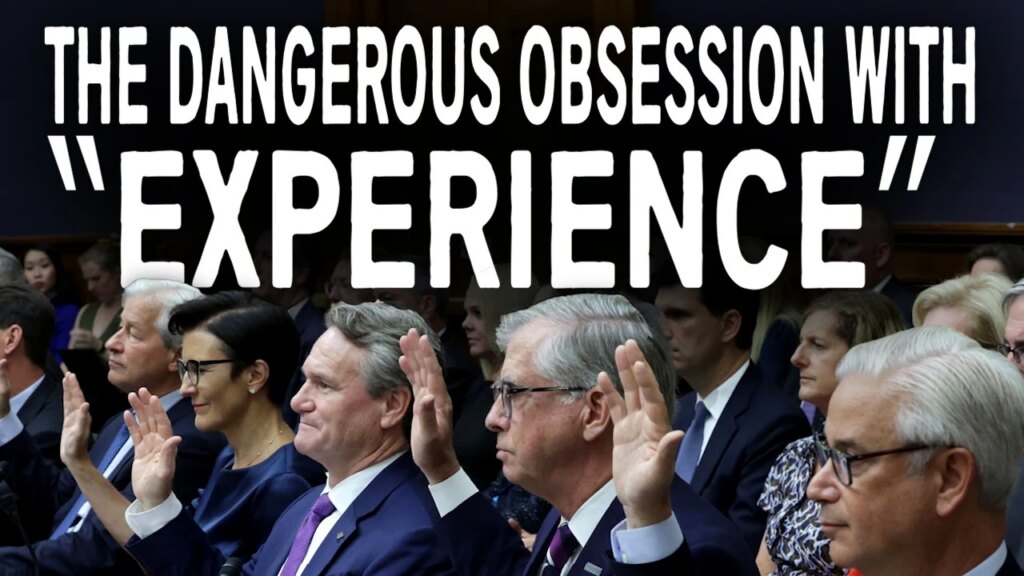
Most employees understand the basic terms of workplace accountability. Perform poorly for long enough and the promotion disappears, the bonus shrinks or the job ends. Senior executives frequently operate under a different system, one in which failure can produce a lucrative departure, an expanded network and another opportunity to run a major company.
The contrast is most visible when a chief executive leaves after a scandal, strategic collapse or prolonged destruction of shareholder value. Workers may lose jobs, retirement savings can fall and the company may spend years repairing the damage, yet the departing executive can retain stock, pension benefits and contractual payments worth tens or hundreds of millions of dollars. The executive’s record is then repackaged as valuable experience managing through complexity.
Golden parachutes were not originally designed to reward incompetence. They can protect executives who might otherwise resist a merger or avoid difficult decisions because they fear losing their jobs. The problem develops when protection from arbitrary dismissal becomes insulation from meaningful consequences. Once the executive has substantial upside for success and a protected landing after failure, the system begins rewarding risk without imposing an equivalent personal cost.
The Golden Parachute Can Survive the Crash
Adam Neumann became the defining example of how much leverage a powerful founder can retain after a company unravels. WeWork abandoned its initial public offering in 2019 after investors questioned its losses, governance and inflated valuation, forcing Neumann out of the chief executive role. Although early reports placed the potential SoftBank arrangement near $1.7 billion, the final settlement was more complicated; Neumann ultimately received roughly $445 million in cash and stock through a later agreement, while WeWork continued struggling and eventually entered bankruptcy protection.
Dennis Muilenburg’s departure from Boeing produced a different but equally revealing result. Boeing removed him as CEO during the 737 MAX crisis, after two crashes killed 346 people and the aircraft was grounded worldwide. He received no traditional severance payment, yet left with approximately $62 million in previously earned stock and pension benefits, showing how accumulated executive compensation can still create an enormous exit even when a board officially withholds severance.
These examples should not be described loosely as executives receiving billions in bonuses for failure. Some amounts represented stock already awarded, pensions or ownership interests rather than new cash granted on the day of termination. The distinction matters legally and financially, but it does little to change how the outcome appears to employees who lose their jobs with far less protection.
The central problem is that executive contracts are negotiated before the failure occurs, often when the candidate has maximum leverage and the board is eager to secure a celebrated leader. By the time performance deteriorates, the company may already be obligated to deliver benefits that cannot easily be withdrawn without proving misconduct or violating the agreement.
Boards Often Buy Reputation Before They Buy Results
Selecting a chief executive is one of a board’s most consequential responsibilities, yet the process can resemble risk management more than a search for the best operator. A director who promotes an unconventional internal candidate assumes personal reputational risk if the appointment fails. Hiring a former CEO, prominent consultant or well-known industry figure is easier to defend because the résumé has already been validated by other powerful institutions.
That logic helps explain why failed executives and retired leaders frequently return. Major companies have increasingly brought former CEOs back into senior roles when boards want immediate credibility during a crisis, even though research on second-term leaders has produced mixed results. The familiar executive reassures investors, lenders and employees, while an untested internal candidate may require more time to establish authority.
Corporate hiring therefore contains a built-in preference for people who have already occupied the job, regardless of whether their previous tenure ended impressively. A former CEO can describe a collapse as experience navigating disruption, making hard decisions or learning from an unusually difficult market. The same failure that would disqualify a lower-level employee can become evidence that the executive has seen what lesser candidates have not.
Boards are also working with a limited and increasingly mobile leadership pool. Spencer Stuart recorded 61 CEO transitions across 60 S&P 500 companies in 2025, up from 47 transitions the previous year. Other leadership research found that the average tenure of outgoing public-company CEOs declined to 7.1 years in 2025, down from 8.3 years in 2021, suggesting that boards are replacing leaders more frequently even while relying heavily on candidates from the same established networks.
Consulting Became Corporate America’s Leadership Credential
Management consulting provides an unusually powerful route into senior corporate leadership. Consultants are trained to analyze unfamiliar businesses quickly, present recommendations to executives and move comfortably among board members, investors and senior managers. They also develop alumni networks extending across industries, giving former consultants access to decision-makers who may later become clients, directors or employers.
Consulting experience can be valuable because chief executives must understand finance, strategy, operations and organizational behavior. The danger appears when the ability to diagnose and present a problem is mistaken for the experience of living with the consequences. A consultant can recommend a restructuring, collect a fee and move to the next engagement, while the company’s employees and operating managers spend years trying to make the new structure work.
It would be inaccurate to claim that McKinsey or another consulting firm routinely installs its own former employees as CEOs through a formal process. Consulting alumni do, however, occupy a significant place in corporate leadership, and consulting remains one of the most common career backgrounds among prominent executives. Those networks can create a self-reinforcing system in which boards hire people who speak the same strategic language, use the same frameworks and recommend others with similar credentials.
The result can be a leadership class that is highly skilled at managing investor expectations, redesigning organizations and explaining strategic change, but less connected to the technical details of the products, customers and employees affected by those decisions. Industry knowledge is not the only qualification for leadership, yet boards should be cautious when polished general-management experience repeatedly outweighs deep operational understanding.
Research does not support a simple claim that technical executives always outperform professional managers. Founder-led companies can invest more heavily in innovation, but founder CEOs can also display weaker management practices or greater overconfidence. The more defensible conclusion is that leadership performance depends on the company’s needs, the executive’s range of experience and the board’s ability to balance technical depth with organizational discipline.
Executive Pay Protects Risk-Taking and Can Encourage Too Much of It
Boards defend large exit packages by arguing that talented executives will not join unstable companies without protection. A turnaround candidate asked to lead a troubled business may be risking a strong reputation, years of compensation and future employment prospects. Guaranteed severance can make the role attractive and give the executive confidence to close divisions, replace managers or pursue a sale without protecting the job at all costs.
That rationale is not entirely unreasonable. A CEO who receives nothing after a change in control might oppose an acquisition that benefits shareholders but eliminates the executive’s position. A carefully designed parachute can reduce that conflict and allow the leader to act in the company’s interests.
The problem is one of scale and structure. When compensation committees rely heavily on comparisons with other highly paid CEOs, each new contract can become justification for the next increase. Stock awards may also encourage executives to emphasize decisions that lift the share price during the measurement period, even when the long-term consequences remain uncertain.
Economic research has long described two competing explanations for executive pay. One sees compensation as an efficient contract designed to align managers with shareholders; the other sees powerful executives influencing boards and capturing more favorable terms than a genuinely independent negotiation would produce. Evidence supports elements of both, which is why the quality and independence of the board matter as much as the size of the compensation figure.
Failure Often Belongs to Everyone Except the CEO
Chief executives receive exceptional compensation partly because their decisions can affect billions of dollars in corporate value. The logic becomes difficult to defend when favorable performance is credited to leadership while poor performance is blamed on interest rates, regulators, consumers, employees or an unpredictable economy.
A CEO cannot control every external force, and it would be unfair to attribute every decline to one person. The opposite extreme is equally misleading. Executives choose acquisitions, capital structures, senior managers, product priorities and cost reductions. They influence culture and determine whether unwelcome information reaches the board before a problem becomes a crisis.
Stock-based pay was supposed to align CEOs with shareholders by making executives owners. It can do so, but it can also reward temporary valuation increases and encourage leaders to conceal bad news when compensation depends on maintaining an elevated share price. Research has warned that equity-heavy incentives can become particularly problematic in growth companies when executives benefit from sustaining an overvalued stock.
Boards often respond to poor performance by replacing the executive while leaving the broader system intact. The next CEO receives another large package, launches another restructuring and announces another strategic transformation. Employees endure repeated reorganizations while advisers, recruiters and senior executives continue receiving fees and compensation from the cycle.
Elon Musk Shows the Difference Between Pay and Control
Elon Musk’s compensation at Tesla operates on a scale that makes ordinary golden parachutes look minor, but his situation is fundamentally different from a conventional salaried executive negotiating severance. Musk’s packages are primarily performance-based equity arrangements intended to increase his ownership and voting power if Tesla reaches extraordinary market-value and operational targets.
Tesla shareholders approved a new performance plan in November 2025 that could eventually be worth hundreds of billions of dollars, and potentially close to $1 trillion at the highest achievement levels. The headline amount is not guaranteed cash; it depends on Tesla reaching exceptionally ambitious goals involving market capitalization, vehicle deliveries, robotaxis and humanoid robots.
Musk has argued that greater ownership is necessary to preserve sufficient influence as Tesla expands into artificial intelligence and robotics. By June 2026, filings indicated that he held roughly 19.9% of Tesla’s outstanding stock after exercising options and converting more of his economic interest into voting shares.
The board’s dilemma is clear. Musk’s leadership, public identity and strategic ambitions are deeply connected to Tesla’s valuation, so losing him could damage investor confidence. Granting additional equity, however, dilutes other shareholders and strengthens the control of an executive whose decisions involve considerable operational, political and reputational risk.
This is not simply a debate over whether one person deserves an enormous salary. It is a negotiation over how much control shareholders must surrender to retain a leader they believe is central to the company’s future. When a CEO’s perceived value becomes inseparable from the company’s market value, the executive can negotiate from a position few boards are capable of resisting.
Companies Need Leaders Who Own the Consequences
Corporate America does not suffer from a shortage of intelligent executives. It suffers from incentives that sometimes reward appearances, networks and short-term financial results more consistently than durable operating performance.
A better compensation system would still reward leaders generously when they create substantial value, but it would extend the measurement period and make more pay vulnerable to later outcomes. Stock awards could vest over longer periods, with meaningful clawbacks when results were produced through misconduct, misleading disclosures or strategies that collapsed soon after the executive’s departure. Severance could protect leaders from arbitrary removal without guaranteeing extraordinary wealth after documented failure.
Boards should also invest more seriously in internal succession. An executive who has spent years inside the company understands its products, employees and unresolved weaknesses in ways an outside celebrity may not. External experience can be valuable, but it should not automatically outweigh the credibility earned through operating the actual business.
The deeper cultural change involves rejecting the idea that every former CEO is qualified because the title appears on a résumé. Experience should be judged according to what the executive built, what remained after departure and how stakeholders were treated when performance deteriorated. A leader who preserved personal wealth while transferring the consequences to employees and shareholders may understand corporate survival, but not necessarily corporate leadership.
Golden parachutes will not disappear because some serve a legitimate purpose. Nor should every failed CEO be permanently excluded from another leadership role, since capable people make mistakes and difficult businesses can overwhelm even strong executives. Accountability requires something more precise: compensation that reflects long-term outcomes, boards willing to challenge celebrated candidates and a hiring market that distinguishes genuine learning from failure repackaged as experience.
Until that happens, corporate America will continue practicing its most exclusive form of career advancement. Workers will be judged by their latest results, while executives will be judged by whether their failures were important enough to make them famous.