Greece Thinks a Sixth Workday Will Fix Its Economy. It May Be Solving the Wrong Problem
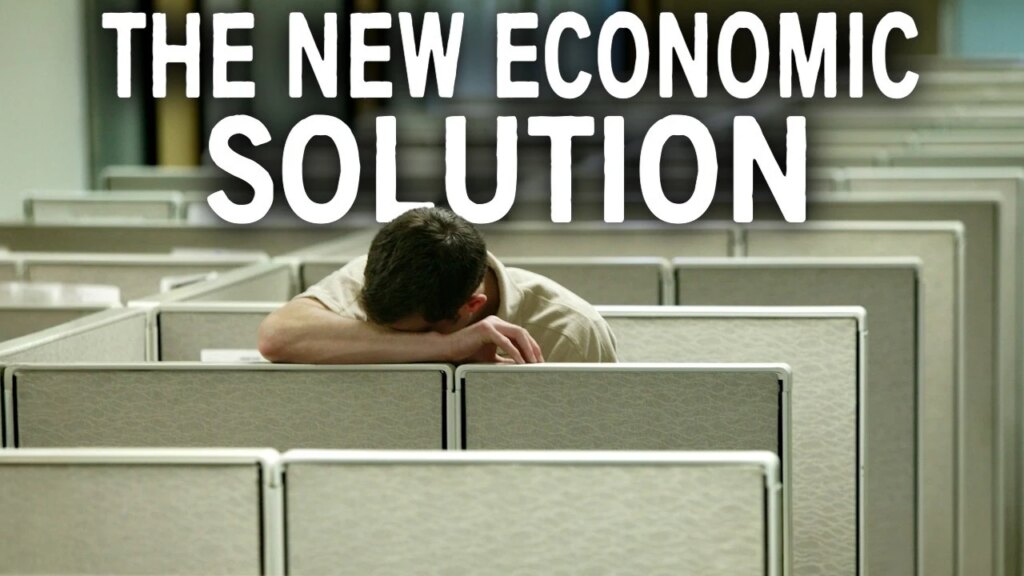
Greece has spent years rebuilding an economy devastated by a sovereign-debt crisis, weak investment and the departure of hundreds of thousands of workers. Its response to one of the remaining problems—labor shortages—has included allowing some businesses to put employees on a sixth workday. The policy has been portrayed internationally as Greece embracing a 48-hour workweek just as other European countries experiment with four-day schedules, but the actual law is narrower than that description suggests. What makes the policy interesting is not that every Greek employee is suddenly being forced to work Saturdays, but that one of Europe’s longest-working populations is being asked whether even more hours are the solution to an economy still struggling with productivity and wages.
Greece’s rules permit certain businesses operating continuously or facing specific workload conditions to use an additional sixth day, generally limited to eight hours. Employees working that sixth day receive a 40% premium, and the law excludes hotel and food-service workers from the particular provisions governing the additional day. Greece’s broader labor framework allows statutory weekly work of as much as 48 hours under a six-day system, while contractual working time remains generally centered around 40 hours.
That is materially different from declaring a mandatory national six-day workweek. Still, the direction of the policy is striking because Greece already records the longest average workweek in the European Union. In 2025, Greek workers ages 20 to 64 averaged 39.6 actual hours in their main jobs, compared with an EU average of 35.9 hours and just 31.9 hours in the Netherlands.
The question therefore is not whether Greece can extract another day of labor from some employees. It is whether an economy becomes stronger because people work more hours, or because each hour of work becomes more productive and valuable. Greece’s experience suggests those are very different objectives.
Greece Is Already Europe’s Longest-Working Country
A six-day policy might sound logical if Greece suffered from unusually short working hours. The data show the opposite. Eurostat found that Greece had the longest average actual workweek in the European Union in 2025, ahead of Bulgaria, Poland and Lithuania and nearly eight hours longer than the Netherlands.
That does not mean every Greek employee is working 40 hours while every Dutch employee is working 32. National averages are influenced by part-time employment, occupation, self-employment and industry structure, but the comparison still matters because it undermines the idea that Greece’s central economic weakness is insufficient time spent working. Greeks are already putting in more hours than workers in countries with much higher incomes and productivity.
This is the core problem with treating working time as an economic growth strategy. A country can increase output by increasing the number of hours worked, but that is the least sophisticated way to generate growth. The more durable route is raising the value produced during each hour through technology, investment, education, better management and more efficient firms.
OECD analysis of Greece has identified productivity and employment as long-term challenges, noting that many smaller Greek firms continue to struggle with digital adoption and performance even as labor shortages increase. If the structural problem is low productivity, extending the week can increase total labor input without fixing the underlying weakness.
The Sixth Day Is Really a Labor-Shortage Policy
The strongest argument for Greece’s policy is not that workers need to become more industrious. It is that businesses in certain sectors cannot find enough people.
Greece has an aging population, relatively low employment rates in several groups and persistent mismatches between the skills companies need and the workers available. The OECD has described growing Greek labor shortages occurring alongside unfavorable demographic trends and a labor market that still has considerable room to bring more people into employment.
Allowing a company to pay existing employees to work an additional day can therefore solve an immediate operational problem. If a factory or other qualifying business cannot hire enough workers to keep production running, using current employees for another shift can be faster than recruiting, training and integrating new staff.
The danger comes when an emergency staffing solution becomes a substitute for solving the reasons workers are missing. Longer schedules can keep production moving this month while doing little to address low wages, emigration, weak labor-force participation or the difficulty some businesses face attracting skilled employees.
Greece Lost Exactly the Workers It Now Needs
The Greek debt crisis produced one of Europe’s most significant modern brain drains. During the 2010s, large numbers of young and highly educated Greeks left the country seeking employment in places such as Germany, the Netherlands and other wealthier European economies.
European Commission analysis found that Greece’s population fell by almost 400,000 between 2010 and 2019 as a result of net emigration and natural population decline, with the migration wave disproportionately involving young, highly educated people in fields including medicine and engineering. The outflow did not simply remove people; it removed precisely the workers whose education and skills could have contributed to higher productivity later.
Emigration has moderated from the crisis-era peak, but it has not disappeared. OECD data show that emigration of Greek citizens to OECD countries rose 18% in 2022 to about 33,000, with Germany and the Netherlands among the most common destinations.
That makes the labor shortage partly self-inflicted by history. Greece is now asking some remaining workers to work an additional day in an economy that previously gave many younger workers powerful incentives to leave.
You Cannot Outwork a Wage Problem Forever
There is an obvious way to encourage more people to remain in Greece or return from elsewhere in Europe: make Greek employment economically more competitive. That is easier to say than accomplish because wages ultimately depend on productivity, investment and what businesses can sustainably afford to pay.
Still, the difference in purchasing power matters. Greece’s economy has recovered significantly, yet average incomes remain weak relative to much of Western Europe, and a cost-of-living squeeze continues to create public pressure. Reuters reported this month that Greek unemployment was 7.9% while average incomes remained broadly stagnant compared with 2009 even after years of economic recovery.
Asking an existing employee to work another eight hours can raise that individual’s paycheck, especially when the sixth day receives a premium. It does not necessarily raise the worker’s hourly economic value or improve the long-term competitiveness of the job.
A country trying to keep skilled young workers must compete on more than total hours available. Career opportunity, wages, housing costs, public services and the quality of working life all influence whether someone stays in Athens or moves to Amsterdam.
More Hours Do Not Automatically Mean More Productivity
The distinction between total output and productivity is easy to miss. If five employees each work eight additional hours, the business has purchased 40 additional hours of labor and may produce more output. That does not mean the company has become more productive because productivity measures how efficiently labor and other inputs are converted into goods and services.
A company that produces 100 units with 1,000 labor hours and later produces 104 units with 1,040 hours has increased production without necessarily increasing labor productivity. By contrast, a company that introduces better equipment and produces 110 units with the original 1,000 hours has genuinely improved productivity.
This is why countries with shorter average workweeks can still be dramatically richer. Wealthier European economies often combine shorter working hours with better technology, higher capital investment, stronger institutions and more valuable industries. The economic objective should be increasing output per hour rather than simply maximizing the number of hours available to employers.
Greece’s own productivity challenge makes that distinction especially important. Longer weeks can provide temporary relief from staffing shortages, but they are a poor substitute for investment that makes the same worker more productive.
Longer Workweeks Have a Human Cost
Economic models can treat labor hours as interchangeable units, but people become tired. The 48th hour of a workweek does not necessarily generate the same quality of output as the 18th, particularly in physically demanding or high-stress occupations.
Long working hours have been associated in international health research with increased risks of cardiovascular disease and stroke, particularly at very high levels of weekly work. Fatigue can also increase errors, workplace accidents and absenteeism, creating costs that do not appear when a policy is evaluated solely through the number of scheduled hours.
The tradeoff can be particularly difficult in sectors already experiencing labor shortages. If employees work longer because companies cannot recruit enough staff, the resulting burnout can make those jobs less attractive and increase turnover, producing an even larger shortage.
A company can therefore enter a cycle in which shortages cause longer hours, longer hours make employment less appealing and declining job quality produces additional shortages. The sixth day solves the schedule while potentially worsening recruitment.
The Rest of Europe Is Moving in the Opposite Direction
Greece’s policy attracted international attention partly because it arrived while several European countries and companies were experimenting with shorter working weeks. Trials of four-day schedules have generally focused on maintaining output through improved organization rather than simply compressing five days of identical work into four.
The underlying theory is almost the mirror image of Greece’s approach. Instead of asking how much more time employees can provide, companies ask whether meetings, administrative work and inefficient processes can be reduced enough to produce similar results in fewer hours.
That approach will not work equally well in every industry. A manufacturing plant, hospital, restaurant or transportation network cannot eliminate human coverage as easily as an office can eliminate an unnecessary meeting, and businesses needing physical staffing around the clock face legitimate scheduling constraints.
Still, the comparison exposes an important philosophical difference. One model treats labor time as the scarce resource that must be expanded, while the other treats productivity as the problem that must be improved.
American Workers Already Know What a Hidden Six-Day Week Feels Like
The Greek debate also has an American parallel, even though the United States has not formally introduced a national six-day schedule. Millions of Americans effectively create longer workweeks themselves through second jobs, freelance work and side hustles.
Bureau of Labor Statistics data show that about 8.8 million Americans held multiple jobs in 2025, representing roughly 5.4% of all employed people. More than five million combined a full-time primary job with a part-time secondary job, while another 2.2 million worked multiple part-time jobs.
That is not the majority of workers, and social-media claims that virtually everyone now needs a side hustle exaggerate the trend. Yet the numbers are large enough to show that a meaningful portion of the labor force is already extending the workweek beyond one employer.
The economic motivation varies widely. Some people freelance because they enjoy entrepreneurship or want additional savings, while others take second jobs because ordinary wages do not comfortably cover housing, food, healthcare or debt.
Most Side Hustles Are Not Startups
The language around side hustles can make secondary employment sound entrepreneurial. In reality, a second source of income can be anything from running a successful consulting business to driving deliveries after an eight-hour workday.
There is an important difference between building an asset and selling additional hours. A side business that develops intellectual property, customers or employees can eventually create wealth independent of the founder’s labor. A second hourly job provides additional income but generally stops paying as soon as the worker stops showing up.
That does not make the second job irrational. For someone paying down debt, building an emergency reserve or trying to afford rising expenses, additional labor can provide immediate financial improvement.
The broader economic warning appears when supplemental work becomes necessary merely to maintain an ordinary standard of living. At that point, longer working hours can mask stagnant purchasing power rather than demonstrate entrepreneurial dynamism.
Household Work Can Rise Even When Formal Work Hours Fall
Historical comparisons showing that average paid working hours have fallen over many decades can also obscure how households experience time. In many modern families, two adults participate in paid employment, meaning total household labor can remain high even if each individual’s formal workweek is shorter than that of a single-earner household generations ago.
Unpaid work adds another layer. Childcare, elder care, housework, responding to emails after hours and other tasks can expand the effective workday without appearing fully in payroll statistics.
Technology has made that boundary especially porous for professional employees. The ability to answer messages from a phone means work no longer necessarily stops when someone leaves the office, and BLS time-use data show that more than half of workers with bachelor’s degrees or higher performed at least some work from home on days they worked in 2025.
The modern argument over working hours is therefore not simply about whether the official schedule says 35, 40 or 48 hours. It is about how much of a person’s week is effectively controlled by paid and unpaid labor.
Aging Populations Make the Labor Math Harder
Greece is confronting a problem that will increasingly affect other advanced economies. Populations are aging while the share of people available to work is growing more slowly or shrinking, leaving fewer workers to support larger retired populations.
There are only several broad ways to respond. Countries can increase productivity, bring more existing residents into employment, encourage immigration, extend working lives or ask current workers to provide more labor hours.
Greece is attempting several of these simultaneously. OECD analysis notes that the country has pursued immigration reforms partly to address shortages, while significant unused labor-market capacity remains among some demographic groups.
The sixth day should therefore be understood as one piece of a much bigger demographic problem. The challenge is not unique to Greece, and countries across Europe will increasingly have to determine how to finance pensions, healthcare and public services when the ratio of workers to retirees declines.
Immigration Is the Obvious Economic Answer—and a Difficult Political One
If an economy has jobs but not enough workers, immigration is one of the most direct ways to increase labor supply. OECD research specifically notes that well-designed immigration can alleviate labor shortages in the short to medium term, even though migration alone cannot fully offset population aging.
Greece has already moved in this direction. Its migration-policy reforms have included efforts to facilitate legal migration and improve labor-market access as policymakers attempt to fill shortages in sectors that cannot find enough domestic workers.
Immigration nevertheless creates its own political and social debates involving integration, housing, public services and border management. That can make extending current workers’ hours politically simpler than dramatically expanding immigration.
Simpler does not necessarily mean more sustainable. A country can ask existing workers for another day only so many times before reaching physical, social and political limits.
High Hours Can Conceal a Weak Economy
There is an uncomfortable economic lesson in Greece’s labor statistics. Working more does not necessarily mean earning more, and an economy in which people work extremely long hours can sometimes be demonstrating weakness rather than strength.
A worker using 48 hours to generate income that someone elsewhere produces in 35 hours is not benefiting from the extra labor simply because the schedule is longer. The relevant measure is what those hours purchase and how much value the economy generates from them.
This is why productivity growth matters so much for living standards. Higher productivity allows wages to rise without requiring businesses to raise prices proportionally, and it allows societies eventually to choose more leisure without sacrificing output.
An economy that can only raise production by continually increasing labor hours has reached a much less attractive form of growth. It becomes richer by consuming more of people’s time rather than by making that time more valuable.
Greece’s Sixth Day May Work—But That Does Not Make It a Model
For specific companies facing genuine staffing shortages, Greece’s additional workday can make sense. Employees receive extra compensation, businesses gain flexibility and production does not have to stop simply because a sixth shift cannot otherwise be staffed.
The mistake would be interpreting that practical measure as evidence that longer workweeks are the answer to weak growth. Greece already works more hours than any other EU country, while productivity, wages, demographics and labor-force participation remain much deeper economic challenges.
If the policy becomes a bridge while Greece attracts workers, invests in technology and improves productivity, the extra day may prove useful. If it becomes a permanent substitute for those reforms, the country risks asking a shrinking workforce to compensate for structural problems simply by surrendering more time.
That lesson extends far beyond Greece. Americans working second jobs, professionals answering emails late at night and businesses trying to solve shortages with overtime are all versions of the same economic question. More labor can produce more output, but the real sign of progress is producing more without requiring people to give up an ever-larger share of their lives.