Wall Street Is Moving South. Texas Now Has Three Stock Exchanges Fighting for Listings
For more than a century, the center of American stock trading has been synonymous with New York. That grip is beginning to loosen.
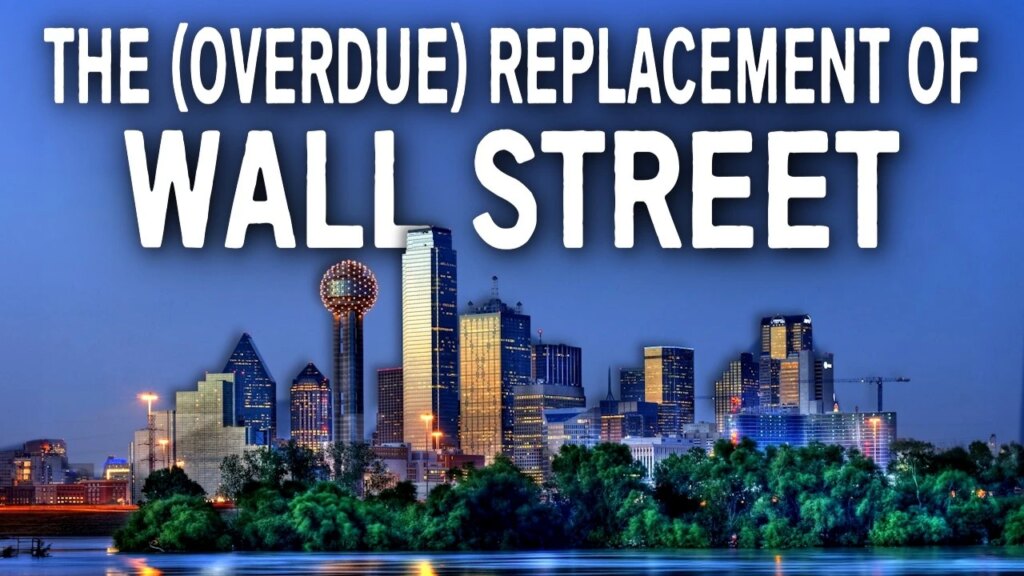
The Texas Stock Exchange, backed by financial heavyweights including BlackRock, Citadel Securities, Charles Schwab and J.P. Morgan, began production trading in 2026 from its Dallas headquarters. It is entering a market already transformed by the arrival of NYSE Texas and Nasdaq Texas, turning the state into the most serious geographic challenge to New York’s dominance in U.S. equity listings in decades.
Texas is not replacing Wall Street. But the competition could change how much companies pay to list, how exchanges court issuers and where America’s financial infrastructure is concentrated.
The Texas Stock Exchange Has Serious Backing
When TXSE was first announced in 2024, it had raised roughly $120 million and described itself as potentially the most well-capitalized new exchange applicant in SEC history. By its later financing round, TXSE Group said total capital raised had reached approximately $250 million, with 82 financial institutions and business leaders among its owners.
That investor list matters because launching an exchange requires far more than building a trading platform. An exchange needs broker-dealers, liquidity providers, market makers, data connections and companies willing to trust a new venue with their securities.
TXSE says seven of the 10 largest liquidity providers are among its investors and collectively represent more than 70% of U.S. equity order flow. Citadel Securities alone executes more than one in four U.S. shares traded, while Charles Schwab represents a major source of retail order flow.
That does not guarantee TXSE will become a major rival to NYSE or Nasdaq. But it gives the exchange something most startups lack: immediate relationships with firms already deeply embedded in U.S. market infrastructure.
BlackRock Is an Investor, Not a Guaranteed Source of Liquidity
BlackRock’s involvement has attracted particular attention because of its enormous scale. TXSE said BlackRock managed about $13.5 trillion when the exchange announced its second funding round.
But that should not be interpreted to mean BlackRock can simply direct trillions of dollars onto TXSE or guarantee the exchange’s success. Asset managers invest client money under specific mandates, and exchange liquidity depends on trading activity across many institutions rather than the balance sheet of a single investor.
The significance is more strategic. Having BlackRock, Citadel Securities, Schwab and other major firms as shareholders gives the exchange credibility with issuers and market participants before it has decades of operating history.
That credibility matters when asking a company to move a primary listing away from an incumbent exchange.
TXSE Is Already Trading
The exchange passed a major milestone on July 31, 2026, when it completed the phased rollout of all National Market System securities and marked the launch of full production trading. TXSE said it opened with more than 50 member firms.
The next battle is listings.
Texas Capital announced that two of its Texas-focused exchange-traded funds would move from NYSE Arca and become TXSE’s first primary listings. Energy Transfer then announced plans to transfer its common and preferred units from the New York Stock Exchange to TXSE in October 2026.
Those moves matter because trading securities listed elsewhere is relatively straightforward for a new exchange. Convincing companies to make TXSE their actual primary listing venue represents a much more direct challenge to NYSE and Nasdaq.
NYSE and Nasdaq Didn’t Wait
The incumbents responded before TXSE could establish Texas as its exclusive territory.
NYSE Texas opened in March 2025 after Intercontinental Exchange reincorporated its Chicago exchange in Texas. The platform began attracting dual listings from companies including Trump Media, AT&T and Texas Pacific Land while allowing them to retain their existing primary NYSE listings.
Nasdaq followed with Nasdaq Texas, which became fully operational in March 2026. Companies including APA, J.B. Hunt and Huntington Bancshares were among those expected to dual list on the new venue, and Nasdaq itself joined the inaugural group.
The competition became even more direct in September, when Nasdaq filed to allow Nasdaq Texas to become a primary listing venue rather than simply a destination for dual listings.
Texas therefore does not have one challenger exchange. It now has three exchange brands competing for corporate attention.
Why Texas?
The simplest explanation is that Texas already has the companies.
The state leads the country with 57 Fortune 500 headquarters in 2026, according to the governor’s office, with those companies generating approximately $2.8 trillion in combined revenue. Texas also has more NYSE-listed companies than any other state, representing more than $3.7 trillion in market capitalization, according to NYSE.
That gives exchange operators a natural customer base across energy, technology, telecommunications, airlines, manufacturing and financial services.
Dallas also offers something New York cannot easily replicate: proximity to a rapidly expanding corporate headquarters market. Firms that have moved operations, legal domiciles or senior executives to Texas may find a Texas-based listing venue attractive from a branding or relationship standpoint even if the technical mechanics of trading remain national.
The exchange business is ultimately about relationships as much as geography.
This Isn’t About Escaping the SEC
The most misleading description of TXSE is that companies can move to Texas to avoid regulation.
TXSE is a registered national securities exchange regulated by the Securities and Exchange Commission. Its rules, fee schedules and listing standards are filed with the SEC just as those of NYSE and Nasdaq are. The SEC continues reviewing TXSE rule changes involving listing standards, proxy voting, trading auctions and other market functions.
The real competitive argument is narrower. TXSE has said issuers want greater predictability in listing standards and costs, while its founders have criticized rising compliance burdens associated with existing exchanges.
That leaves room for competition over exchange-specific rules, fees and governance without eliminating federal securities regulation.
A company listed in Texas still has to comply with federal disclosure, antifraud and reporting requirements.
Listing Costs Could Become More Competitive
Competition tends to matter most when customers have alternatives.
For decades, companies seeking a prestigious U.S. public listing largely chose between NYSE and Nasdaq. Their business models include listing fees, transaction revenue, market data and technology services.
A credible third primary-listing competitor can force incumbents to defend those economics. TXSE has already structured trading fees and rebates to attract order flow and is waiving certain membership and market-data fees through the end of 2026.
That does not necessarily mean companies will suddenly save enormous sums by switching exchanges. Listing fees are generally small relative to the total cost of being a public company.
But even modest competition can improve negotiating leverage, technology offerings and customer service.
The fact that NYSE and Nasdaq both established Texas exchanges before TXSE fully launched suggests the incumbents take the threat seriously.
Global Companies Could Become Part of the Fight
TXSE has consistently said it wants both U.S. and international companies to access American capital markets through its platform.
The appeal is understandable. U.S. equity markets remain among the deepest and most liquid in the world, and foreign businesses frequently seek American listings to gain access to institutional capital and wider investor exposure.
But Texas does not remove the barriers that make U.S. listings expensive. Foreign issuers still face federal securities requirements, accounting standards and ongoing disclosure obligations.
TXSE’s opportunity is therefore less about offering an unregulated alternative and more about convincing global issuers that a newer exchange can provide competitive economics, technology and service while retaining access to the same national market system.
That is a harder pitch—but also a more sustainable one.
Texas Could Gain More Than Trading Volume
The economic impact extends beyond the transactions themselves.
Exchanges employ engineers, compliance professionals, market-structure specialists, sales teams and executives. Around them grows an ecosystem of law firms, broker-dealers, data companies, investment firms and financial technology providers.
The arrival of TXSE, NYSE Texas and Nasdaq Texas gives Dallas another reason to compete for financial-industry jobs traditionally concentrated in New York, Chicago and other established hubs.
That could accelerate the broader movement of corporate and financial jobs into Texas. But the benefits can come with familiar costs.
High-income migration has already placed pressure on housing in several fast-growing Texas metropolitan areas. If financial firms continue expanding in Dallas, demand for housing, office space and professional services could increase further.
An exchange will not determine Texas home prices on its own, but it can contribute to the same economic forces reshaping the state’s major cities.
Texas Is Becoming a Financial Battleground
The most important development may be what TXSE has already forced its competitors to do.
Before the new exchange began trading, NYSE opened a Texas exchange. Nasdaq followed. Both now have dedicated Texas platforms, and Nasdaq is moving toward primary listings there.
That is a significant response to an entrant that did not exist a few years ago.
NYSE and Nasdaq retain enormous advantages. They have global brands, decades of issuer relationships and deeply established market infrastructure. Companies do not move primary listings casually, and creating another exchange does not automatically recreate the prestige associated with ringing the opening bell on Wall Street.
But TXSE does not necessarily need to replace either incumbent to succeed.
If it captures a meaningful number of primary listings, pressures fees or forces competitors to improve their offerings, the exchange could reshape the market without ever becoming the largest venue.
The larger story is that American finance is becoming less geographically concentrated. Texas already attracted corporate headquarters, technology investment and private capital. Now the stock exchanges are following.
Wall Street is still in New York.
The fight for what comes next increasingly runs through Dallas.