Have a Pension? It Can Change Almost Every Retirement Decision You Make
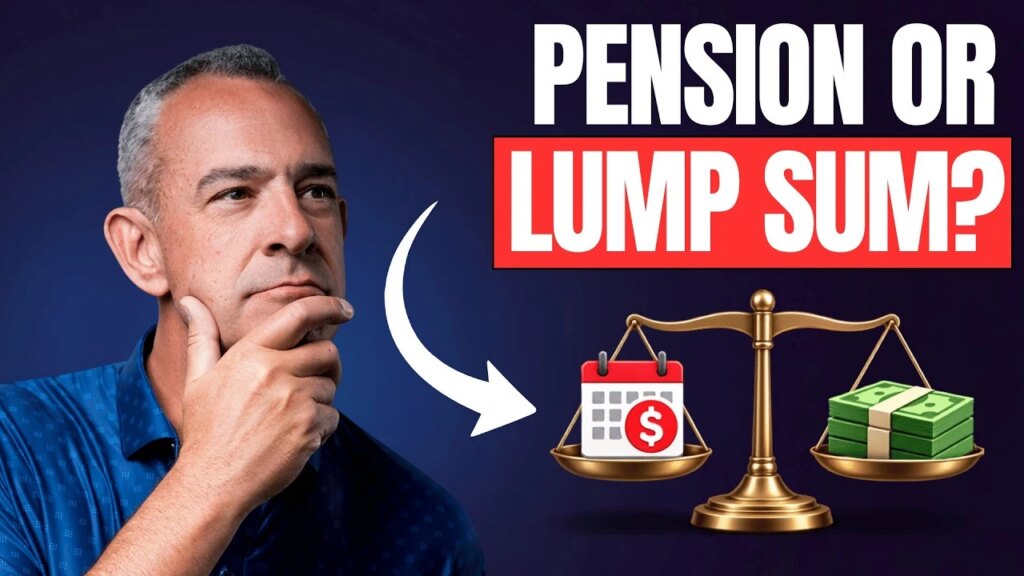
A pension can completely change the way retirement should be planned. Instead of relying almost entirely on investments, a retiree with a pension may have a meaningful portion of monthly expenses covered by guaranteed income before touching an IRA or 401(k). That can reduce pressure on the portfolio, create more flexibility around Social Security, and make market downturns easier to manage.
But pensions also come with decisions that can be difficult to reverse. Choosing between a single-life benefit, a joint-and-survivor option, or a lump sum can affect both spouses for decades, while inflation can quietly erode the value of a fixed monthly benefit. The pension itself may be valuable, but how it is integrated into the rest of the retirement plan matters just as much.
A Pension Is More Valuable Than Its Monthly Check
The biggest advantage of a traditional defined-benefit pension is predictability. Unlike a stock portfolio, a lifetime pension does not depend on whether the market rises or falls during retirement, and the retiree does not have to decide how much to withdraw each year. The payment can function like another layer of Social Security, providing a foundation for essential expenses.
That stability can make the rest of the portfolio easier to manage. If Social Security and a pension eventually cover most housing, food, insurance, and other necessities, investments do not have to carry the full burden of retirement spending. That may allow the household to take more long-term investment risk, spend more confidently on travel, or preserve more assets for children and charities.
The mistake is valuing the pension only by multiplying the monthly payment by 12. The real value comes from the fact that the income can continue for life, potentially across the lives of two spouses, without requiring the retiree to manage market risk.
Inflation Is the Pension’s Biggest Weakness
A pension paying $4,000 a month may feel substantial when retirement begins, but a fixed benefit can lose significant purchasing power over a 20- or 30-year retirement. At 3% inflation, prices would roughly double over about 24 years, meaning the same monthly pension would eventually buy far less than it did when the payments started.
That makes cost-of-living adjustments especially important. Some pensions provide no COLA, while others increase benefits using a fixed percentage or another formula. A compounding COLA is generally more powerful over long periods because each increase builds on the prior year’s higher payment, while a simpler adjustment may grow more slowly.
Before making any pension election, retirees should understand exactly how the benefit changes over time. A smaller starting payment with meaningful inflation protection can sometimes provide more long-term value than a larger payment that never increases.
Single Life Pays More—but Stops at Death
Many pension plans offer a single-life annuity that provides the largest monthly payment available to the employee. The trade-off is that payments generally stop when that person dies, leaving no continuing pension for a spouse or other beneficiary.
That can work for someone who is unmarried or whose spouse has substantial independent retirement income. For a married couple who relies heavily on the pension, however, the higher initial payment can create a significant survivor risk.
Federal rules generally require many defined-benefit plans to provide a qualified joint-and-survivor annuity as the normal form for married participants unless both spouses properly elect another option. The survivor benefit must generally continue at least half of the benefit paid during their joint lives, although plans can offer other percentages such as 75% or 100%.
The important question is not simply which option pays more today. It is what happens to the surviving spouse’s income after the first death.
Joint-and-Survivor Coverage Acts Like Insurance
A joint-and-survivor pension usually lowers the monthly payment while both spouses are alive in exchange for continuing some or all of the benefit after the pensioner dies. Plans may offer options such as 50%, 75%, or 100% survivor benefits.
That reduction can be viewed as the cost of insuring the spouse against the loss of pension income. A healthy younger spouse who depends heavily on the pension may find that protection particularly valuable because payments could potentially continue for many years after the employee dies.
The decision should be coordinated with life insurance, Social Security survivor benefits, other assets, and each spouse’s own pension income. A couple with substantial liquid savings may be comfortable accepting more survivor risk, while another household may need the pension to remain intact for both lives.
Once pension payments begin, the election is often difficult or impossible to change. That makes the survivor decision one of the most important choices in the entire retirement plan.
The Lump Sum Creates Flexibility—and New Risks
Some pension plans allow participants to choose a lump sum instead of lifetime payments. That option can be attractive because the money may be rolled into an IRA, invested, spent more flexibly, or ultimately left to heirs.
The trade-off is that the retiree assumes responsibility for turning that lump sum into lifetime income. PBGC notes that an annuity provides steady lifetime payments, while a lump sum creates the risk that the money could eventually run out if it is poorly managed or the retiree lives longer than expected.
The attractiveness of a lump sum also depends partly on interest rates and the actuarial assumptions used by the plan. Pension lump-sum calculations consider factors including mortality assumptions and interest rates, which means the value offered can change over time even when the monthly pension benefit does not.
There is therefore no universal rule that a lump sum is better than the pension or vice versa. Someone with poor health, substantial outside guaranteed income, or strong estate goals may value the flexibility of the lump sum, while a healthy couple expecting a long retirement may place greater value on lifetime monthly payments.
A Pension Can Let the Portfolio Work Differently
A reliable pension changes the job of the investment portfolio. Someone without guaranteed income may need a larger allocation to bonds and cash because investments must produce nearly every retirement paycheck. A retiree whose pension and Social Security cover most essential spending may have more freedom to leave long-term assets invested for growth.
That does not mean every pension recipient should own more stocks. Risk tolerance, age, spending needs, and the size of the pension all matter. But guaranteed income can act somewhat like a bond-like component of the broader household balance sheet because it provides predictable cash flow that does not fluctuate with the stock market.
The more expenses the pension covers, the less likely the retiree is to be forced to sell stocks during a downturn. That can reduce sequence-of-returns risk and allow discretionary spending to be funded more flexibly.
The Pension Can Also Affect When You Claim Social Security
A pension may make it easier to delay Social Security because the household already has another source of guaranteed income. Someone who does not need Social Security immediately can potentially use the pension and portfolio to cover expenses while allowing Social Security benefits to grow until a later claiming age.
That strategy is not automatically right for everyone. Health, longevity, survivor benefits, and the size of the pension should all influence the decision. But the presence of pension income creates more choices than a household that needs Social Security as soon as possible to cover monthly bills.
The pension and Social Security should therefore be viewed together. They form the guaranteed-income portion of the retirement plan, while investments provide additional growth, liquidity, and flexibility.
Early Retirement Years Can Create Tax Opportunities
One surprising advantage of a pension plan can occur when employment ends before Social Security and required minimum distributions begin. A retiree may receive pension income but still have considerably less taxable income than during peak working years, creating a potential window for Roth conversions.
A Roth conversion moves assets from a traditional retirement account into a Roth account. The taxable portion of the conversion is generally included in income in the year the conversion occurs, so it is not a tax-free strategy. The advantage is paying tax intentionally today in exchange for reducing future traditional IRA balances and allowing the Roth assets to potentially grow tax-free.
The best conversion amount depends on pension income, deductions, Social Security timing, Medicare thresholds, and expected future tax rates. The goal is not to eliminate the IRA as quickly as possible but to use lower-income years before future income becomes less controllable.
RMDs Can Create a Tax Problem Later
Traditional retirement accounts eventually become subject to required minimum distributions. Under current law, the applicable RMD age is generally 73 for people reaching that age before 2033, while the applicable age becomes 75 for later cohorts covered by SECURE 2.0.
A pension can make those future RMDs more significant because the distributions stack on top of income that is already arriving every month. Add Social Security and investment income, and a retiree who seemed to have modest taxable income early in retirement can later find themselves in a much higher bracket.
That makes the years before RMDs particularly important. Converting some traditional IRA assets earlier can potentially reduce future required distributions and give the household a larger pool of tax-free Roth money for later spending.
The right balance depends on projections rather than rules of thumb. A large pension combined with a large traditional IRA may justify more aggressive tax planning than a household whose pension already keeps them in a relatively high bracket.
A Pension Can Increase Spending Confidence
One of the biggest psychological benefits of a pension is that it can make spending easier. Retirees who rely entirely on an investment portfolio may hesitate to travel, make gifts, or spend on family because every withdrawal makes the account balance visibly smaller.
Guaranteed income changes that dynamic. If a pension and Social Security cover most core expenses, portfolio withdrawals can be reserved for discretionary goals such as travel, home improvements, charitable giving, or helping children and grandchildren.
That does not mean the pension should encourage reckless spending. It means the household can separate essential expenses from discretionary ones more clearly, knowing that at least part of the retirement paycheck does not depend on market returns.
In many cases, that confidence can be as valuable as the pension’s mathematical benefit.
Don’t Evaluate the Pension in Isolation
The most important pension decision is not whether the monthly check looks attractive. It is how the pension fits with every other part of the retirement plan.
A single-life pension may be appropriate if a surviving spouse has plenty of independent income, while joint-and-survivor coverage may be essential when both spouses depend on the payment. A lump sum can create flexibility and inheritance potential, but it transfers longevity and investment risk back to the retiree.
Taxes add another layer. Pension income can provide stability while also affecting how much room remains for Roth conversions, Social Security, and future RMDs.
The best pension choice is therefore the one that strengthens the entire household plan, not necessarily the option with the largest payment on the first statement.
A pension is more than retirement income. Used correctly, it can change how much investment risk you need to take, how confidently you can spend, when you claim Social Security, and how aggressively you need to manage taxes.
That makes understanding the pension one of the most important steps in building the rest of the retirement strategy.
Intended for educational purposes only. Opinions expressed are not intended as investment advice or to predict future performance. Past performance does not guarantee future results. Neither the information presented, nor any opinion expressed constitutes a solicitation for the purchase or sale of any security. Consult your financial professional before making any investment decisions. Opinions expressed are subject to change without notice.
IMPORTANT DISCLOSURES:
• Investment Advisory and Financial Planning Services are offered through Pure Financial Advisors, LLC. A Registered Investment Advisor.
• Pure Financial Advisors, LLC. does not offer tax or legal advice. Consult with a tax advisor or attorney regarding specific situations.
• Opinions expressed are subject to change without notice and are not intended as investment advice or to predict future performance.
• Investing involves risk including the potential loss of principal. No investment strategy can guarantee a profit or protect against loss in periods of declining values.
• All information is believed to be from reliable sources; however, we make no representation as to its completeness or accuracy.
• Intended for educational purposes only and are not intended as individualized advice or a guarantee that you will achieve a desired result. Before implementing any strategies discussed you should consult your tax and financial advisors.