The Auto Industry Bet Big on EVs. Now It’s Rewriting the Plan
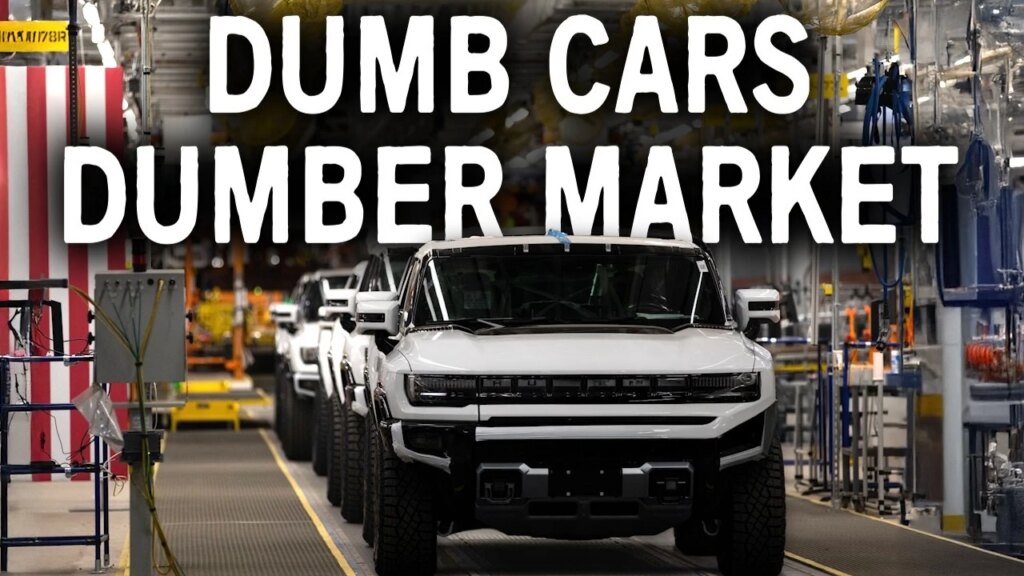
The auto industry spent much of the past decade preparing for a future that looked increasingly simple: gasoline vehicles would decline, electric vehicles would take over, and manufacturers that moved fastest would gain the advantage. That future now looks far more complicated. EV adoption is still advancing globally, but the pace differs sharply by region, consumer demand is proving less predictable than expected, and automakers are being forced to support several technologies at once.
The result is one of the most expensive strategic resets the industry has seen in decades. Manufacturers are investing in EVs while expanding hybrids, cutting some electric programs, developing advanced driver-assistance systems, and defending themselves against rapidly growing Chinese competitors. Consumers, meanwhile, are asking a much simpler question than automakers sometimes expect: which vehicle is affordable, reliable, convenient, and worth keeping for years?
EV Demand Has Not Disappeared, but the U.S. Market Has Changed
Electric vehicle sales in the United States have fallen sharply in 2026. Reuters reported that U.S. EV sales were down about 30.7% year to date through the latest data, with EVs accounting for roughly 6% of new-vehicle sales compared with 8.5% a year earlier. The expiration of the $7,500 federal consumer tax credit in September 2025, along with broader changes in federal vehicle policy, has altered the economics for buyers and manufacturers.
That does not mean Americans have suddenly rejected electric cars. J.D. Power found that 25% of new-vehicle shoppers in 2026 said they were very likely to consider an EV, slightly higher than a year earlier, while charging availability, charging time, and purchase price remained the biggest barriers. Consumer interest and actual sales can therefore move in different directions when incentives, vehicle prices, financing costs, and product availability change.
The more important change is that automakers can no longer assume EV demand will rise in a straight line. They now need enough flexibility to sell gasoline vehicles, hybrids, plug-in hybrids, and battery EVs according to what buyers actually choose rather than what long-range forecasts predicted several years earlier.
Hybrids Have Become the Industry’s Safety Valve
One of the clearest beneficiaries of the reset has been the hybrid. Reuters reported that U.S. hybrid sales increased about 23% in 2026 and reached roughly 15.6% of the market, giving manufacturers a technology that can reduce fuel consumption without requiring drivers to rely entirely on public charging.
That middle ground is increasingly attractive for both consumers and manufacturers. Buyers can get many of the efficiency benefits associated with electrification while retaining the familiarity and refueling convenience of a gasoline vehicle. Automakers can also use hybrids to reduce fleet emissions without committing every customer to a battery-electric platform.
This is forcing companies to rethink earlier plans that treated hybrids as a temporary bridge. They may instead remain a major part of the market for much longer, particularly in North America where charging access, long-distance driving, pickup trucks, and large SUVs make a rapid full-EV transition more difficult.
Automakers Are Paying Billions to Change Course
Changing an automotive strategy is extraordinarily expensive because vehicles take years to develop and factories require billions of dollars in investment. Stellantis illustrated the scale of the problem when it recorded roughly €22.2 billion, or about $26.5 billion, in charges tied partly to pulling back from earlier electric-vehicle ambitions and restructuring its product plans. Company leadership acknowledged that previous EV assumptions had been too optimistic.
General Motors has also slowed portions of its EV expansion. The company recorded a $1.1 billion charge related to reduced electric-vehicle programs in the first quarter of 2026, while one of its Ohio battery plants remained partly idled because of weaker-than-expected demand. GM has still improved the economics of its EV operation, but it is matching production more closely to actual sales rather than building capacity purely for expected future demand.
Ford has made a similar shift. It has canceled or delayed some larger EV programs while increasing its emphasis on hybrids, extended-range vehicles, smaller affordable EVs, commercial products, and battery-storage businesses. These decisions show how quickly billions of dollars in product planning can become obsolete when regulation, consumer demand, and technology change faster than expected.
EV Owners Are Happier Than the Headlines Suggest
One claim that deserves more nuance is the idea that electric-vehicle owners are broadly moving back to gasoline. Earlier surveys did show meaningful numbers of EV owners considering a return to internal-combustion vehicles, particularly because of charging and range concerns. But newer U.S. data suggest satisfaction among existing EV owners has actually improved substantially.
J.D. Power’s 2026 EV ownership study found overall battery-EV satisfaction at its highest level since the study began. An extraordinary 96% of owners of newer battery EVs said they would consider purchasing or leasing another battery-electric vehicle for their next vehicle. Public-charging satisfaction also improved significantly as charging networks expanded and more drivers gained access to Tesla’s Supercharger network.
The challenge is therefore less about convincing existing owners that EVs work and more about persuading new buyers that the economics and convenience work for them. Charging availability is still the leading reason some shoppers reject an EV, while purchase price remains another major obstacle. The industry is discovering that early adopters and mainstream buyers do not necessarily make vehicle decisions the same way.
Jaguar Is Making the Opposite Bet
While several manufacturers are adding more flexibility to their electric strategies, Jaguar has chosen a much more radical path. The company has repositioned itself as a substantially more exclusive luxury brand built around electric vehicles, dramatically reducing its traditional product lineup and attempting to move higher in price rather than compete directly with mass-market luxury brands.
Jaguar unveiled the production Type 01 electric grand tourer in New York this week, with pricing beginning around $130,500 and first deliveries expected in the second half of 2027. The car follows the controversial Type 00 concept and represents the first production vehicle on Jaguar’s dedicated electric architecture.
The strategy is risky because Jaguar is making its largest transformation just as U.S. EV demand has weakened. Rather than competing on volume, however, Jaguar is effectively betting that a smaller number of affluent buyers will pay considerably more for distinctive design, performance, and exclusivity. If that works, Jaguar may not need the sales volumes its previous lineup required, but the brand will need the actual product to justify the marketing.
Rebranding Cannot Replace Product Quality
Automotive brands can generate attention through advertising, design, and positioning, but those tools only go so far. Buyers eventually judge vehicles on reliability, ownership costs, performance, service, and resale value, particularly at luxury prices.
That makes Jaguar’s transformation a useful example for the broader industry. A dramatic marketing campaign can get shoppers interested enough to visit a showroom, but a brand cannot permanently outrun weak products or a poor ownership experience. The new Type 01 therefore has to do more than look different; it needs to demonstrate that Jaguar can deliver the quality and technology expected from a vehicle costing well into six figures.
The same principle applies to every automaker introducing expensive new technology. Customers may tolerate some experimentation in smartphones, but a $50,000 or $100,000 vehicle is a much larger commitment. The faster technology changes, the more buyers may worry that today’s expensive innovation will feel outdated long before the vehicle itself wears out.
Chinese Automakers Are Changing the Competitive Equation
The disruption is not coming only from electrification. Chinese automakers have become increasingly strong competitors, particularly in Europe, where companies such as BYD, Chery, and others are rapidly expanding their electric and plug-in hybrid lineups.
The 2026 Paris Motor Show featured a record 20 Chinese brands, roughly double the Chinese presence from two years earlier. Chinese electric and hybrid vehicles now hold meaningful shares of the European market, increasing pressure on Volkswagen, BMW, Stellantis, and other established manufacturers already struggling with expensive electrification programs.
Trade barriers have slowed Chinese expansion into some markets, particularly the United States, but they have not eliminated the competitive threat. Chinese companies have developed batteries, software, manufacturing systems, and vehicles at prices that are forcing established automakers to reconsider development costs and product timelines.
Tariffs Add Another Layer of Uncertainty
Automakers operate some of the world’s most complicated international supply chains. A vehicle assembled in one country may contain batteries, electronics, engines, steel, and components produced across several others, which means tariffs can affect costs even when the finished vehicle is manufactured domestically.
Trade policy has therefore become another moving part in long-term automotive planning. Manufacturers have to decide where to build vehicles years before they know exactly what tariff structures or local-content requirements will exist when those cars reach showrooms.
Chinese manufacturers face additional tariffs in Europe, while manufacturers selling in North America have also had to adjust sourcing and production plans as U.S. trade policy changes. The result is another reason automakers are increasingly reluctant to make irreversible bets on a single technology or manufacturing geography.
Startups Face an Even Harder Problem
Building cars has always required enormous capital, but electric vehicles briefly created the impression that new companies could challenge century-old manufacturers relatively quickly. Tesla’s rise encouraged investors to fund dozens of EV startups hoping to become the next major automotive brand.
The economics have proven much harsher. Lucid reduced production in the third quarter of 2026 as it worked through existing inventory and attempted to control costs, highlighting the difficulty of scaling a new automotive company even with substantial financial backing.
Vehicle startups must simultaneously fund factories, engineering, software, service networks, marketing, warranties, and new-model development before they reach meaningful scale. Large investors or strategic partners can keep those companies operating for years, but long-term survival eventually requires producing vehicles profitably rather than simply raising additional capital.
Technology Is Shortening the Product Cycle
The industry’s technology race creates another problem: buyers expect vehicles to improve at something closer to the pace of consumer electronics. Software, driver assistance, batteries, infotainment, charging technology, and connected services can all advance significantly during a traditional vehicle’s development cycle.
Manufacturers are responding by using more shared platforms, over-the-air updates, and partnerships with technology companies. Stellantis, for example, is working with autonomous-driving technology company Wayve in an effort to reduce development costs and shorten the time required to introduce new driver-assistance systems.
That can accelerate innovation, but it also raises development expenses and increases the risk that consumers feel their cars are obsolete too quickly. Most buyers still expect a vehicle to remain useful for many years, which creates tension between technology companies’ rapid upgrade culture and the automotive industry’s much longer ownership cycle.
Consumers Still Want the Basics
For all the industry’s focus on electrification, artificial intelligence, autonomous driving, and software-defined vehicles, most consumers still judge a car by remarkably traditional standards. They want something dependable, affordable, comfortable, convenient to use, and likely to retain reasonable value.
That helps explain why the transition is proving slower and less predictable than some forecasts suggested. A consumer does not necessarily care whether an automaker needs a particular percentage of EV sales to justify a factory investment. The buyer cares whether the vehicle fits the household budget and lifestyle.
Automakers that lose sight of that distinction risk building products around corporate strategy rather than customer demand. Technology can improve the vehicle, but it cannot substitute for a compelling product at a price consumers are willing to pay.
The EV Transition Is Not Dead—It Is Becoming Less Linear
The current turmoil does not mean electric vehicles have failed. Europe continues to post strong EV growth, electric adoption is expanding in China, and U.S. EV owners report increasingly high satisfaction. Even in the United States, used EV sales are rising and new models continue to enter the market.
What has failed is the assumption that every major market would move toward full electrification on roughly the same timetable. Government policy, electricity prices, charging infrastructure, consumer preferences, vehicle segments, and local competition are producing very different outcomes.
That is forcing automakers to become more flexible just when the cost of flexibility is highest. They must fund gasoline vehicles, hybrids, electric vehicles, batteries, software, driver-assistance systems, and new factories while competing against companies that often entered the market with fewer legacy costs.
The Auto Industry Is Entering Its Messiest Era
The next decade is unlikely to produce one clear winner between gasoline, hybrids, and electric vehicles. Different technologies may dominate different segments and countries, while manufacturers continue adjusting their plans as demand develops.
That creates enormous risk for automakers because every new platform can require billions of dollars before the first customer buys a vehicle. It also creates opportunities for companies that can move quickly, control costs, and build products consumers genuinely want rather than products designed primarily to satisfy a forecast.
The industry once expected electrification to simplify its future.
Instead, it has made the future more complicated.
The winners may not be the companies that committed most aggressively to one vision of transportation. They may be the ones flexible enough to change when consumers tell them the original vision was wrong.