BMW EV Survey Reveals What Buyers Really Want
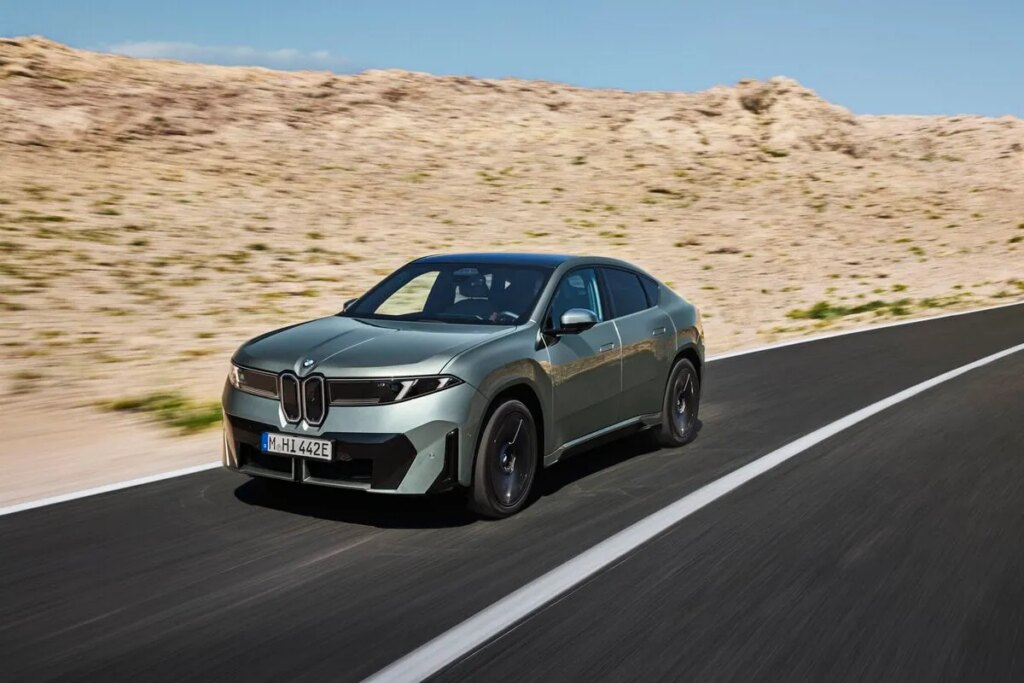
The 2026 BMW EV survey shows why Americans demand 300-mile electric cars, even when their daily journeys rarely require that much range.
Americans have developed an interesting relationship with electric cars. We want them to travel enormous distances, charge almost as quickly as filling a gasoline tank, and cost considerably less than many currently do. Meanwhile, most of us aren’t actually driving very far.
BMW has put numbers to that contradiction. Its new national survey found that 73% of Americans believe 75 miles or less would cover their typical daily driving routine. Yet 42% wouldn’t consider an EV without at least 300 miles of available range.
Before dismissing those shoppers as irrational, consider what they’re really buying. A vehicle has to handle unexpected journeys, holidays, changing family schedules, and the occasional trip into the middle of nowhere. Americans want flexibility, not merely sufficient battery capacity for Tuesday’s commute.
You may also like this video:
What the BMW EV Survey Actually Tells Us
BMW commissioned Big Village to survey 1,005 American adults between September 11 and 13, 2026. The results were weighted to represent the U.S. adult population, and the company compared several findings with a similar survey conducted in 2025.
The headline finding is encouraging for electric-vehicle manufacturers: 68% of Americans say they would consider an EV. But considering something and signing a purchase agreement are two very different activities.
In fact, 72% said minimum driving range would influence their decision, while 18% wanted at least 400 miles. That’s a substantial expectation, particularly when so many respondents acknowledged that their ordinary journeys require relatively little energy.
The important distinction is between daily mileage and total usable range. An EV with 75 miles of maximum range would be a very different ownership proposition from one capable of 300 miles but driven only 30 miles each day.
Drivers need reserve capacity for unexpected journeys, adverse weather, and situations where charging isn’t immediately available. The EPA’s explanation of the electric vehicle label provides an important reminder: advertised range is an estimate based on standardized testing, not a promise that every journey will deliver identical results.
That distinction matters far more than simply calculating how many days someone could commute before recharging.
BMW iX4
BMW’s 300-Mile Problem Is Really About Convenience
Consider the difference between owning an electric vehicle with reliable overnight home charging and relying entirely on public stations. The first driver may leave home every morning with a comfortably replenished battery. The second must build charging appointments into an already busy schedule.
According to the Department of Energy’s charging infrastructure guidance, most EV owners complete the majority of their charging at home. That helps explain why home access can dramatically influence the ownership experience.
BMW’s survey found that 23% of respondents identified convenient home charging as a barrier, while 24% cited public charging availability.
Anyone comparing electric vehicles should investigate where they will charge before becoming distracted by the largest range number in the showroom. A 300-mile vehicle may be entirely practical for one household and frustratingly inconvenient for another.
You may also enjoy: 2026 Toyota bZ First Drive: The EV for People Who’ve Been Waiting for Toyota to Act Like Toyota
Homeowners should also understand the possible expense of installing charging equipment. The Department of Energy’s charging installation guidance outlines the electrical work, permits, and equipment considerations that can affect the final bill.
Those details might not appear in a glossy showroom brochure, but they absolutely belong in a sensible purchase decision.
BMW iX4
Ten Minutes of Charging Could Change the Conversation
Here’s where BMW’s research becomes particularly revealing. Fifty-three percent of Americans said they would be more interested in an EV capable of adding approximately 150 miles of range in a 10-minute charging stop.
The younger the respondent, the greater the attraction. Seventy percent of Generation Z and 65% of Millennials favored that capability, compared with only 30% of Baby Boomers.
BMW says its new iX3 can recover an estimated 185 miles in 10 minutes using a suitable 800-volt DC fast charger. That’s a manufacturer estimate under specified conditions, not a guarantee at every public station.
Indeed, public charging involves different equipment types and power levels. The vehicle, charger, battery temperature, and state of charge all affect the practical experience.
Here’s the buyer question I’d ask: does a car consistently charge quickly on the routes I actually travel, or does it merely advertise an impressive peak figure?
You may also enjoy: 2026 Hyundai IONIQ 9 Review: The Three-Row Electric SUV That’s Quietly Redefining Family Hauling
The industry should concentrate on repeatable charging performance, reliable payment systems, and stations that work when drivers arrive. The Department of Energy also emphasizes charger maintenance and operation as essential considerations for charging networks.
Those practical details can matter more to ownership satisfaction than another 20 miles of advertised maximum range.
BMW iX4
Price Is Still More Important Than Range
For all the attention given to batteries and charging speed, BMW discovered that purchase price was the biggest EV obstacle. Fifty-one percent of respondents identified it as a concern.
Battery longevity and replacement expenses troubled 31%, while 26% cited charging time. Range worried 24%.
That ordering deserves attention. Manufacturers can spend enormous sums engineering more driving range, but the typical shopper may be more concerned about the monthly payment.
BMW also found that 55% would consider a used or certified pre-owned EV if the savings were sufficiently attractive.
Used EV buyers should examine battery warranty coverage, battery condition, charging compatibility, insurance costs, and the availability of qualified service facilities. A low asking price doesn’t automatically make a vehicle inexpensive to own.
For a broader ownership comparison, the Department of Energy’s electric vehicle resources explain the differences among battery-electric vehicles, plug-in hybrids, and conventional hybrids.
You may also enjoy: Mercedes EQS Sets 749-Mile Solid-State Battery Record
The right financial calculation includes the purchase price, financing, electricity, charging installation, insurance, depreciation, and expected maintenance. An impressive range figure cannot rescue a purchase that simply doesn’t make financial sense.
BMW iX4
Could Your Next BMW Power Your House?
Another result deserves more attention than it may initially receive. Fifty-seven percent said they would be more likely to consider an electric vehicle capable of supplying electricity to their home during an outage.
BMW’s iX3 introduces bidirectional charging technology, including vehicle-to-home capability when paired with compatible equipment.
That opens an intriguing possibility. Instead of sitting in the driveway as transportation alone, a vehicle could become part of a household’s emergency energy strategy.
There are important qualifications. Buyers must establish what home equipment is required, which household circuits can be supported, how much battery energy can be used, and what installation might cost.
For households concerned about storm-related power interruptions, those practical capabilities may eventually influence purchase decisions as strongly as horsepower or acceleration.
You may also enjoy: Aston Martin EV Delay Pushes Electric Debut Past 2032
BMW’s findings also suggest that the image of EV ownership is changing. Only 56% now describe electric buyers as early adopters, compared with 62% in 2025. Consumers are increasingly evaluating these vehicles as ordinary transportation with some additional technical possibilities.
BMW iX4
BMW Is Preparing for a Different EV Customer
BMW has substantial commercial reasons to understand these changing expectations. The company is expanding its electric lineup, developing faster charging technology, and investing in American battery and vehicle production.
It says the forthcoming electric iX5 will deliver up to 435 miles of EPA-estimated range, with production scheduled to begin in South Carolina before the end of 2026.
BMW has also completed a $1.7 billion investment in South Carolina and plans to manufacture at least six fully electric models in the United States by 2030.
Meanwhile, the brand continues selling gasoline and plug-in hybrid vehicles, allowing shoppers to choose different powertrains according to their circumstances.
You may also enjoy: 2026 BMW M2 CS Review: BMW’s Compact Weapon Just Got Sharper and Louder
That approach makes sense because there isn’t one universally correct answer. A driver with a garage, modest commute, and access to affordable electricity has different requirements from someone who regularly drives hundreds of miles through rural areas.
My conclusion from BMW’s survey is straightforward: don’t buy an electric vehicle based solely on the biggest range number. Start with what it costs, where you’ll charge, how quickly it recovers usable miles, and whether it genuinely suits your lifestyle.
Americans aren’t necessarily asking for unnecessarily large batteries. They’re asking for the freedom they’ve always expected from their cars. The manufacturers that deliver that freedom at an affordable price will have a much stronger argument than those relying on range figures alone.