FTC Dealer Fees Case: How to Avoid a $3,350 Surprise
FTC Dealer Fees Case: How to Avoid a $3,350 Surprise
The FTC dealer fees case involving Greenway Auto Group alleges thousands in added charges and offers car buyers a practical warning before signing.
FTC Dealer Fees Case: What Investigators Allege
A vehicle advertised at one price and sold for thousands more is the sort of arithmetic that makes buyers wonder why they bothered checking the advertisement. On October 8, 2026, the Federal Trade Commission announced a proposed settlement with Greenway Auto Group after alleging that the dealer group routinely charged customers substantially more than its advertised vehicle prices.
The headline figure is striking: according to the FTC announcement, customers were charged more than $3,350 above the advertised price on average in more than 92% of transactions covered by the agency’s allegations. That is not a claim that every car dealership overcharges, and it is not a nationwide average. It describes conduct alleged in this particular federal case.
The complaint identifies administrative, processing, delivery and dealer fees, along with mandatory packages and penalties, among the additions. Investigators also allege that some advertised discounts depended on eligibility requirements not available to all shoppers. The dealer group agreed to a proposed order requiring clearer price advertising; the court must approve the stipulated order before it takes effect.
You may also enjoy: This Mandatory Window Sticker Fee Is Now Closing In on $3,000
You may also like this video:
Why a Low Online Price May Be the Wrong Number
Buying a car usually begins with a browser tab, not a handshake. Shoppers compare dozens of listings and naturally gravitate toward the lowest apparent offer. If mandatory dealership charges appear only after a visit, the comparison becomes meaningless: a car advertised at $30,000 is no longer the cheapest option when the real required selling price is $33,350.
That hypothetical is an illustration, not a specific Greenway transaction. It shows why the advertised figure should be treated as the opening question rather than the final answer. The FTC’s car advertising guidance recommends asking the dealership to confirm the vehicle is available and supply a complete out-the-door price in writing before making the trip.
There is also an important distinction between manufacturer destination charges, dealer-imposed fees, and taxes or title charges required by government. They may all affect what you spend, but they do not all have the same origin or negotiating flexibility. Ask the salesperson to identify each item rather than letting everything disappear into a catchall line labeled fees.
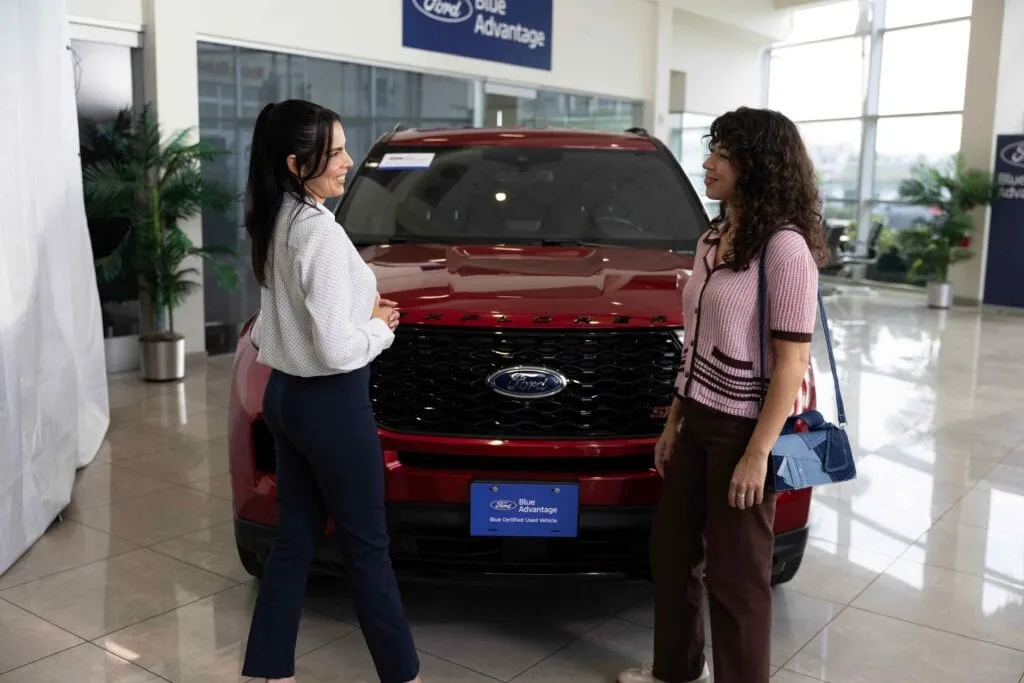
Customer discussing cardio with dealership salesperson courtesy of Ford
You may also enjoy: Buying a Car? 10 Things You Must Do Before You Sign
Five Questions to Ask Before You Drive to the Dealer
First, request the exact stock number or VIN and confirm the car is on the lot. Second, ask for a written out-the-door quotation itemizing selling price, dealer fees, government charges and any accessories. Third, request the eligibility conditions for every rebate. Fourth, ask whether dealer financing is required to receive the stated price. Fifth, find out which add-ons are genuinely optional and request a revised quotation without any you don’t want.
Those questions turn a vague advertisement into a comparable offer. The FTC financing guide specifically advises shoppers to separate the vehicle price from the financing conversation, obtain a written total, and consider bank or credit-union preapproval. Monthly payments are especially distracting: a longer loan can disguise a much larger financed amount.
Dealers sometimes offer valuable products, including service contracts, paint protection or upgraded floor mats. Value depends on the price and whether the buyer actually wants them. The Consumer Financial Protection Bureau explains that optional add-ons can be negotiated and that financing them increases the overall borrowing cost.
You may also enjoy: Auto Loan Shopping Could Save You $2,346
Happy man signing documents while sitting in new car, looking at female sales person. Car selling, business concept
The OEDRO Alternative: Shop for Accessories Separately
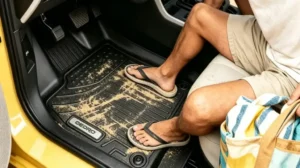
One sensible way to retain control over a car purchase is to make the vehicle deal first and shop separately for nonessential accessories. All-weather floor protection is a good example. You can evaluate fit, mat retention, coverage and price without rolling an accessory package into a multi-year auto loan. The same principle applies to many convenience products, although some factory-installed equipment cannot simply be removed.
If you want to compare mats independently, Test Miles readers can browse OEDRO’s official store and use discount code NIKM20 there, or shop OEDRO on Amazon. For background on protecting original carpeting, see our guide to carpet protection and trade-in value. Never stack driver’s floor mats, and always verify that the mat is secured and cannot interfere with pedals.
Affiliate disclosure: Test Miles may earn a commission from purchases through these OEDRO links. The discount code applies at the OEDRO official store.
Buyers looking at vehicles in dealer showroom
What the Greenway Settlement Would Change
Under the FTC’s proposed order, Greenway would have to prominently advertise the actual vehicle price consumers must pay, excluding government-required charges. The order would also restrict misrepresentations involving the required nature of fees, products, and financing. The complaint separately alleges deceptive prize mailers that told recipients they had won cash awards that did not exist.
Federal regulators say they warned Greenway in March 2026 about potentially misleading advertising. The agency alleges that the company subsequently added assurances about pricing transparency while the challenged pricing practices continued. Those allegations have not been adjudicated as factual findings. The FTC case docket lists the matter as pending.
You may also enjoy: Labor Day Car Deals: Buy Prepared, Not Hyped
Man signing documents to purchase a car in a dealership
What to Do If the Contract Does Not Match the Advertisement
Keep a screenshot of the online listing showing the vehicle and price, along with emails, itemized quotes, rebate conditions and any changes made in the finance office. Examine the purchase agreement before signing, not after someone hands over the keys. If an unwanted accessory appears in the paperwork, ask for it to be removed and review the revised document before proceeding.
The FTC’s consumer alert about unwanted add-ons explains why examining the actual contract matters, including when electronic signature systems are used. Buyers can report suspected deceptive practices through the agency’s consumer-reporting process and may also contact state consumer-protection authorities.
You may also enjoy: America’s Car Affordability Crisis Is Getting Worse
A bargain should survive the trip from the website to the signing desk. My recommendation is simple: negotiate the complete price of the vehicle in writing, verify rebate eligibility, compare financing independently, and treat every optional product as a separate purchasing decision. A dealership willing to give you those numbers has earned a closer look. One that will not has given you useful information before you spend a penny.