CEOs Want You Back in the Office. Their Own Work Rules Can Look Very Different
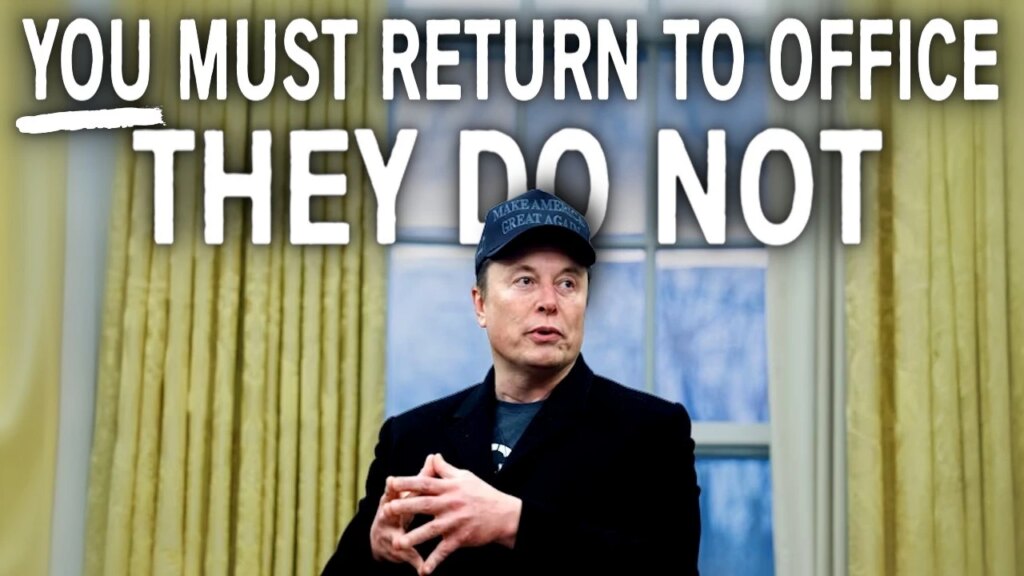
Corporate America has spent the past several years telling employees that collaboration, culture and creativity work better when people are physically together. Return-to-office mandates have become more common, with some companies requiring employees to commute three, four or even five days a week. Yet the executives making those decisions can sometimes operate under a very different set of rules, including customized offices, extensive travel budgets and geographic flexibility that would be unavailable to most employees.
That contrast has become harder to ignore as executive compensation continues rising. The Economic Policy Institute estimates that CEOs at the 350 largest U.S. companies received average realized compensation of about $27.9 million in 2025, roughly 325 times the compensation of a typical worker. CEO compensation has increased about 1,316% since 1978, compared with just 28% growth for typical workers over the same period.
CEO Pay Has Become a Different Economic Category
The gap between executives and ordinary workers is no longer primarily about salary. Modern CEO packages are often dominated by stock awards, performance incentives and other equity compensation that can become extraordinarily valuable when share prices rise. An AP and Equilar analysis found median CEO compensation among large S&P 500 companies reached $17.7 million in 2025, while median worker compensation at the companies studied was about $89,744.
Boards typically argue that this structure aligns executives with shareholders because much of the compensation depends on company performance. That argument has some merit, particularly when awards require years of service or difficult financial targets before they vest. The controversy comes when executive rewards rise far faster than worker compensation while employees are simultaneously being asked to accept stricter workplace rules, layoffs or cost controls.
The difference can become especially visible during periods of corporate restructuring. A company may tell thousands of employees that efficiency requires fewer workers, tighter budgets and more days in the office while its CEO receives compensation worth tens of millions of dollars. Even when both decisions make sense independently, employees are likely to judge whether the burdens and benefits of corporate policy are being shared fairly.
Starbucks Became a Symbol of the RTO Double Standard
Starbucks provided one of the clearest examples of why executive work arrangements attract so much attention. When Brian Niccol was hired as CEO in 2024, his agreement allowed him to maintain an office near his Newport Beach, California, home and use corporate aircraft to travel to the company’s Seattle headquarters. At the time, Starbucks said Niccol would meet or exceed the company’s existing hybrid-work expectations and would spend the majority of his time at headquarters or visiting company locations.
The situation became more politically sensitive inside the workplace when Starbucks later tightened its corporate office policy. In 2025, the company increased its in-office requirement from three days to four and told many managers working remotely that they would need to relocate to Seattle or Toronto within 12 months. Employees unwilling to make the move were offered a voluntary exit option, while Niccol had not originally been required to relocate when he took the job.
The circumstances have changed somewhat since then because Niccol purchased a home in Seattle and has been regularly present at headquarters. That makes it inaccurate to describe him today simply as a remote CEO commuting from California while forcing everyone else into the office. The controversy nevertheless illustrates why employees scrutinize executive exceptions closely when companies argue that physical proximity is essential to performance.
Executive Flexibility Is Not Always the Same as Remote Work
Victoria’s Secret became part of a similar debate when Hillary Super was named CEO in 2024. Early commentary portrayed her appointment as another example of a top executive being allowed to work remotely from a different city than the company’s traditional headquarters near Columbus, Ohio. The actual employment agreement is more nuanced: her CEO position is based in New York, requires her to be on site as needed and specifically anticipates frequent travel to Columbus.
Victoria’s Secret itself also advertises flexible work arrangements, including hybrid and some remote opportunities for eligible home-office employees. That makes the company a weaker example of a simple rule in which executives work remotely while everyone else is ordered into a corporate office. What it does show is that companies increasingly design executive jobs around geography and talent acquisition in ways that can be difficult to replicate for rank-and-file workers.
That distinction matters because executive flexibility is often less about working fewer hours than about having more control over where those hours happen. A CEO may travel constantly among headquarters, stores, investors, suppliers and other offices while still maintaining a residence far from the traditional corporate base. Employees can reasonably view that autonomy as a perk even when the executive is working an extremely demanding schedule.
CEOs Generally Are Not Working a Part-Time Job
The idea that highly paid CEOs simply work fewer hours than everyone else is difficult to support with the available research. A widely cited Harvard Business School study tracking chief executives found that CEOs worked an average of 62.5 hours a week, including work on 79% of weekend days and 70% of vacation days. Only about 47% of their work occurred at company headquarters, with the rest happening during travel, at other company locations, at home or while meeting outside constituencies.
That schedule reflects the unusual nature of the job. A public-company CEO may move between employee meetings, board discussions, investor calls, government relations, customer events, media appearances and crisis management in the same week. Physical absence from headquarters therefore does not necessarily mean the executive is disengaged or working less.
The stronger criticism concerns control rather than effort. Senior executives often have much more ability to decide when they travel, where they maintain offices and how their schedules are structured. Employees subjected to mandatory attendance policies may therefore object less to how hard the CEO works than to why flexibility is treated as essential for one level of the organization but potentially harmful at another.
The CEO Has Also Become Part of the Brand
The modern chief executive increasingly serves as a public representative of the company rather than simply its highest-ranking internal manager. Earnings calls, television interviews, social media and investor conferences can turn CEOs into recognizable personalities whose statements can influence recruiting, customer perceptions and even stock prices. That visibility makes communication and reputation management a larger part of the job than it was for many corporate leaders several decades ago.
Elon Musk represents the most extreme version of the model because his public identity is closely connected with Tesla and his other companies. Other executives maintain a lower profile but still spend significant time communicating strategy to investors, employees and customers. The CEO is therefore partly an operator and partly the public face of the enterprise.
That can create value when the executive communicates effectively and builds confidence around a clear strategy. It can also create risk when the company becomes too closely identified with one individual or when publicity begins taking attention away from execution. Boards have to decide how much executive visibility helps the business and when celebrity becomes a distraction.
Founder-CEOs Are Not Automatically Better or Worse
The outline’s suggestion that founders often remain CEO after they have become unqualified to manage a larger company is plausible in individual cases but too broad as a general rule. Academic research has produced mixed conclusions about founder control, and several studies have found founder-led firms can actually outperform professionally managed peers under certain conditions. Research has also found that founder leadership can improve innovation while simultaneously creating governance or capital-allocation risks when the founder holds substantial power.
Founders can bring advantages that an outside executive cannot easily reproduce. They often understand the product deeply, maintain strong relationships with early employees and investors, and have a long-term commitment to the business that is difficult to capture through an employment contract. Those qualities can be especially valuable while a company is still growing quickly.
The problem emerges when the skills needed to create a business differ from the skills required to manage a large global organization. Hiring tens of thousands of people, allocating billions of dollars and managing regulatory or operational complexity may require capabilities that were not necessary during the startup years. Good governance therefore means evaluating founder performance objectively rather than assuming the founder must either remain forever or leave simply because the company has grown.
Boards Ultimately Decide How Much Flexibility a CEO Gets
A CEO does not normally set compensation and employment terms entirely alone. Boards of directors approve executive pay, succession decisions and many of the special arrangements granted to senior leadership. Shareholders also receive advisory votes on executive compensation at public companies, and AP’s analysis found roughly 90% of shareholders typically supported the compensation packages presented to them.
That means apparent double standards are ultimately corporate-governance decisions rather than merely CEO preferences. A board may conclude that allowing a sought-after executive to maintain another residence, use corporate aircraft or work from multiple locations is worthwhile if it believes that executive can create billions of dollars in shareholder value. The economic argument is that exceptional talent can justify exceptional arrangements.
Employees may still view the arrangement differently. If physical presence is described as indispensable to innovation and culture, exceptions for senior leadership can undermine the credibility of that message. Companies imposing office mandates therefore have to explain why the rule applies differently at different levels or accept that employees may see the policy as a question of power rather than productivity.
Private Jets Make the Divide Especially Visible
Few executive benefits symbolize that divide more clearly than corporate aircraft. Companies often justify private aviation on security, scheduling and productivity grounds, particularly when a CEO needs to visit several locations quickly. A chief executive whose time is valued in millions of dollars may legitimately be able to complete more work using private aircraft than by waiting for commercial connections.
The optics can still be difficult when employees are being told to spend additional hours commuting each week. A worker who loses two hours a day driving to an office may not be persuaded by an argument about corporate culture when the CEO can travel hundreds of miles using company aircraft. The benefit reinforces the reality that the economic cost of location is distributed very differently inside the organization.
That does not automatically make private aviation wasteful. The relevant governance question is whether the expense creates sufficient business value and whether personal use is properly disclosed and compensated. The cultural question is whether leadership understands how that privilege looks to workers whose own flexibility is being reduced.
Return-to-Office Policies Need a Clear Business Case
There are legitimate reasons to prefer office work for certain teams. New employees may learn faster around experienced colleagues, creative work can benefit from spontaneous interaction and complicated projects can sometimes move more quickly when teams are physically together. Starbucks explicitly cited faster problem solving, stronger culture and better collaboration when explaining its four-day requirement.
Those advantages do not mean every job benefits equally from the same office mandate. A software engineer working independently, a regional salesperson and a headquarters manager may have completely different reasons to be physically present. Uniform policies can therefore create unnecessary resentment when employees cannot see a connection between their commute and the work they actually perform.
Executive behavior becomes part of that credibility test. Leaders asking employees to return because face-to-face interaction is essential should be visibly participating in the same culture whenever their responsibilities allow it. Otherwise, employees can reasonably conclude that office attendance is being used as a management-control tool rather than purely as a productivity strategy.
CEO Compensation Ultimately Has to Be About Results
A $20 million or $30 million compensation package can look extraordinary compared with ordinary wages, but shareholders generally judge it in relation to the size of the company. If an executive improves the value of a $100 billion business by several billion dollars, a large performance award can still represent a small fraction of the wealth created. That is the central economic argument behind stock-based compensation.
The problem is ensuring that performance measures actually reward durable value rather than short-term share-price movements. A CEO can benefit from a strong market cycle, an industry boom or financial engineering even when the underlying business has not improved dramatically. Boards therefore face a difficult task in designing incentives that reward genuine operating performance without creating incentives to pursue excessive risk.
Pay disparities become harder to defend when performance is weak. Employees are more likely to accept enormous executive rewards when the business is thriving and workers are sharing in the gains than when compensation continues rising through layoffs and stagnating wages. The legitimacy of CEO pay therefore depends partly on whether the broader workforce sees any connection between company success and its own economic position.
The Real Question Is Whether the Rules Feel Consistent
Corporate leadership has always come with privileges unavailable to ordinary employees. CEOs control larger budgets, make broader decisions and carry responsibility for outcomes that can affect thousands of jobs and billions of dollars. It is not surprising that their compensation, travel arrangements and schedules differ from those of other workers.
The tension arises when companies describe one behavior as essential for employees while making exceptions for executives. If being physically present four days a week is necessary for culture, employees will notice when senior leaders receive greater geographic freedom. If everyone must control costs, workers will notice unusually generous executive travel and compensation.
The workplace debate is therefore becoming less about whether CEOs work hard and more about whether corporate rules are applied with a defensible logic. Executives may reasonably need flexibility that other employees do not, and they may create enough value to justify extraordinary compensation. But as the gap between the CEO suite and the average worker continues widening, companies will have to do more than simply say leadership is different.
They will have to explain why.