Pilotless Flying Taxis Get Their Own California Airport Pad
Pilotless flying taxis are moving closer to reality as Boeing-backed Wisk opens a California testing facility for autonomous electric aircraft.
By Nik J. Miles
Just as Americans are getting accustomed to the idea of climbing into a taxi without a driver, an aviation company wants us to do something considerably more adventurous: climb into an aircraft without a pilot. As someone who spends a disproportionate amount of his life sitting in traffic on American freeways, I can certainly appreciate the appeal. The absence of somebody up front wearing a uniform, however, might take a little getting used to.
Wisk Aero, the Boeing-backed developer of autonomous electric aircraft, has opened a dedicated takeoff and landing facility at Hollister Municipal Airport in California. Announced on October 30, 2026, following a ribbon-cutting ceremony the previous day, the facility represents a tangible step toward a transportation network in which some journeys currently made by car could eventually be made through the air.
Before anyone starts selling the family SUV, however, there are some rather important details.
You might like this video:
Pilotless Flying Taxis Have Somewhere to Land
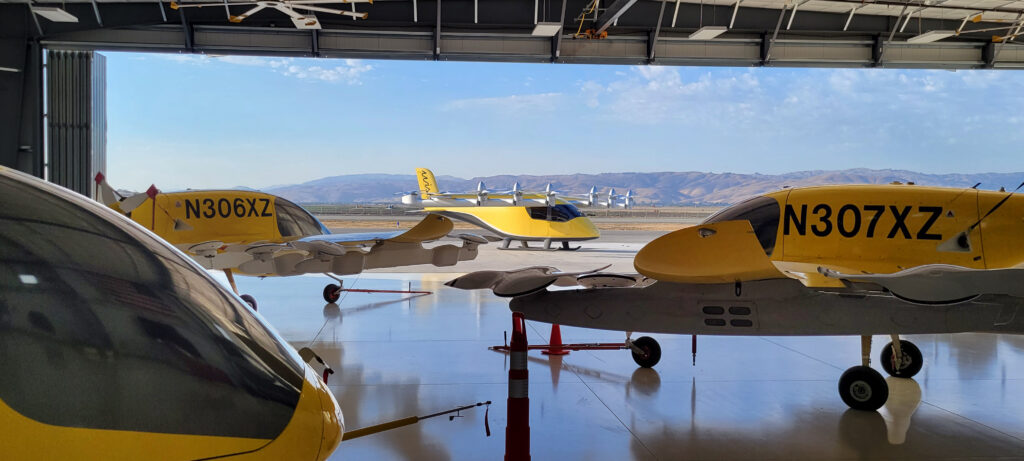
The new facility is known as a vertiport, essentially the aviation equivalent of a dedicated transportation pickup and drop-off area for aircraft capable of taking off and landing vertically.
Wisk’s new installation measures 100 feet by 100 feet. It incorporates steel construction, solar panels, electrical power storage and equipment designed to help aircraft determine their precise landing position.
According to Wisk’s official announcement, the facility will support testing with helicopters and its Generation 6 aircraft, including approaches and landings when visibility is poor or satellite navigation is unavailable.
That last part is particularly important. If the navigation system in your car loses its signal, you can generally pull over and contemplate your relationship with technology. An aircraft doesn’t have quite the same luxury.
You may also enjoy: Toyota Waymo Robotaxi: The Next Driverless Revolution
What Exactly Is a Flying Taxi?
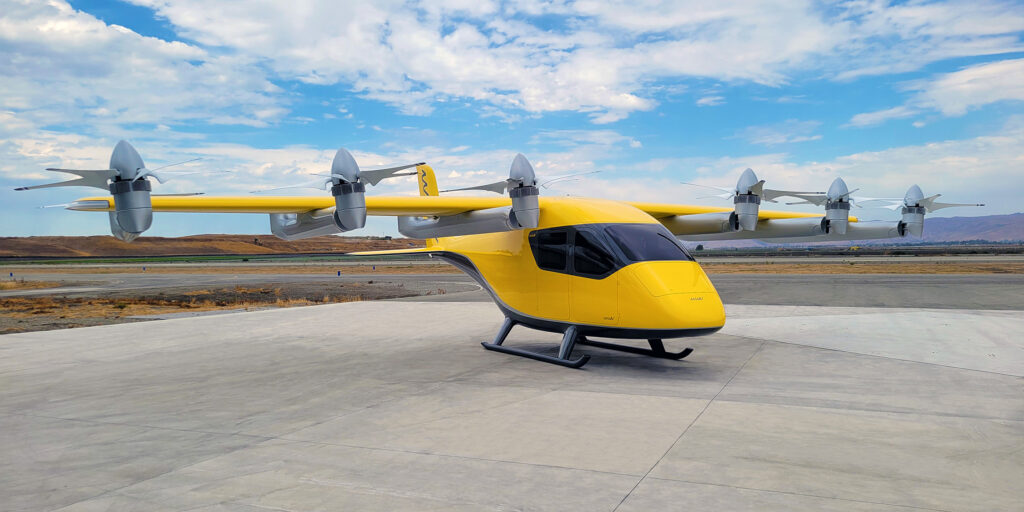
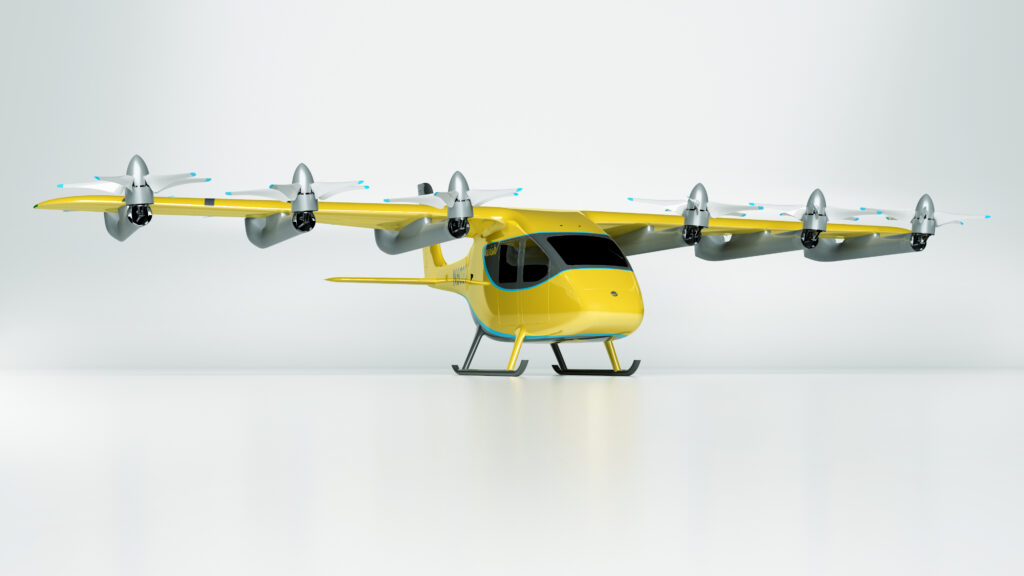
Wisk’s Generation 6 belongs to a category of aircraft commonly described as eVTOL, short for electric vertical takeoff and landing. These aircraft form part of what the Federal Aviation Administration calls Advanced Air Mobility.
The concept combines the ability to depart from a relatively compact landing area with the efficiency of winged flight. Rather than needing a conventional runway, an aircraft can rise vertically before transitioning into forward flight.
Wisk’s aircraft is designed to accommodate four passengers, with electric propulsion and autonomous flight systems. Crucially, its intended configuration does not include an onboard pilot.
There would still be people involved in the operation. Under Wisk’s proposed operating model, ground-based personnel would monitor flights, coordinate with air traffic control and provide operational oversight. Other employees would handle passenger assistance and aircraft preparation.
In automotive terms, the closest comparison is Waymo. Passengers request transportation without employing a human driver inside the vehicle. Wisk wants to apply a broadly similar transportation concept to the skies, although the engineering and regulatory requirements are substantially different.
You may also enjoy: Tesla Cybercab: The Car You Can’t Drive Yourself
Would You Trust a Computer to Fly You?
Commercial aircraft already rely heavily on computerized systems. Completely removing the onboard pilot, however, introduces additional questions about how an aircraft responds to unusual circumstances, equipment failures, weather and unexpected changes around a landing area.
According to the FAA, aircraft in the emerging powered-lift category require a regulatory framework that accounts for their distinctive operating characteristics.
Importantly, the FAA’s 2024 powered-lift operating rule applies to aircraft with pilots onboard. It does not automatically authorize unmanned passenger aircraft.
Wisk must therefore demonstrate that its autonomous systems meet the applicable aircraft certification and operational requirements before commercial passenger services can become a reality.
The company’s California facility provides somewhere to conduct practical evaluations of the technology. Opening the vertiport should not be confused with proving that every proposed autonomous operation is safe, or receiving permission to sell passenger tickets.
You may also enjoy: AI in Cars Is Getting Clever. Can We Trust Its Judgment?
Boeing and Archer Are Making a Bigger Bet on Flying Taxis
There is another significant development behind Wisk’s progress. Boeing announced in August that Archer Aviation had agreed to acquire Wisk alongside two other Boeing businesses, Insitu and SkyGrid.
In its November 9 financial update, Archer said the acquisition was approaching completion. Boeing is expected to become Archer’s largest shareholder following the transaction, maintaining its involvement through an ongoing strategic relationship.
Archer has initially pursued piloted passenger aircraft, while Wisk has concentrated on autonomous flight. Bringing those approaches together could give the combined business an opportunity to develop different transportation services as technology and regulations permit.
It is an interesting parallel with the automotive industry, where manufacturers increasingly share the considerable expense of developing electric propulsion, software and automated transportation systems.
You may also enjoy: Stellantis AI Driving Technology Targets 2028 Launch

Could Flying Taxis Actually Replace Your Car?
The most obvious applications are journeys where road congestion makes relatively short distances painfully time-consuming. Airport transfers, business districts, major sporting events and connections between regional transportation hubs could all be candidates.
But passengers should consider the entire journey, rather than simply the time spent in the air. Getting to the departure facility, boarding the aircraft and arranging transportation at the other end could significantly reduce the time saved.
Commercial viability will also depend on ticket prices, aircraft utilization, charging infrastructure, maintenance costs and weather-related disruptions. A flying taxi may sound wonderfully convenient until it costs considerably more than the plane ticket for the vacation you are trying to reach.
Local communities will have questions, too. The FAA’s advanced mobility integration guidance addresses issues such as infrastructure, community planning, aircraft safety and operational approval.
You may also enjoy: ADAS Calibration: When a Simple Repair Takes Longer
When Can Americans Book a Pilotless Flying Taxi?
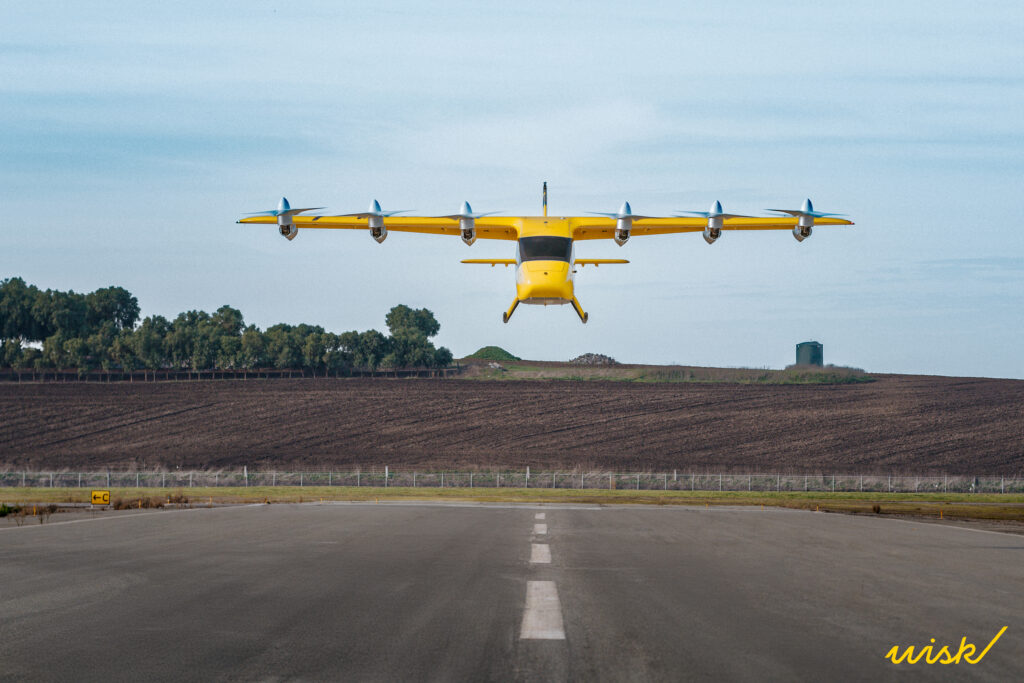
There is no confirmed public booking date or passenger fare associated with Wisk’s Hollister announcement. The California facility is intended for testing and development, rather than scheduled commercial passenger departures.
Nevertheless, the transportation industry is progressing beyond computer-generated pictures of futuristic aircraft hovering above immaculate cities. Companies are building aircraft, conducting flight tests and investing in the infrastructure needed to make these services practical.
For American motorists, the most meaningful development may eventually be the ability to choose between autonomous ground transportation and electric air transportation for particular journeys.
I wouldn’t cancel the car insurance just yet. But the next time you’re sitting on Interstate 405 watching your estimated arrival time move in precisely the wrong direction, remember that somebody in California is working on an alternative.
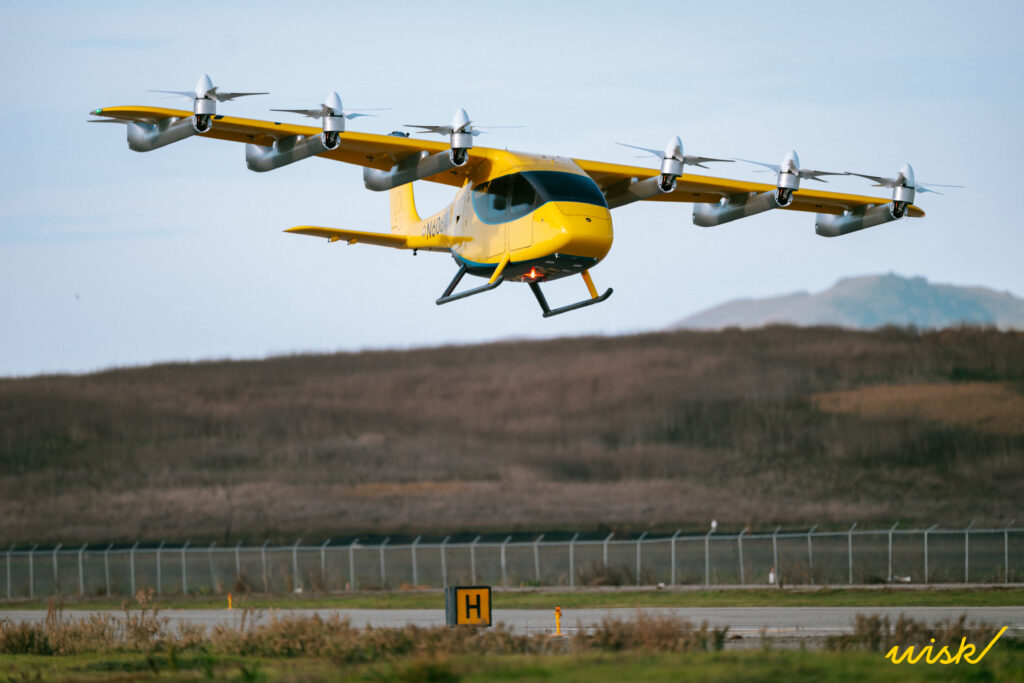
They’ve even built somewhere for it to land.