2027 Toyota Sienna: 37 MPG, More Power, Smarter Tech
The 2027 Toyota Sienna gets 37 mpg combined, 251 horsepower, upgraded safety technology and bigger screens. Here’s what buyers should know.
By Nik J. Miles
I’ve spent enough time around family vehicles to appreciate a simple truth: sometimes the most sensible vehicle in the showroom is the one nobody particularly wants to be seen driving. Minivans have suffered from that reputation for years, despite being remarkably good at the things most families actually need.
The 2027 Toyota Sienna makes the argument a little more compelling. Toyota has upgraded its hybrid powertrain, improved fuel economy, introduced a new generation of safety technology and substantially updated the electronics. There’s even more horsepower, although I doubt anyone was demanding a Sienna capable of frightening the neighbors.
Announced November 20, 2026, the updated Sienna is scheduled to reach American dealerships in early 2027. Toyota hasn’t announced pricing, which remains an important missing piece of the buying decision.
You may also like this video:
2027 Toyota Sienna Hybrid: More Power, Better Mileage
The biggest change is underneath the hood. Toyota’s sixth-generation hybrid system combines a retuned 2.5-liter gasoline engine with new electric motors, silicon carbide power electronics and a 1.15-kWh lithium-ion battery.
Combined output increases from 245 to 251 horsepower. That’s a modest six-horsepower improvement, but the accompanying efficiency gains are more interesting.
Toyota estimates 39 mpg city, 35 mpg highway and 37 mpg combined for both front-wheel-drive and all-wheel-drive versions. That’s an improvement of three city mpg for the front-drive model and four for all-wheel drive.
Having identical combined economy estimates across both drivetrains changes the shopping calculation. Families living in snowy climates may no longer have to accept an advertised fuel-economy penalty simply to obtain all-wheel drive.
A conventional hybrid vehicle combines gasoline power with electric assistance, recovering some energy that would otherwise disappear during braking. There’s no charging cable and no need to install equipment at home.
According to the Department of Energy, hybrid efficiency is especially useful in stop-and-go driving, where electric assistance and regenerative braking can reduce fuel consumption.
These are manufacturer estimates, not independently verified EPA ratings or Test Miles road-test results. Actual consumption will depend on driving conditions, something the federal government’s fuel-economy guidance explains in considerable detail.
You may also enjoy: 2026 Toyota Sienna Review: My Six Dogs Approve
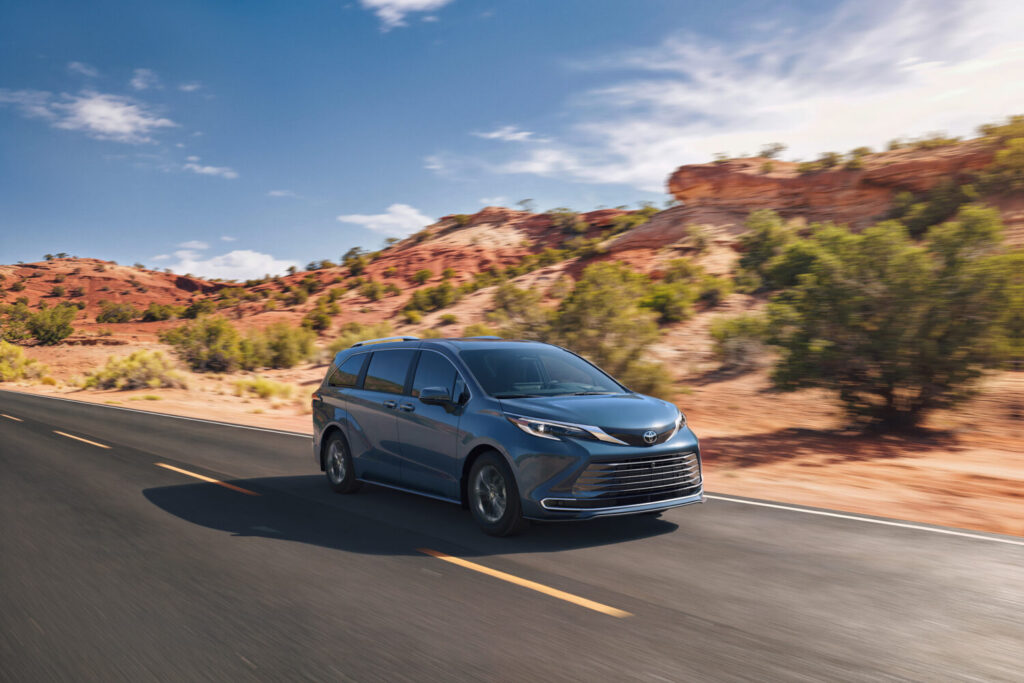
A Quieter, More Responsive Family Vehicle
Toyota has also retuned the gasoline engine to operate at lower engine speeds during certain driving conditions, particularly low- and mid-speed acceleration.
The company says this should make the Sienna quieter when maneuvering through parking lots or accelerating between 50 and 70 mph. A new higher-density dashboard sound insulator is intended to reduce cabin noise by another 1.6 decibels.
There’s more happening with the chassis. Toyota has introduced a new electric power steering system, steering column and torque sensor, alongside revised control software.
The goal is lighter steering during parking and improved stability at highway speeds. An electronically controlled braking system also introduces Vehicle Braking Posture Control, designed to reduce body roll during cornering through selective braking intervention.
Toyota estimates zero to 60 mph in 7.5 seconds for front-wheel drive and 7.6 seconds for all-wheel drive, compared with 7.9 seconds previously.
I wouldn’t mistake those numbers for sporting ambition. They’re encouraging because a fully loaded minivan needs sufficient acceleration for confident highway merging, particularly when carrying passengers, luggage and everything else a family insists is essential.
2027 Toyota Sienna Technology Gets a Major Upgrade
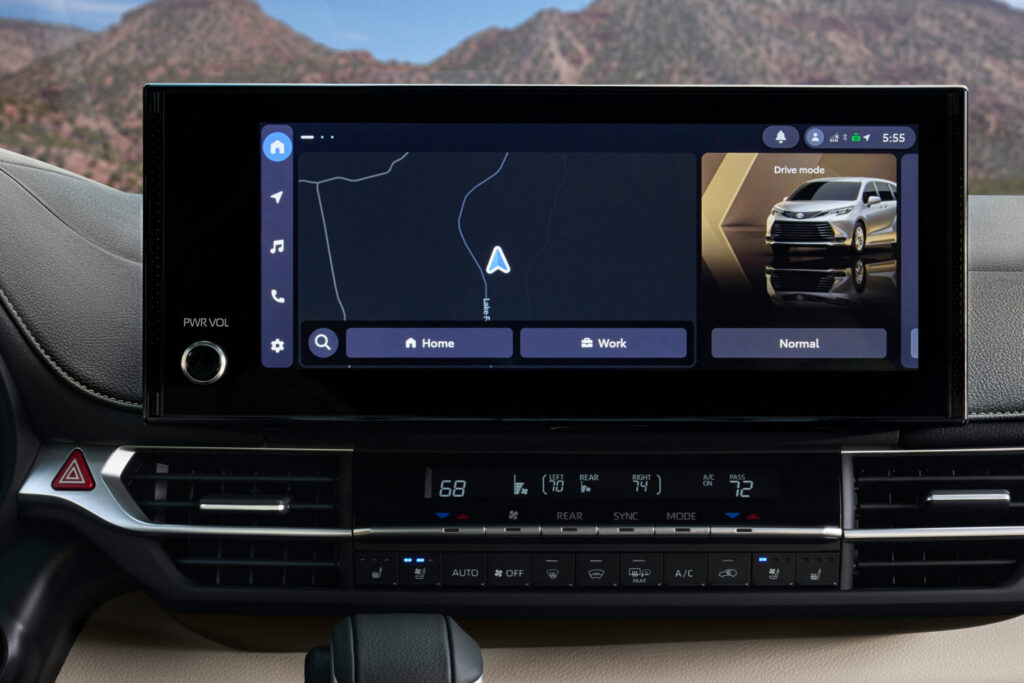
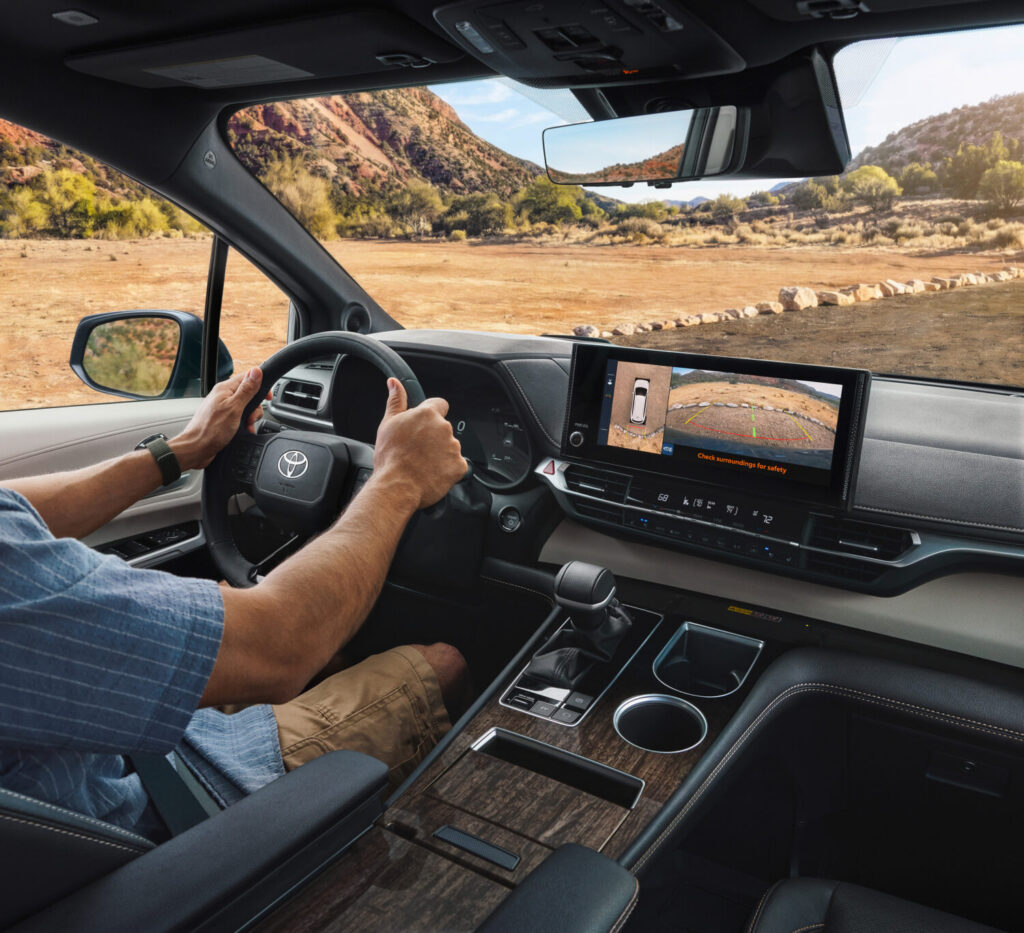
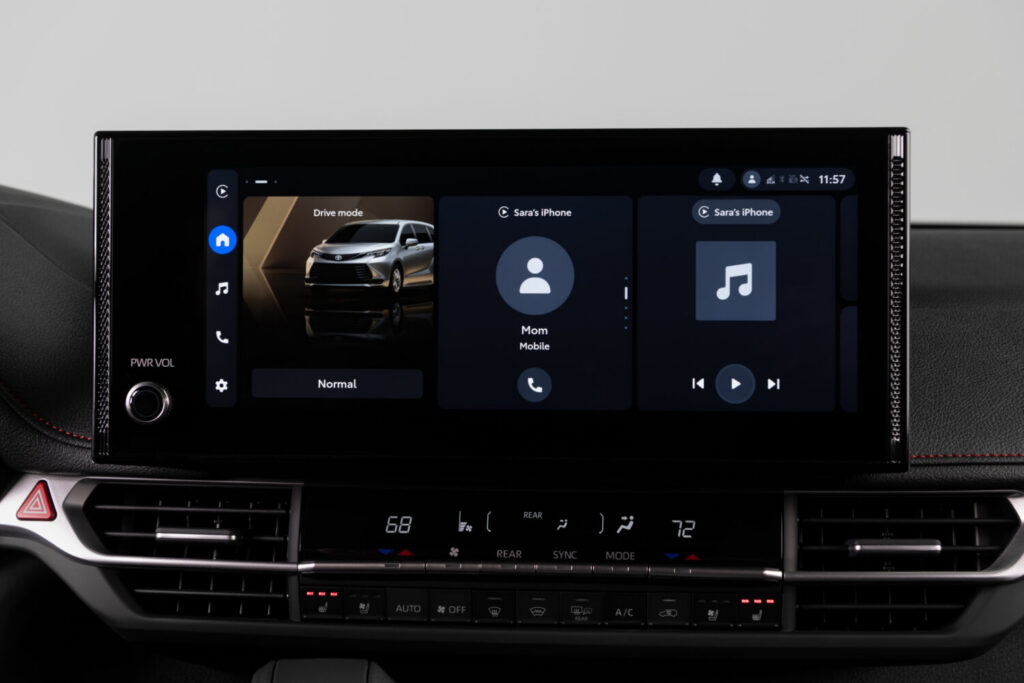
Inside, every 2027 Sienna receives a standard 12.3-inch infotainment touchscreen and a separate 12.3-inch digital instrument cluster.
Previously, the entry-level LE had an 8-inch center display, while LE and XLE models had smaller 7-inch driver information screens. Making both larger displays standard is a meaningful upgrade for buyers who don’t want the most expensive trim.
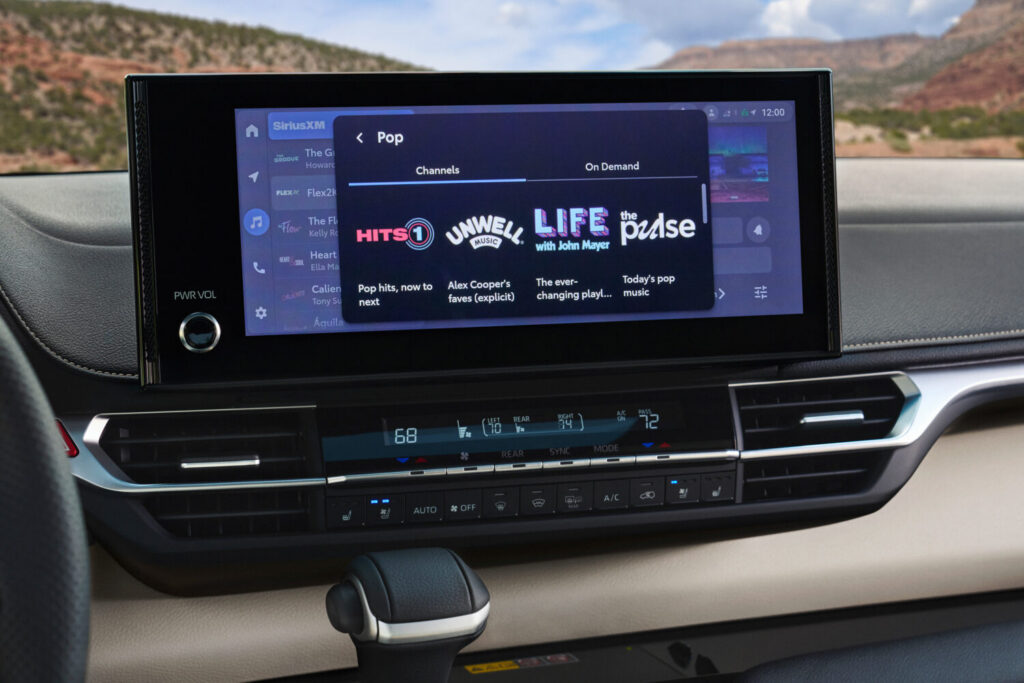
The latest Toyota Audio Multimedia system adds 5G connectivity, a configurable home screen and improved shortcut controls. Wireless Apple CarPlay and Android Auto remain supported.
There’s also Toyota’s new Arene software platform, developed by Woven by Toyota. It supports expanded software capabilities, including over-the-air updates and updated driver-assistance features.
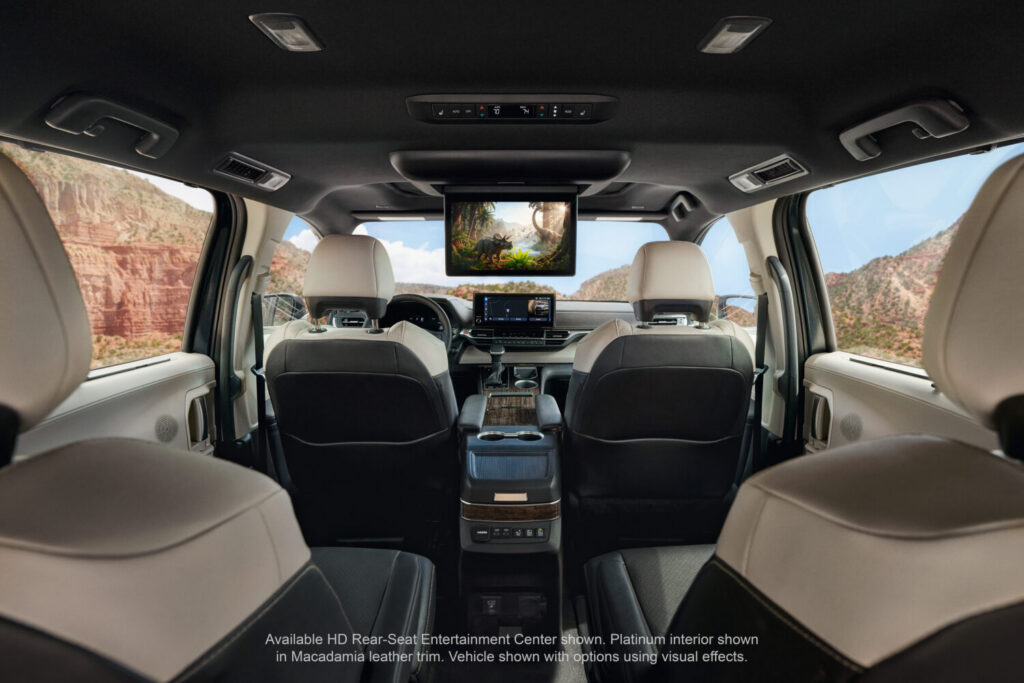
The optional rear entertainment system grows from 11.6 to 12.9 inches and gains touchscreen functionality. It’s available on Woodland, XSE and Platinum versions.
You may also enjoy: 2026 RAV4 Debuts Toyota Audio Multimedia With 5G
Toyota Safety Sense 4.0 Arrives
Perhaps the most important development for families is Toyota Safety Sense 4.0, now standard across the Sienna lineup.
The system introduces updated sensors, computing hardware and software intended to improve vehicle detection and the operation of several driver-assistance functions.
Features include pre-collision assistance with pedestrian detection, adaptive cruise control, lane tracing assistance, road sign recognition and proactive driving assistance.
Newly integrated capabilities also include Emergency Driving Stop System and Safe Exit Alert. Toyota has added a standard built-in dash camera with footage playback through the main touchscreen.
The dash camera is particularly useful because recording equipment no longer requires an aftermarket installation. However, buyers should confirm recording conditions, storage requirements and operational limitations before depending on it.
It’s also important to distinguish assistance from autonomy. The National Highway Traffic Safety Administration explains that driver-assistance technologies support the driver but don’t eliminate the need for attention and control.
The same applies to automated vehicle functions, whose capabilities differ substantially depending on their design and operating conditions.
The Practical Details Still Matter
The Sienna retains the features that make a minivan more useful than many three-row SUVs: sliding side doors, a low entry height, a spacious cabin and seating for seven or eight, depending on configuration.
Second-row legroom measures 39.9 inches, while third-row passengers receive 38.7 inches. Toyota quotes 75.2 cubic feet of cargo space behind the second row with the third row folded, and 101 cubic feet behind the front seats under its stated configuration.
Some seven-seat versions feature second-row captain’s chairs that slide as much as 25 inches. This creates flexibility for passengers, although buyers should understand that those seats don’t simply disappear into the floor.
Parents should also test actual child-seat installations rather than relying exclusively on seating specifications. NHTSA offers practical car-seat installation guidance, including seat-belt and anchoring considerations.
I have six dogs, so vehicle accessibility tends to influence my opinions rather strongly. Wide sliding doors and a comparatively low floor are genuinely useful when you’re persuading an elderly Labrador that climbing aboard is an excellent idea.
After our Operation Frodo rescue experience with a Toyota Sienna, I developed a renewed appreciation for the practical advantages of this type of vehicle.
You may also enjoy: Best Cars for Dogs? Start With a Minivan
Which 2027 Toyota Sienna Trim Makes Sense?
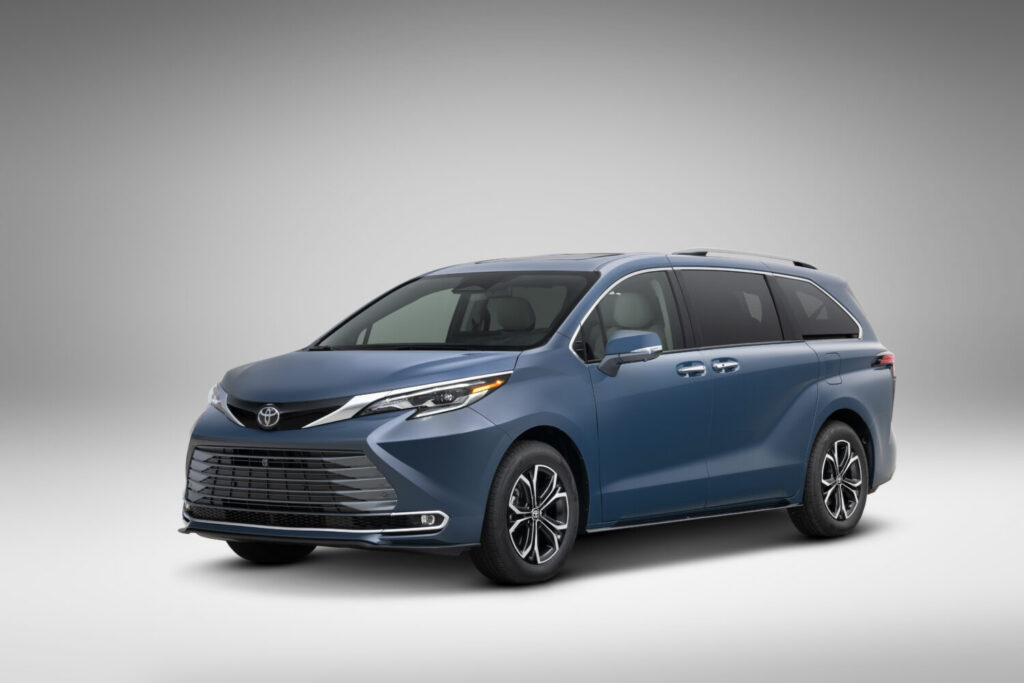
Toyota has simplified the lineup to five grades: LE, XLE, Woodland, XSE and Platinum. The Limited grade disappears, with additional comfort equipment moving into the XSE.
The LE now looks more attractive thanks to its standard displays, updated safety equipment and power sliding doors.
For most families, however, I would begin with the XLE. Heated front seats, upgraded upholstery, four-zone climate control and available seating configurations make it a strong candidate for everyday use.
The Woodland Edition deserves consideration for buyers regularly traveling with pets, camping equipment or outdoor gear. It includes all-wheel drive, all-weather mats, a towing hitch, a 1,500-watt power inverter and a standard panoramic camera system.
The XSE adds a sport-tuned suspension, 20-inch wheels, ventilated front seats, a head-up display and second-row ottomans. Those additions sound appealing, although families should consider whether larger wheels and more elaborate seating arrangements suit their actual needs.
At the top, the Platinum retains its built-in vacuum and refrigerated storage compartment. Both are wonderfully practical luxuries, particularly for anyone who has watched a child dismantle a packet of crackers across three rows of upholstery.
You may also enjoy: 2026 Toyota Grand Highlander Review: Hybrid XLE Wins
How Does the Sienna Compare With Other Family Vehicles?
One of the Sienna’s most obvious competitors is the Kia Carnival Hybrid. Kia provides a different design approach, with SUV-inspired styling and a conventional six-speed automatic transmission.
The Sienna counters with its standard hybrid powertrain, available all-wheel drive and Toyota’s newly updated electronic architecture.
Families considering three-row SUVs should compare usable seating access, passenger room and cargo loading height rather than relying exclusively on exterior dimensions.
The Toyota Grand Highlander Hybrid offers a more traditional SUV configuration, but it cannot match the everyday convenience of sliding side doors.
Ultimately, buyers should compare the exact trims and their official fuel-economy ratings when available. The government’s hybrid vehicle comparison database is a useful starting point.
You may also enjoy: 2025 Kia Carnival Hybrid Brings Minivan Muscle to the Electrified Era
2027 Toyota Sienna Price and Release Date
Toyota builds the Sienna in Princeton, Indiana, and expects the updated model to reach dealerships across the United States in early 2027.
Official pricing hasn’t been announced. That makes it premature to declare any particular trim the best value, particularly when comparing a discounted outgoing vehicle with a newly updated model.
For buyers who need a minivan immediately, the 2026 Sienna remains worth investigating. But anyone planning to keep a vehicle for several years should consider the new hybrid hardware, upgraded safety equipment and substantially improved standard electronics before making a decision.
My preliminary recommendation is to put the XLE at the top of the shopping list and compare it with the Woodland if all-wheel-drive capability and outdoor equipment are priorities. Final judgment will depend on pricing and proper road testing.
The 2027 Toyota Sienna makes a persuasive case for the family minivan. It promises better efficiency, useful technology and more refinement without abandoning the things that made it practical in the first place. Some people may still prefer the image of a three-row SUV. Personally, I’d rather have doors that open properly in a crowded parking lot.