Tesla FSD v15 Turns Real-World Driving Into a Video Game
Tesla FSD v15 introduces Reality View, an AI-generated display that makes driving look like a video game. Here’s what drivers need to know.
I’ve spent years watching automakers promise us the future. Sometimes that future arrives as a beautifully engineered machine. Occasionally, it arrives as a touchscreen update that makes your car look as though it’s escaped from Grand Theft Auto.
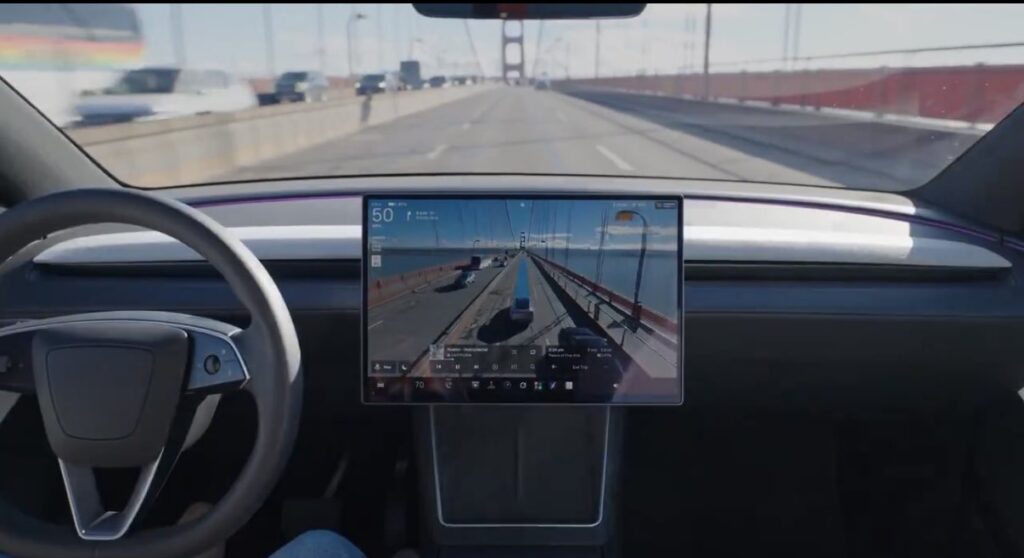
Tesla’s latest Full Self-Driving software update belongs firmly in the second category. Released to an initial group of users on November 21, 2026, version 15 introduces something called Reality View. The system uses artificial intelligence to generate a remarkably detailed virtual representation of the world surrounding the vehicle.
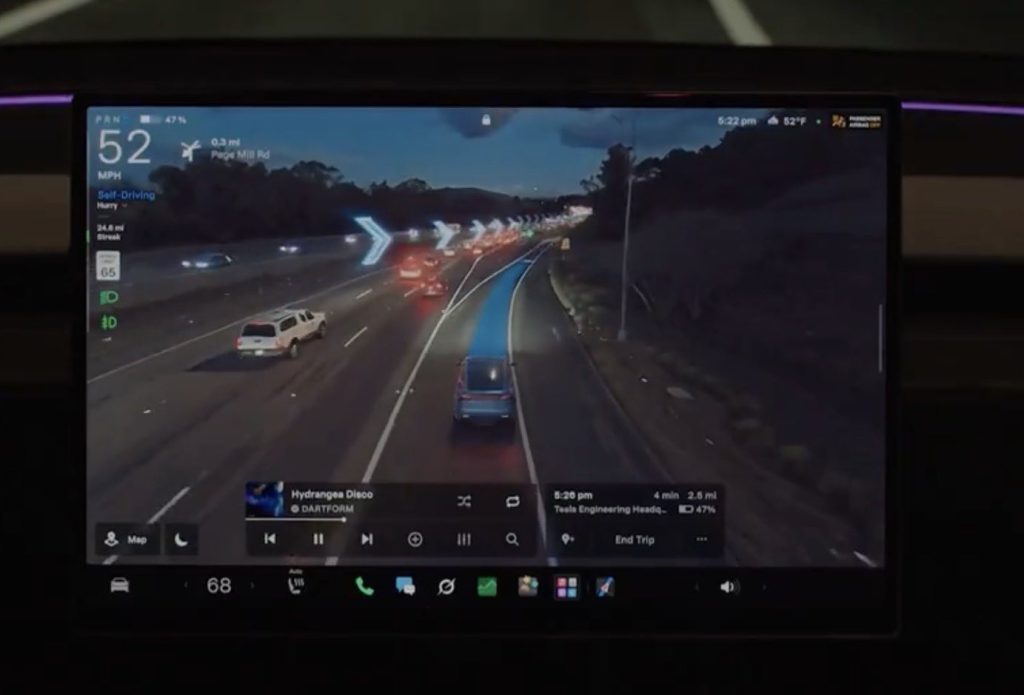
Buildings appear alongside traffic. Vehicles and pedestrians move through a digitally reconstructed streetscape. Navigation instructions become part of the scene, while the perspective follows the car from an elevated virtual camera.
It’s extraordinary to watch. But the technology behind the visuals is more interesting than the entertainment value, particularly when you consider what Tesla is attempting to accomplish with artificial intelligence.
What Is Tesla FSD v15 Reality View?
Tesla FSD v15 changes the way drivers see information collected and interpreted by the vehicle’s driving-assistance software.
Previous Tesla driving displays represented nearby vehicles, road markings and other objects using simplified computer graphics. Reality View takes a different approach. Instead of assembling the scene from individually illustrated objects, Tesla describes a generative system that produces a continuous visual representation from an elevated virtual viewpoint.
The result resembles a modern driving simulator. The difference is that the underlying information comes from the vehicle’s interpretation of actual roads and surrounding traffic.
According to Tesla’s published release notes, the new visualization uses less computing power than the previous approach. Drivers can choose full-screen visuals, navigation maps or a split-screen arrangement. Upcoming turns also appear directly in the generated driving scene.
For drivers, the potential benefit is understanding what the assistance system believes is happening around the car. That’s important because the most impressive automation technology in the world becomes considerably less reassuring when you cannot understand what it intends to do.
You may also enjoy: 2026 Tesla Model Y Review: Which Trim Should You Buy?
The Artificial Intelligence Behind the Screen
The new graphics aren’t the only significant part of Tesla’s update. Version 15 also incorporates changes to the company’s end-to-end driving network, the software responsible for interpreting road conditions and selecting driving actions.
Tesla says its upgraded vision encoder is shared across its Full Self-Driving, Robotaxi and Optimus robotics development. According to the company, the system has been trained using millions of internet videos to improve its ability to interpret unfamiliar situations.
That’s a striking development. The ambition is for the technology to recognize patterns and respond to circumstances beyond a narrowly defined collection of driving situations.
There’s an important distinction, however, between the software interpreting the road and the beautiful picture displayed to the driver. Reality View is a generated visualization. It should not be confused with unaltered live camera footage or treated as independent confirmation that the system has correctly understood everything around the vehicle.
The broader field of connected and automated vehicle technology has significant potential, but researchers and regulators continue to examine how such systems can be evaluated for safety.
You may also enjoy: Stellantis AI Driving Technology Targets 2028 Launch
Tesla Claims a Major Safety Improvement
Buried beneath the striking visuals is Tesla’s claim of a 25-fold improvement in its critical intervention rate. The company also reports improvements in detecting small animals, road debris, potholes, signs and deep standing water.
That sounds impressive, particularly for anybody who’s encountered a pothole capable of swallowing a small family hatchback.
But the number needs context. Tesla is describing a company-reported improvement in critical driving interventions associated with its updated software. It is not evidence that vehicles running version 15 are 25 times less likely to crash.
The distinction matters because an intervention metric measures something different from a real-world collision or injury rate. Independent analysis would be necessary to establish how the reported improvement translates into actual road safety.
The National Highway Traffic Safety Administration’s crash-reporting program provides another framework for examining incidents involving automated driving systems and advanced driver-assistance technology.
NHTSA also explains how driver-assistance technologies can support motorists without replacing their responsibility to operate the vehicle safely.
You may also enjoy: Tesla Robotaxi School Zone Speeding: Can AI Be Trusted?
What Else Changes With FSD Version 15?
The updated software makes several changes that may prove more useful in everyday driving than the graphics themselves.
- Navigation: Tesla says a new learned navigation model uses route preferences gathered from its vehicle fleet.
- Parking: The system can present multiple possible parking locations and use personalized parking history when choosing a destination.
- Road hazards: Tesla reports improvements in detecting debris, animals, potholes and deep standing water.
- Speed control: The software includes changes for school zones, weather conditions and driver-selected speed profiles.
- Driver monitoring: Tesla says its attention-monitoring system is better able to function when drivers wear hats or sunglasses.
There is also a new feature that can reduce speed when a speed camera is detected, along with revised functionality for vehicles carrying certain hitch-mounted accessories.
The most practical improvements may be the least dramatic to watch. More predictable speed selection, clearer parking choices and better recognition of unusual road hazards could make driving assistance feel less demanding to supervise.
Whether those improvements consistently appear in real-world use will require further testing as more owners receive the update.
You may also enjoy: Mercedes-Benz Takes On Tesla FSD With New Hands-Free Tech

Does Tesla FSD v15 Actually Drive Itself?
No. And this is the part that deserves considerably more attention than the video-game graphics.
Tesla’s consumer system remains Full Self-Driving (Supervised), which the company itself describes as an advanced driver-assistance system.
That means the person behind the wheel must remain attentive, monitor the driving environment and be prepared to intervene immediately.
The U.S. Department of Transportation distinguishes between driver-assistance systems requiring human supervision and automated driving systems designed to operate without continuous driver intervention in specified conditions.
Those distinctions also matter when comparing Tesla’s consumer vehicles with purpose-built robotaxis. A driverless service operating within a defined area is fundamentally different from a privately owned vehicle whose human driver remains responsible for the journey.
Tesla’s own Full Self-Driving support guidance explicitly requires drivers to stay attentive when using the system.
You may also enjoy: Tesla Cybercab: The Car You Can’t Drive Yourself
When Can Tesla Owners Get Reality View?
Tesla began distributing version 15 to selected early-access users on November 21. The first documented release, identified as software version 2026.38.6.11 with FSD 15.0.1, targets newer vehicles equipped with Hardware 4.
Elon Musk has indicated that a broader release is planned for December, but a company target should not be mistaken for a guaranteed delivery date. Software eligibility and rollout timing can vary by vehicle and configuration.
Owners should check their vehicle’s software information and Tesla’s release notices rather than assuming the update is available immediately.
The Test Miles Verdict: Clever Graphics, Serious Questions
I rather like the idea of a vehicle showing drivers what its artificial intelligence believes is happening. There’s genuine value in making complicated technology more understandable, particularly when that technology is making decisions about steering, braking and navigating traffic.
Reality View is undeniably entertaining. It also raises a serious question: does a more convincing digital picture make drivers better informed, or simply more willing to trust the computer generating it?
That’s the distinction I’ll be watching as Tesla FSD v15 reaches more vehicles. The impressive graphics deserve attention. The reported driving improvements deserve testing.
And until supervised driving becomes something demonstrably different, the most important part of the entire system remains the person sitting behind the wheel.
Even if the dashboard looks like Grand Theft Auto, real life doesn’t come with a restart button.