When Not to Do a Roth Conversion: The Overlooked Scenarios That Could Cost You More in Taxes
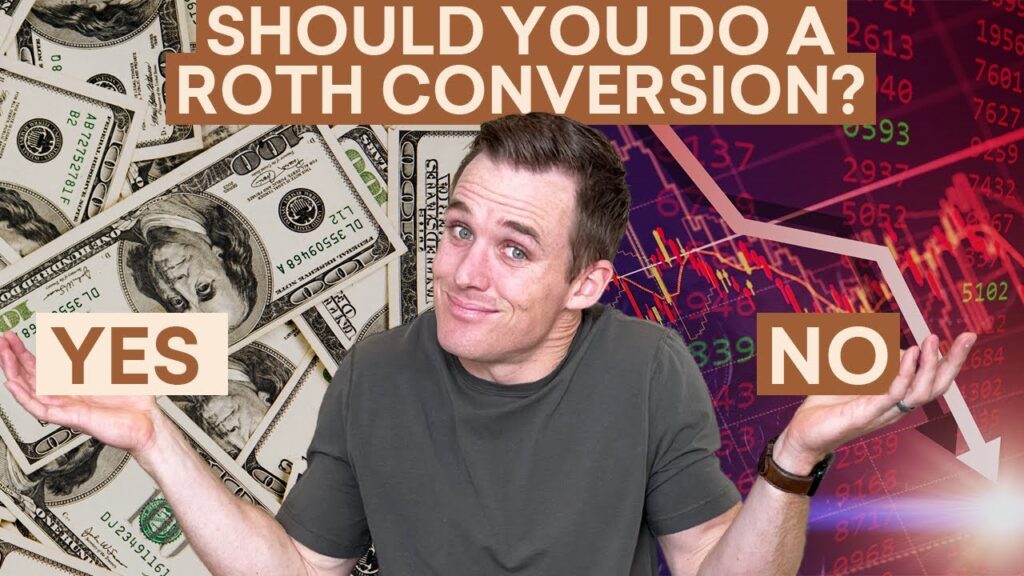
Roth conversions get a lot of attention, and for good reason they can be incredibly powerful when they line up with your tax situation. But they’re not always the smartest move. In fact, converting at the wrong time can increase your taxes instead of lowering them.
A Roth conversion only works in your favor when your current tax rate is lower than the rate you expect in the future. When that balance flips, the strategy can backfire quickly.
One of the clearest reasons to avoid converting is simple: if you expect to be in a lower tax bracket later, paying taxes on a conversion now makes little sense. Many early retirees experience this. During the first few years of retirement, expenses like mortgage payments, family support, or high discretionary spending can temporarily push taxable income higher. If those expenses fade later, future tax brackets may naturally drop. Converting today means paying more tax than necessary.
Required Minimum Distributions also play a major role in the decision. Some retirees worry that RMDs will inflate their tax bracket, but that isn’t always the case. For someone with a $2 million IRA, an $80,000 RMD could push income up and justify conversions. But others may find their RMDs are modest and barely impact their tax bracket. If RMDs are unlikely to strain your tax situation, converting may offer very little benefit.
Charitable giving can also shift the entire equation. Individuals over age 70½ can use Qualified Charitable Distributions (QCDs) to donate up to $100,000 per year directly from their IRA without triggering income tax. For retirees who give regularly, QCDs can dramatically reduce taxable income, help manage RMDs, and eliminate the need for Roth conversions altogether.
Life expectancy is another overlooked factor. RMD percentages rise with age, from about 4.1% at 75 to roughly 8.2% at 90. But if your life expectancy is shorter or you expect to spend down assets more aggressively, you may never face large RMDs. In those cases, paying upfront taxes for a future benefit you may not use is unnecessary.
Roth conversions can be incredibly effective, but they aren’t universal. The best retirement strategies are built around personal tax brackets, spending needs, charitable plans, longevity expectations, and income sources. When those elements don’t support a conversion, the smartest choice may be to skip it and let your retirement plan work with your reality instead of against it.
You should always consult a financial, tax, or legal professional familiar about your unique circumstances before making any financial decisions. This material is intended for educational purposes only. Nothing in this material constitutes a solicitation for the sale or purchase of any securities. Any mentioned rates of return are historical or hypothetical in nature and are not a guarantee of future returns.
Past performance does not guarantee future performance. Future returns may be lower or higher. Investments involve risk. Investment values will fluctuate with market conditions, and security positions, when sold, may be worth less or more than their original cost.