A Hybrid Coupe That Remembers Joy
I’ll admit it: when a manufacturer revives a beloved badge, I usually wince a little. Half the time it’s a nostalgia costume with a touchscreen stitched on, and the other half it’s a perfectly competent car that simply doesn’t understand why anyone cared in the first place.
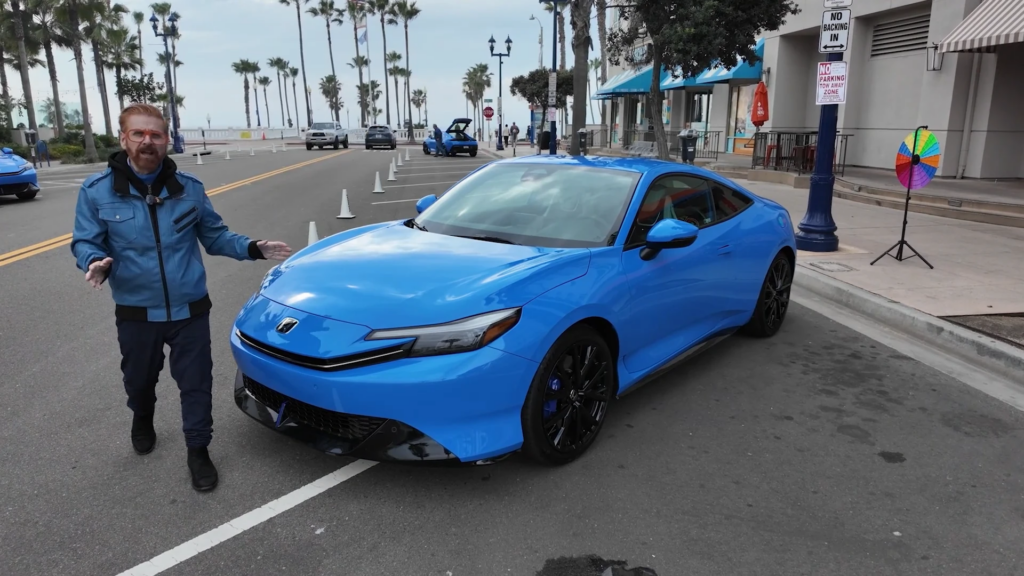
The 2026 Honda Prelude feels different—at least on paper. Not because it’s trying to out-shout the world with giant wings or track-day bravado, but because Honda is making a very specific promise: you can have modern hybrid efficiency without surrendering the simple, human pleasure of driving. And in 2026, that’s a surprisingly timely thing to say out loud.
Prelude returns as a hybrid-electric grand touring sports coupe, pairing Honda’s two-motor hybrid system with serious chassis hardware borrowed from the Civic Type R—things like the dual-axis strut front suspension and big brakes. It’s designed to be precise and responsive, but also comfortable enough to live with every day. That balance—fun when you want it, calm when you don’t—is the thread running through the details.
Under the skin, the headline figures are straightforward: a combined system output of 200 horsepower and 232 lb.-ft. of torque from the two-motor hybrid system, built around a 2.0-liter Atkinson-cycle direct-injection engine and two electric motors. Honda even quotes fuel economy ratings of 46 city / 41 highway / 44 combined. For a coupe with 19-inch wheels and performance intent, those numbers are the sort that make you pause and re-check the line.
But the more interesting bit isn’t the power figure. It’s the way Honda is trying to make a hybrid feel engaging.
This 6th-generation Prelude introduces Honda S+ Shift, a new drive mode that simulates an 8-speed performance transmission experience. It builds on Honda’s existing Linear Shift Control, but goes further—integrating paddle shifters, managing engine RPM, holding “gears,” and adding virtual rev-matched downshifts and enhanced engine sounds. In other words: Honda knows what people miss when a drivetrain gets too smooth, too clever, too silent. The company is attempting to put some of that theatre back, without pretending the car has a traditional gearbox.
The rest of the package supports the same goal. Prelude offers selectable drive modes—Comfort, GT, Sport and Individual—plus an Adaptive Damper System tuned specifically for this coupe. There’s also enhanced Honda Agile Handling Assist, and a steering system shared in concept with the Type R: dual-pinion electric power steering, tuned here for a different mission.
Visually, Prelude goes for “sophisticated yet muscular,” and the description is accurate enough to picture it: low, sharp nose, wide stance, clean surfaces, flush door handles, a “double-bubble” roof, and full-width taillights. Honda says the aerodynamics were evaluated on the Autobahn and the Nürburgring Nordschleife, which—whatever you think of marketing theatre—does suggest they cared about high-speed stability and steering calm, not just how it looks on an Instagram carousel.
Inside, it’s a driver-focused cabin with a low cowl and thin A-pillars for good visibility, plus sport seats trimmed in leather with integrated headrests and a perforated “heritage houndstooth” pattern. It’s a 2+2 with a 60/40 folding rear seat and a liftback, which matters more than people admit: this is a coupe you can actually pack for a weekend.
Tech is sensibly modern: a 10.2-inch digital instrument cluster, 9-inch HD touchscreen, wireless Apple CarPlay and Android Auto compatibility, Google built-in with a three-year unlimited data plan, wireless charging, Wi-Fi hotspot capability, and an eight-speaker Bose system as standard. Safety is similarly comprehensive: Honda Sensing, the latest ACE body structure, and a full set of airbags including rear side airbags, plus Post-Collision Braking.
One trim only, and it’s well equipped. That’s either refreshingly simple or mildly ominous, depending on your feelings about choice. But at least the intent is clear: Prelude isn’t trying to be everything to everyone. It’s trying to be one specific thing done properly.
Why does this matter right now?
Because hybrids are no longer the “compromise option.” They’re becoming the default smart choice for a large chunk of buyers who want lower fuel use without re-learning their entire routine.
Honda says hybrid-electric models represent about one-third of its sales, and it plans to push hybrid application to over 60% of total auto sales in the coming years. That sort of shift changes the tone of the brand. When a manufacturer commits at that scale, it stops being a niche strategy and becomes the centre of gravity.
Prelude’s timing also taps into a quieter reality: people miss cars that feel intentionally designed around driving, rather than merely accommodating it. The market has been SUV-heavy for so long that a sleek coupe with real engineering focus feels almost rebellious—even if it’s a sensible hybrid underneath.
And Honda is doing something quite cheeky with the historical symbolism. In the 1970s, the Civic, Accord and Prelude made up the core of Honda’s passenger-car identity. Now Honda is pointing out that all three are “back together again” in the lineup as hybrids. That’s not just nostalgia. It’s Honda saying, “This is who we are in the electrified era.”
Technically, the important “right now” story is how Honda’s two-motor hybrid system continues to evolve. Prelude uses a 72-cell lithium-ion battery and a low-profile Power Control Unit under the hood. The traction motor produces 181 horsepower and spins up to 5,000–6,000 rpm, while the generator motor produces 143 horsepower and focuses primarily on charging the battery. The gas engine itself is quoted at 141 hp and 134 lb.-ft., with thermal efficiency said to be nearly 41%—a reminder that modern combustion engines can still be extremely clever when they’re not being asked to do everything all the time.
And then there’s the unusual bit: the system isn’t equipped with a traditional transmission or CVT. Drive force from the traction motor goes through a fixed ratio, while the engine can be coupled through a simple lock-up clutch at efficient highway speeds. That’s the engineering underpinning of why these hybrids can feel smooth and immediate in town, yet relaxed on the motorway.
S+ Shift sits on top of that and tries to give you the sensation people associate with performance cars: downshift blips, rev matching, gear holding, and a more deliberate relationship between sound, speed and throttle. Honda even builds in details like earlier downshifts under braking on winding roads, cornering hold logic, and step-shift control that changes both engine speed and drive force in steps during acceleration and deceleration.
If it works the way Honda intends, the payoff is simple: a hybrid that doesn’t feel like it’s constantly negotiating with you.
How does it compare to rivals or alternatives?
The first thing to say is that Prelude isn’t really trying to fight the same battle as the classic lightweight sports cars people love to name-check. If you’re cross-shopping something like a rear-wheel-drive coupe or a tiny roadster, you’re chasing a particular flavour: lightness, simplicity, and that old-school feeling of the car pivoting around your hips.
Prelude’s pitch is different. It’s a front-wheel-drive, hybrid-electric grand touring coupe with a liftback and real daily usability. That immediately places it in a smaller, more specific niche: a practical sporty coupe that won’t punish you for commuting.
Where it does get interesting is in how Honda is borrowing from the Civic Type R without pretending Prelude is a Type R. The dual-axis strut front suspension is a serious piece of kit, designed to reduce torque steer by reducing steering axis offset and using equal-rigidity driveshafts. The braking hardware is also substantial: 13.8-inch two-piece front rotors clamped by four-piston Brembo monobloc calipers, with 12.0-inch rear rotors. Add adaptive dampers and a wide track, and you’ve got a chassis foundation that suggests Honda didn’t want this car to feel “pretty but vague.”
In the broader landscape, Prelude also represents an alternative to the “either EV or nothing” framing that can make shopping feel binary. Plenty of people want electrification benefits—quietness, instant response, better efficiency—without fully committing to charging routines or infrastructure constraints. Hybrids are the practical middle ground, and Honda is essentially saying, “Fine, but let’s make that middle ground entertaining.”
The fuel economy numbers Honda quotes—46/41/44—also matter in this comparison. Even if you never drive like a saint, those ratings give the Prelude a different ownership rhythm than many performance-leaning coupes. It suggests fewer fuel stops and less financial friction, which is a form of performance in the real world: the car is easier to justify.
Finally, there’s the “one trim” strategy. Rivals often make you climb a trim ladder for the good bits—audio, tech, safety, or seat comfort. Honda is bundling the good bits from the start: the digital cluster, Google built-in, Bose audio, heated leather sport seats, Honda Sensing, adaptive dampers, and the performance hardware. That makes the comparison simpler, even if it also removes your ability to “spec it cheap.”
Who is this for and who should skip it?
This is for you if:
- You want a coupe that feels special without being fragile.
- You like the idea of hybrid efficiency, but you still care about steering feel and brake confidence.
- Your life includes commuting, motorway miles, and the occasional spirited back-road detour—often in the same week.
- You want modern tech that’s integrated rather than gimmicky: Google built-in, wireless phone integration, and a clean digital cluster.
- You want something rarer than another small SUV, but you still need a hatch and folding rear seats for real-world practicality.
You should probably skip it if:
- You’re fundamentally shopping for rear-wheel-drive balance and a more old-school sports-car layout.
- You want a traditional manual gearbox experience. Prelude’s engagement story is software-led, not clutch-led.
- You prefer a stripped, lightweight car with fewer layers between you and the road.
- You dislike the idea of simulated shifting and enhanced engine sound, regardless of how well it’s executed.
- You need true rear-seat usefulness. Prelude is a 2+2, not a family coupe.
There’s also a temperament question. Prelude seems designed for the person who wants the car to be calm most of the time, but properly alive when asked. If you want your car to shout constantly, this probably won’t be your flavour.
What is the long-term significance?
Prelude’s return matters beyond this one model, because it’s a signal about where Honda thinks “fun” lives in an electrified future.
For the past decade, the industry’s electrification narrative has often been about efficiency and compliance, with performance reserved for expensive halo products. Prelude suggests a different path: make the mainstream electrified experience more engaging, and you pull more people toward the technology willingly rather than dragging them.
S+ Shift is the most obvious example of this. Honda is essentially experimenting with how software can add character—how you can make a powertrain feel responsive and involving without relying on a conventional transmission. If Honda says it plans to feature S+ Shift on future hybrid-electric vehicles, Prelude becomes a rolling test case for a broader strategy: hybrids that feel less appliance-like.
The chassis choices point in the same direction. Borrowing Type R hardware for a hybrid coupe is a statement that performance engineering doesn’t have to be limited to pure petrol cars. It also hints at a future where “sporty Honda” isn’t a separate branch of the family tree—it’s a set of hardware and tuning principles that can be applied across drivetrains.
There’s also a cultural significance. Coupes have been declining because they’re harder to justify in a practical, cost-conscious market. If Honda can make a coupe that is efficient, safe, usable, and still genuinely enjoyable, it offers a template other brands might follow. Not to revive every old badge, but to remember that delight is part of what makes people care about cars at all.
And finally, Prelude is being built at the Yorii Plant in Japan on the same line as the Civic Type R. That’s a small detail with a big implication: Honda is placing this car in the same manufacturing environment as one of its icons. That tends to happen when a company takes a product seriously.
We’ll learn the real truth when we drive it, of course. But as a piece of product intent, the 2026 Prelude is a thoughtful answer to a modern problem: how do you make electrified driving feel like something you choose, rather than something you tolerate? If Honda gets that right, Prelude won’t just be a revived name. It’ll be a quiet roadmap for what the next decade of “fun, sensible cars” could look like.