A Real-World Dog Test Drive in the Audi Q5
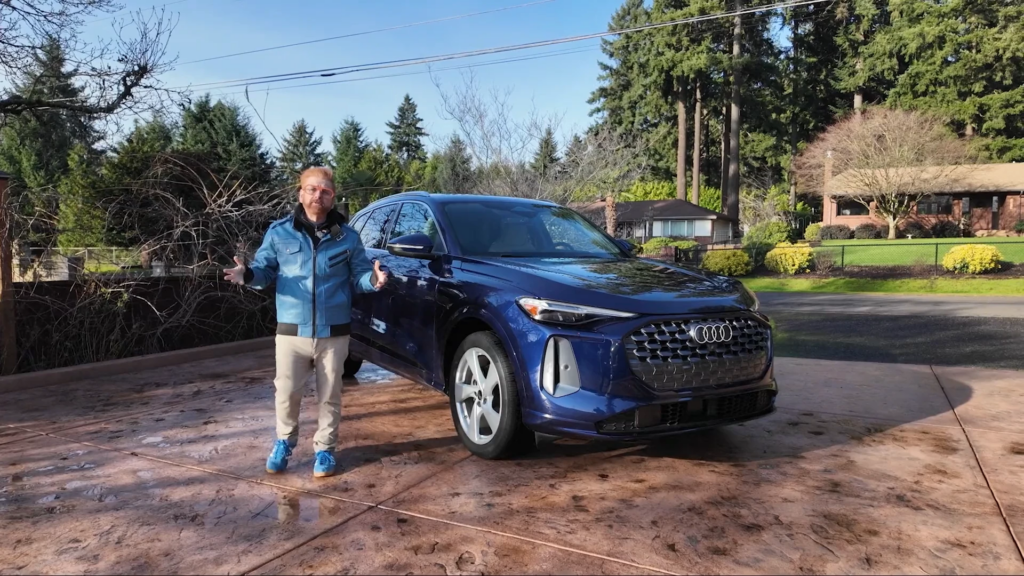
I’ll be honest: I didn’t set out to “review” the Audi Q5 as a dog vehicle. I was doing something small and normal running over to my parents’ house behind mine when my day got hijacked by two muddy, stressed-out animals who treat being left alone like a personal betrayal.
If you’ve got dogs like that, you know the routine. You step outside, it’s still raining, the ground is wet from last night, and the dogs are already vibrating. You open a door, they launch themselves toward freedom, and you’re doing mental math: How fast can we get there and back before someone eats a baseboard?
That’s the part that matters. A lot of vehicle reviews treat “cargo space” as a static number and “rear seat usability” as something you demonstrate with a suitcase. But dogs don’t behave like luggage. They panic. They slip. They shed. They claw at trim. They shake water onto headliners. They find crevices you didn’t know existed and fill them with half the outside world.
And right as the dogs jumped into the back of the Q5, I had the thought every dog owner has had at least once:
Oh no. This one has a white interior.
At that moment, this stopped being a story about the new Audi Q5 and became a durability test because light interiors are a lifestyle choice, and dogs are not part of that lifestyle. So the only question left was whether the materials, layout, and ride quality were good enough to survive real life.
The Dog Audit: Why big dogs expose bad cars fast
Most people can make almost any SUV “work” with a small dog. Small dogs forgive bad design because you can lift them, rotate them, and place them like a houseplant.
Big dogs are different. They’re design critics with claws.
I use Bill as my measuring stick. Bill is a 134-pound American black Labrador—taller and longer than the English labs people picture, and strong enough that strangers ask whether he’s part Great Dane. If Bill hates a vehicle, I learn everything I need to know in about 30 seconds. If he’s uncomfortable, if he slips, if he can’t find a stable position, or if he seems anxious, that’s a sign the vehicle is fighting you.
And here’s the sneaky truth: if a vehicle is easy for Bill, it’s probably easy for a family too. Big dogs “stress test” access, space, stability, and surfaces in a way that mirrors what parents deal with kids climbing in, gear moving around, wet shoes, snack fallout, real-world mess.
So I opened the rear of the Q5 and started looking for the dog-owner things, not the brochure things.
Ingress and egress: the opening matters more than the “space”
First, I’m watching the opening: is it wide enough, low enough, and shaped in a way that doesn’t force a big dog to twist, crouch, or jump awkwardly?
For Bill, that’s everything. A bad opening turns loading into a wrestling match. A good opening looks boring—which is exactly the point.
The Q5 did the basics correctly. The opening is wide, and the load-in feels straightforward. There aren’t weird protrusions or sharp edges that snag a harness or bang a hip. When Bill stepped up and in, it looked natural—not like he was solving a puzzle.
Then I noticed something else that matters when the weather is awful: the sides are high enough that he isn’t instantly trying to push himself out and smear mud across the door area. That sounds minor until you’ve cleaned a light interior for the third time in a week.
Flat-folding seats: fewer steps, fewer drama moments
Next is the floor. For dogs, a stepped load floor or awkward seatback angle creates that moment where they hesitate, scramble, and then lurch. That’s where you get panic slips and torn nails.
With the seats folded, the Q5 gives you a flatter, more usable surface less of that “ledge” effect that can make bigger dogs feel unstable. You also avoid weird transitions that collect hair and grit.
And yes, you can still use the second row when you need it, but having the option to create one continuous space matters for owners who travel with large dogs or multiple dogs. It’s not about carrying more stuff. It’s about letting a dog settle into a position that feels secure.
Anchor points: what you can secure, you can survive
Then I’m looking for anchor points and tie-down locations. Dog-friendly doesn’t just mean “roomy.” It means you can keep the dog from becoming a moving object under braking.
Bill is strong. If something startles him, or if I brake suddenly and he slides, it’s not just a comfort issue it becomes a safety issue for everyone in the car.
Vehicles that give you sensible places to secure gear (and manage restraints) make life easier. The Q5 made it possible to think through a secure setup rather than improvising one.
Important note for anyone doing this at home: dog restraints should be used the way their manufacturers intend, and child-seat anchor systems are designed for child seats. The goal is always a secure dog using equipment built for that purpose, not a DIY solution.
The white interior moment: materials are either honest or they aren’t
Now back to the part that made me laugh nervously: the white interior.
“White seats” always sound good until you introduce biology. Mud, fur oils, rainwater, and the occasional “I found something disgusting outside and rolled in it” situation.
What saved the Q5 in this story wasn’t the color. It was the material behavior.
Some interiors absorb. Dirt and moisture sink in, staining becomes a chemistry experiment, and you’re stuck trying to clean something that’s already been accepted into the seat.
The Q5’s surfaces behaved more like quality leather should: mud and moisture sat on the surface rather than disappearing into it. That made it wipeable. And wipeable is the whole game when you’ve got big dogs.
This is where trim level choices matter more than people realize. A vehicle can be “the same model” and still feel totally different depending on the materials. If you’re a dog household, you’re not being picky you’re being realistic. You’re buying fewer headaches.
Ride quality: the part nobody calls “dog-friendly,” but it is
Here’s the thing most reviews miss: stability and smoothness aren’t just comfort features for humans. They’re dog comfort features too.
When I’m driving, I don’t want Bill sliding forward every time I brake. I don’t want him bracing on corners like he’s on a boat. A calm dog is a safer dog, because calm dogs don’t scramble, whine, or try to climb into the front.
On the road, the Q5 felt planted. Under braking, Bill wasn’t doing that slow-motion slide that tells you the vehicle is unsettled or that the surface and body motion are working against him. In corners, he stayed composed. No panic shifts. No scrambling for traction.
A smooth, predictable ride changes the whole vibe inside an SUV. It turns “surviving the trip” into “settling into the trip.”
Cabin quiet and ventilation: stress management, not luxury
Dogs don’t understand why sirens exist. They don’t understand why traffic is loud. They just feel the intensity.
A quieter cabin helps keep them from spiraling. If they can hear every honk, every motorcycle, every shout outside, the trip becomes stimulation overload.
Then there’s airflow. If it’s warm, you want to direct vents toward the back so the dog isn’t cooking. If it’s cold, you don’t want the rear of the cabin to take forever to heat up. Comfort is safety, because an uncomfortable dog is a restless dog.
In this drive, the Q5 came across as calm and insulated less chaotic noise bleeding in, less harshness in motion. That matters in a way you only appreciate when you travel with animals who are already a little wound tight.
So… is the Audi Q5 a great dog car?
Here’s my takeaway after the muddy-paw, white-interior scare:
The Audi Q5 didn’t win because it was “made for dogs.” It won because it was well designed.
Wide, usable access. A stable, confident ride. A quiet cabin. Materials that don’t immediately surrender to mud. The ability to fold things flat and create a simple space where a large dog can settle without sliding around.
And Bill—the dog who exposes bad vehicles quickly was comfortable. He didn’t panic. He didn’t scramble. He looked like he belonged there.
That’s the whole point.
Why does this matter right now?
A lot of people are rethinking what they actually need from an SUV. Not the fantasy version the version where you’re always clean, always organized, always driving to a scenic overlook with a tasteful backpack.
The real version includes pets, kids, weather, mess, and time pressure.
Dog owners are also keeping vehicles longer, which changes the math. It’s not just “can I live with this interior today?” It’s “can this survive years of muddy paws, shedding seasons, and quick trips where you don’t have time to lay down a perfect cover every single time?”
The Audi Q5 matters in that conversation because it’s a premium SUV that doesn’t collapse when you treat it like transportation instead of a museum display. It can handle chaos without feeling cheap or flimsy and that balance is harder to find than it should be.
How does it compare to rivals or alternatives?
If your priority is maximum dog practicality above everything else, there are vehicles that may do parts of the job better.
Some rivals offer lower load floors, which can make entry easier for older dogs or dogs with joint issues. Some offer even more square cargo openings. Some non-luxury models lean into rubberized, wipe-clean materials that are brutally honest and very easy to live with.
But the Q5 holds its ground where a lot of premium SUVs stumble: it doesn’t ask your dog to adapt to awkward shapes, and it doesn’t punish you with surfaces that instantly stain or trap grime. It also delivers a composed ride that keeps big dogs stable—something you don’t always get in SUVs that feel busier or more jittery on imperfect roads.
In other words, some alternatives may be simpler, and some may be bigger, but the Q5 is unusually balanced if you want comfort and refinement without giving up real-world durability.
Who is this for and who should skip it?
This is for:
- People with medium or large dogs who actually bring them along regularly
- Families who want one vehicle that can do errands, trips, and daily chaos without feeling fragile
- Anyone who values a calm cabin and stable ride because their dog is sensitive or easily stressed
- Dog owners who care about materials because they’ve learned the hard way that “cute interior” isn’t the same as “livable interior”
You might skip it if:
- You need the absolute lowest step-in height for an aging dog who struggles to climb
- Your main goal is the most space possible at the lowest cost, and luxury refinement isn’t part of the mission
- You want a vehicle that’s openly rugged inside rubber floors, hard plastics, maximum wipe-down simplicity and you don’t care about premium feel
What is the long-term significance?
The longer I do this, the more I think “dog-friendly” is just another way of saying “human-friendly.”
Dogs don’t care about brand stories. They care about physics and surfaces. Can they get in? Can they stay stable? Can they settle? Can the space handle what they bring into it?
Vehicles that pass that test tend to be the ones that age well for families too. They’re the ones that feel calm instead of chaotic. They’re the ones that don’t punish you for living.
The Audi Q5, in this moment, is a good reminder that refinement doesn’t have to mean delicacy. A premium SUV can still be durable if it’s engineered with real use in mind.
And if it can survive a wet morning, a white interior, and a 134-pound Labrador who doesn’t forgive bad design… it’s probably ready for whatever your week looks like.