2026 Audi A6: The Sedan That Surprised Me
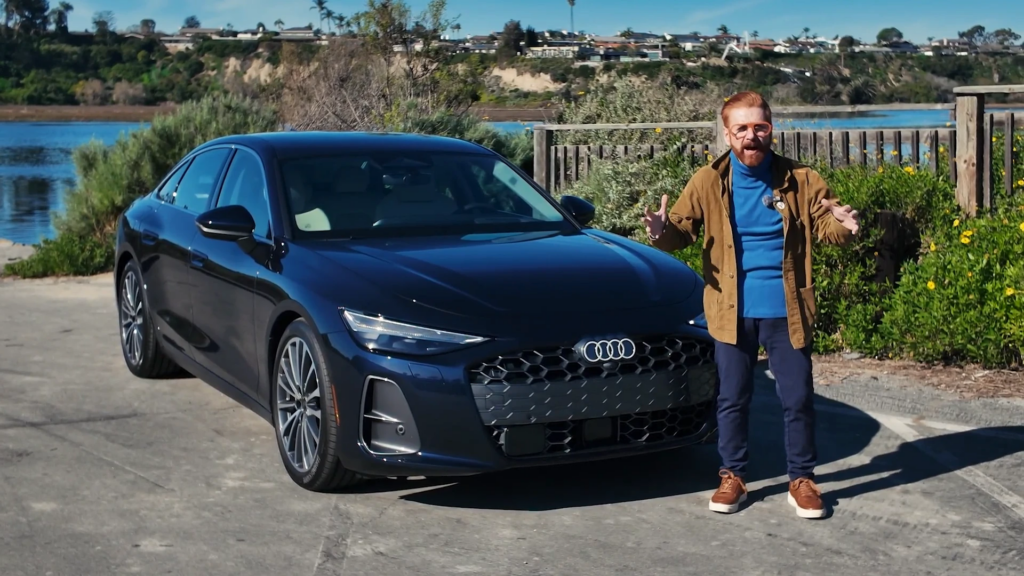
I did not expect to like this 2026 Audi A6 as much as I do. Not because Audi has forgotten how to build a proper sedan, but because the modern luxury playbook has gotten messy. Too many new cars confuse novelty with progress, then ask you to live with the consequences every day. This A6 has three screens totaling more than thirty-seven inches, software-driven lighting, and a cockpit built around Audi’s latest digital architecture. That is usually the part where I brace for something clever that is also exhausting.
Instead, it feels finished. Not experimental. Not like a beta test with leather seats. The interfaces, the visibility tools, and the way the powertrain and quattro system work together all point to the same goal: reduce driver workload while keeping the mechanical bits satisfying. And there is a bigger story here, because this A6 is also a quiet admission from Audi that the road to an all-electric lineup is not as straight as the press releases once suggested.
This is a ninth-generation A6 rebuilt around faster processing, clearer displays, and less mental friction behind the wheel. But the reason it is worth your time is simpler: it is a modern luxury sedan that uses technology to make the driving experience calmer and sharper, rather than more complicated.
Why does this matter right now?
Luxury cars are in an awkward transition phase. Software is no longer a supporting feature. It is becoming the architecture that everything else is built around, from displays to lighting signatures to driver-assistance overlays. At the same time, buyers are still deciding what they actually want from electrification. Some want full battery-electric, right now. Others want something familiar, especially in segments where refinement and effortless performance matter as much as range and charging strategy.
Audi’s original roadmap, as it has been discussed publicly, leaned toward even-numbered models becoming fully electric. In simple terms, the plan was meant to reduce overlap and make the lineup easier to understand. The problem is that real buyers do not always follow tidy roadmaps. The U.S. luxury market, in particular, still has a meaningful audience for high-output combustion sedans that feel premium, respond instantly, and do not ask you to plan your life around charging.
So Audi adjusted. This A6 is not an EV. That choice is not a retreat so much as a recalibration. The significance is that it signals a mid-decade reset: Audi is blending advanced digital systems with proven mechanical platforms rather than forcing electrification before the customer is ready. If you are a buyer who likes the idea of progress but dislikes being pushed into a corner, you will recognize that strategy immediately.
What makes that strategy credible is the way Audi has executed the tech in this car. The cabin is built around three screens: an 11.9-inch virtual cockpit for the driver, a 14.5-inch center display, and an optional 10.9-inch passenger screen. The passenger display is the kind of feature that often sounds silly on a brochure. Here it is handled properly. It uses active privacy filtering so moving images are invisible from the driver’s seat, reducing distraction while keeping the functionality for the passenger. That tells you something about the intent. This is not about adding screens to win a showroom argument. It is about managing attention.
The head-up display follows the same logic. Audi says the projection area grows by eighty-five percent compared to the prior A6, and the point is not to impress you with graphics. It is to keep your eyes forward. The augmented HUD can project navigation, assistance data, and speed into a wider field of view, improving glance time and situational awareness. If you have ever driven a screen-heavy car that constantly pulls your gaze down and right, you will understand why that matters.
Then there is the lighting, which is now software-controlled front and rear. That line alone will make some people roll their eyes. I get it. But lighting is becoming a language, and Audi is leaning into it with a level of technical detail that suggests this is not just styling theatre. Each headlight uses forty-eight digital LED segments. Prestige models add second-generation OLED rear lights with nearly two hundred controllable elements per side. Those OLED segments enable dynamic coming-home sequences and configurable light signatures, tying exterior design directly to vehicle software. In other words, the car can communicate and identify itself, not just illuminate.
That is the deeper reason this matters right now. The next decade of luxury cars will be defined by how well brands integrate digital systems into the act of driving. Audi is making the case that “digital” should feel like reduced workload, not more menus.
How does it compare to rivals or alternatives?
The midsize luxury sedan space has been under pressure for years, squeezed by SUVs on one side and EV halo cars on the other. The remaining sedans have to justify themselves with excellence, because they are no longer the default choice. In that context, the 2026 A6 is interesting because it tries to win on cohesion rather than hype.
Many rivals can match the general idea of screens and driver-assistance overlays. The difference is how those systems behave in real life. Audi’s approach is to build a wraparound digital stage that feels integrated: driver display, center display, and the optional passenger screen all function as parts of the same environment. The active privacy filtering on the passenger screen is a small detail that signals a larger competence: the car is aware of distraction risk and designed around it.
The HUD growth is another differentiator. If you are cross-shopping anything with a heavy infotainment emphasis, the best question is not “how big is the screen?” but “how often do I have to look at it?” A larger HUD projection can meaningfully reduce the need to glance down, especially for navigation and driver-assistance status.
On the mechanical side, this A6 is not trying to be a delicate sports sedan. It is trying to be fast, refined, and reassuring. Under the hood is a 3.0-liter turbocharged V6 making 362 horsepower and 406 pound-feet of torque. Audi says that is an increase of 27 horsepower and 37 pound-feet over the prior A6, paired to a seven-speed S tronic dual-clutch transmission. Torque peaks at 406 pound-feet and arrives early, which is the sort of detail that matters more than peak horsepower when you are actually merging, passing, or climbing a grade with passengers and luggage.
Audi also claims a 0 to 60 time of 4.5 seconds, six-tenths quicker than before. Numbers do not tell you everything, but they do settle a certain kind of argument, especially when you are comparing sedans that all promise effortless performance.
The quattro setup is where the A6 starts to feel distinctly Audi again, and not merely “another luxury sedan with an all-wheel-drive badge.” Quattro is standard, rear-biased, and predictive. The electronically controlled multi-plate clutch can decouple the rear axle under light load and send up to seventy percent rearward under acceleration. That rear bias matters for feel. It gives the car a more natural balance under power, rather than the nose-heavy sensation some all-wheel-drive systems can produce.
If you opt into the more dynamic configuration, Sport plus adds rear steering and an active rear differential. The all-wheel steering turns the rear wheels up to five degrees at low speed, shrinking the turning circle while improving stability at speed. Audi says the turning circle drops to just over thirty-seven feet, which is the kind of statistic you only appreciate when you are doing a tight U-turn or threading into a parking structure that was clearly designed for smaller cars and simpler times. At higher speeds, rear steering works in phase with the fronts for smoother lane changes.
So compared to rivals, the A6’s advantage is not a single headline feature. It is the way the digital layer and the mechanical layer are working toward the same objective: make the car easier to place, easier to understand, and more confidence-inspiring without feeling artificial.
As alternatives, you also have the fully electric luxury sedans that offer instant torque and a different kind of quiet. The A6’s answer is not to pretend it is an EV. Its answer is to deliver reduced NVH through revised mounts and optimized gear geometry, while keeping the immediate response of a dual-clutch gearbox and the predictable traction of a rear-biased quattro system. That combination will still appeal to buyers who want modern tech but are not ready to fully change their fueling and charging routines.
Who is this for and who should skip it?
This A6 is for the buyer who likes technology when it behaves like good infrastructure. You want screens that are clear and responsive, but you do not want your car to feel like a tablet bolted to a dashboard. You want a head-up display that keeps your gaze where it belongs. You want lighting that improves communication and visibility, not lighting that exists purely to show off in a parking lot.
It is also for the driver who still values a refined combustion powertrain in a premium sedan. The 3.0-liter turbo V6 and seven-speed dual-clutch pairing is the kind of combination that can feel both quick and controlled, with torque arriving early and without the rubber-band sensation you sometimes get in less decisive drivetrains. The fact that Audi focused on reduced NVH with new engine mounts and optimized gear geometry tells you the target audience is not chasing drama. They are chasing calm performance.
The standard rear-biased quattro is also a strong signal of who this car is for. If you live in a climate where traction matters, or if you simply like the planted feel of a well-tuned all-wheel-drive sedan, this will land. And if you care about maneuverability in daily life, the available rear steering and active rear differential in Sport Plus is the sort of engineering that you will feel every time you navigate a tight urban environment.
Who should skip it? If you are committed to a fully electric sedan and you see any combustion drivetrain as a compromise, the A6 will not persuade you. Audi itself has acknowledged that its product planning has been evolving, and this A6 is part of that adjustment rather than a final destination. If your priority is living entirely inside an EV ecosystem, you will likely want an electric alternative that is built from the ground up around battery packaging, charging performance, and EV-specific efficiency.
You might also skip it if you are allergic to screens, full stop. The A6 does its best to make those screens feel useful rather than intrusive, but it is still a modern digital cockpit. If your ideal interior is minimal and analog, you are shopping for a different philosophy.
Finally, if you want the sharpest, most playful sports sedan experience above all else, there are rivals that place their emphasis more aggressively on that mission. The A6, as described here, prioritizes cohesion: digital clarity, reduced workload, refined speed, and traction confidence.
What is the long-term significance?
The long-term story of the 2026 Audi A6 is not that it has three screens or animated taillights. The story is that Audi is trying to define “modern luxury” as a blend of digital competence and mechanical credibility, without treating the customer like a captive audience for an experiment.
The digital architecture matters because it is a foundation for the next decade. Faster processing and clearer displays are not just about graphics. They are about making information easier to absorb and making driver-assistance systems easier to monitor without anxiety. The active privacy filtering on the passenger screen is a small preview of where the industry is headed: personalization and entertainment that do not compromise driver focus.
The lighting matters because it is becoming a communication system. Forty-eight digital LED segments up front and nearly two hundred OLED elements per side in the rear are not numbers for trivia night. They show how granular control is becoming normal, and how software will increasingly shape the external identity of a vehicle. Cars will not just look different. They will behave differently in how they signal, animate, and present themselves, and that will become part of brand identity, the way grille design used to be.
The mechanical choices matter because they reflect a market reality. Audi planned one direction, then adjusted because U.S. buyers were not finished with high-output combustion sedans. That is not a failure. It is a data point. The transition to electrification is real, but it is not uniform across segments or regions, and brands that pretend otherwise tend to build products that feel out of step with their customers.
So the A6 becomes a case study in a mid-decade reset, advanced digital systems paired with a proven, refined drivetrain and a traction strategy that feels deliberate. If Audi can carry this level of cohesion into its electric products as well, the brand will be in a strong position. If it cannot, buyers will notice, because this A6 sets a standard for how calm and finished modern tech integration can feel.
I will leave you with the simplest takeaway. The 2026 Audi A6 is not trying to reinvent the luxury sedan. It is trying to make the modern luxury sedan make sense again. And for a car packed with screens and software, that is a surprisingly reassuring outcome.