Can You Retire at 55? Here’s What It Really Takes and What Most People Miss
Retiring at 55 sounds like a dream for many people. More time, more freedom, and more years to enjoy life while you still have the health and energy to do it. But financially, retiring early is not just an earlier version of retirement at 65. It’s an entirely different equation.
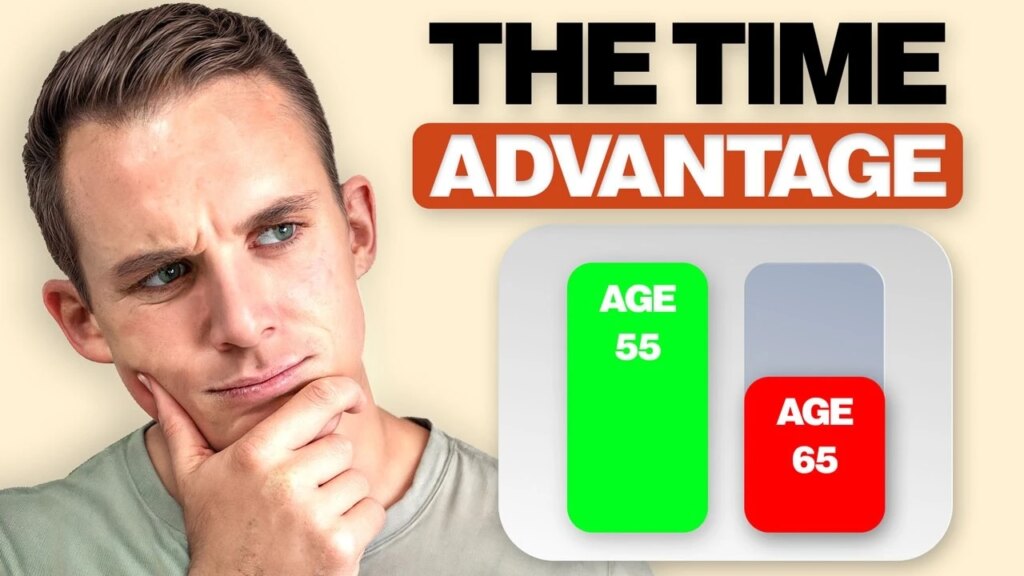
The biggest difference is the gap.
If you retire at 55, you’re potentially facing a 10-year window before Social Security and Medicare begin. That gap changes everything about how your retirement plan needs to be structured.
During those years, your expenses are often at their highest. Healthcare alone can cost around $25,000 per year before Medicare eligibility. Add in property taxes, groceries, travel, and everyday living, and it’s not uncommon to see total annual expenses reach $120,000 or more.
The challenge is that during this same period, you don’t yet have the income sources that make retirement easier later on. There’s no Social Security to offset spending, and no Medicare to reduce healthcare costs. That means your portfolio is doing all the heavy lifting.
And that’s where many early retirement plans break down.
If you need $120,000 per year from a $1.5 million portfolio, you’re withdrawing about 8% annually. That’s a very aggressive rate and historically difficult to sustain over a long retirement.
But here’s where the story changes.
At age 65, the financial picture can shift dramatically. Healthcare costs often drop from roughly $25,000 per year to closer to $10,000 with Medicare. At the same time, Social Security may begin providing around $60,000 annually.
That combination can reduce the amount you need from your portfolio to just $30,000 per year. On a $1.5 million portfolio, that’s roughly a 2% withdrawal rate, which is far more sustainable.
This is why early retirement planning isn’t about finding one withdrawal rate. It’s about understanding how your income and expenses evolve over time.
A strong plan accounts for both phases. It recognizes that the first decade may require higher withdrawals, while later years become significantly easier to sustain.
That’s where a comprehensive financial plan becomes essential.
It starts with clarity around your goals. What do you want your life to look like in retirement? How much do you actually want to spend? And what trade-offs are you willing to make?
From there, you build around your income sources. Social Security, pensions, and investment income all play different roles at different stages. Asset allocation needs to support both short-term withdrawals and long-term growth.
Tax strategy becomes just as important. Roth conversions, tax gain harvesting, and managing taxable income can all help reduce your lifetime tax burden while also improving cash flow during early retirement years.
For example, carefully managing your income can help you qualify for healthcare subsidies before Medicare begins. That alone can significantly reduce one of the biggest expenses in early retirement.
But one of the biggest risks in retirement planning isn’t the market. It’s over-optimization.
Many people are told they need a 98% or 100% success rate before they can retire. On paper, that sounds responsible. In reality, it often means the plan is overly conservative.
That kind of thinking can lead to working years longer than necessary, sacrificing time that you can’t get back.
Some advisors unintentionally reinforce this by focusing on asset growth instead of lifestyle goals. The result is a “fail-safe” plan that protects against every possible scenario but delays the very life you’re trying to build.
A better approach is balance.
Yes, you need to account for risks like market downturns, inflation, and unexpected expenses. But you also need to recognize that waiting too long has its own cost.
The healthiest, most active years of your life are limited. Delaying retirement by five or ten years may improve your financial position, but it may reduce your ability to fully enjoy that time.
That’s why retirement is as much a psychological decision as it is a financial one.
Some fear is healthy. It pushes you to plan, to prepare, and to think through different scenarios. But too much fear can keep you stuck, constantly chasing a bigger number instead of focusing on what actually matters.
The goal isn’t to eliminate risk completely. That’s impossible. The goal is to build a plan that gives you confidence to move forward.
For many people, retiring at 55 is achievable. But it requires understanding that the early years are the most demanding, both financially and emotionally.
If you can navigate that first phase with a clear strategy, the rest of retirement often becomes much easier.
And that’s the real insight most people miss.
Early retirement isn’t about having more money than everyone else. It’s about having a plan that evolves with your life, balances risk with opportunity, and allows you to actually enjoy the years you’ve worked so hard to reach.
You should always consult a financial, tax, or legal professional familiar about your unique circumstances before making any financial decisions. This material is intended for educational purposes only. Nothing in this material constitutes a solicitation for the sale or purchase of any securities. Any mentioned rates of return are historical or hypothetical in nature and are not a guarantee of future returns.
Past performance does not guarantee future performance. Future returns may be lower or higher. Investments involve risk. Investment values will fluctuate with market conditions, and security positions, when sold, may be worth less or more than their original cost.