3 Tax Mistakes Retirees Make That Can Cost Thousands
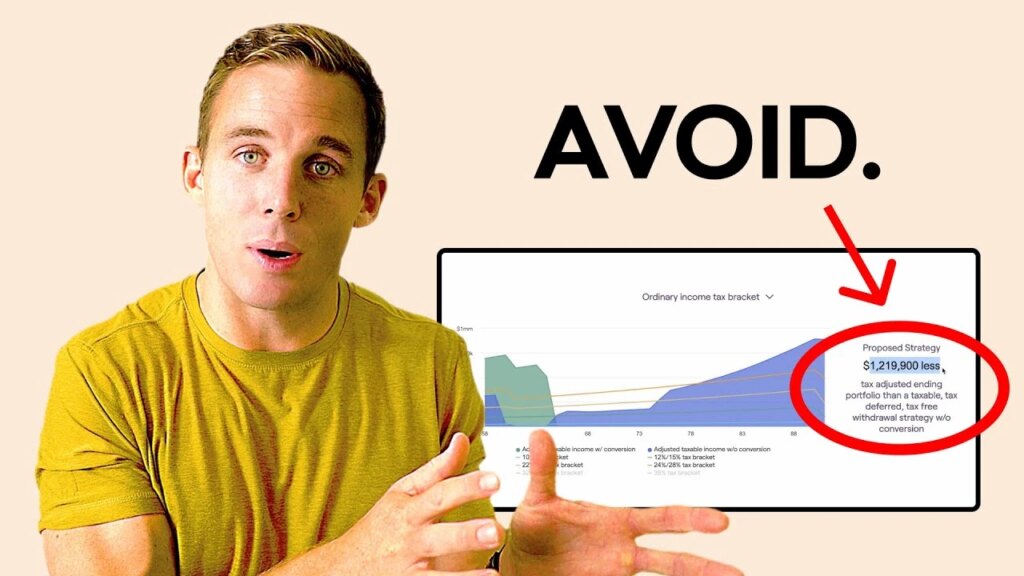
Retirement does not mean tax planning is over. In many ways, retirement is when tax planning becomes even more important. During your working years, your income may be relatively predictable. You earn wages, contribute to retirement accounts, pay taxes, and keep moving. But after retirement, you may have more control over where your income comes from and when you take it. That control creates opportunities. If you miss them, it can cost you thousands, or even hundreds of thousands, of dollars over the rest of your life.
The mistake many retirees make is assuming their tax bill will automatically go down once they stop working. Sometimes it does. But not always. Social Security, pensions, IRA withdrawals, capital gains, dividends, interest, Roth conversions, required minimum distributions, and Medicare premiums can all interact in ways that surprise people. A withdrawal from one account can trigger taxes somewhere else. A capital gain can affect Medicare premiums. A Roth conversion can push more Social Security into taxable income. A year with low income can become a missed opportunity if you do not use it.
That is why retirement tax planning should not be reactive. It should be proactive. The goal is not simply to pay the lowest tax bill this year. The goal is to pay the least amount of tax over your lifetime while preserving flexibility and supporting your retirement income plan.
Mistake 1: Missing the Opportunity for Tax Gain Harvesting
Most people have heard of tax-loss harvesting, where you sell investments at a loss to offset gains. Fewer retirees understand tax-gain harvesting. This is the strategy of intentionally realizing long-term capital gains in a year when those gains may be taxed at a very low rate, or even 0%.
Long-term capital gains are taxed differently from ordinary income. For 2026, the 0% long-term capital gains bracket applies up to $49,450 of taxable income for single filers and up to $98,900 for married couples filing jointly. Above that, gains generally move into the 15% bracket, and higher-income taxpayers may eventually face the 20% rate and possibly the 3.8% net investment income tax.
This creates an opportunity for retirees with taxable brokerage accounts. Suppose you retire before claiming Social Security or before required minimum distributions begin. Your ordinary income may be lower than it was during your working years. If you have appreciated investments in a brokerage account, you may be able to sell some shares, realize gains, and still stay within the 0% capital gains bracket.
That does not mean you should sell everything. It means you should look at your taxable income, cost basis, unrealized gains, and future income sources. If you can realize gains at 0%, you may reset your cost basis and reduce future taxes. This can be especially valuable if you expect your income to rise later because of Social Security, pensions, IRA withdrawals, or RMDs.
For example, if a married couple has taxable income below the 0% capital gains threshold, they may be able to realize some long-term gains without paying federal capital gains tax on that portion. The key is that the threshold is based on taxable income, not total account value. A retiree with a large brokerage account may still have an opportunity if their taxable income is low enough.
The mistake is doing nothing. Many retirees avoid selling appreciated investments because they fear capital gains taxes. That fear can be costly. If you have a low-income year and do not harvest gains, you may later be forced to sell in a higher-income year and pay more tax. Retirement gives you planning windows, but those windows do not stay open forever.
Tax-gain harvesting also helps with diversification. If you have a concentrated position with large gains, realizing some gains in low-tax years can reduce risk while managing the tax bill. You may be able to sell appreciated shares, pay little or no federal capital gains tax, and reinvest in a more diversified portfolio. That can improve both tax efficiency and risk management.
The important point is that tax-gain harvesting must be planned carefully. Capital gains can affect Medicare premiums, state taxes, Social Security taxation, and other income-based thresholds. A gain that is federally taxed at 0% may still create other consequences. But when done correctly, it can be one of the most overlooked tax opportunities in retirement.
Mistake 2: Getting Hit by the Social Security Tax Torpedo
Social Security taxation is one of the most confusing parts of retirement income planning. Many retirees are surprised to learn that their benefits may be taxable, and the way the tax works can create what planners often call the “Social Security tax torpedo.”
The IRS uses provisional income to determine how much of your Social Security benefit is taxable. Provisional income generally includes adjusted gross income, nontaxable interest, and half of your Social Security benefits. For married couples filing jointly, up to 50% of benefits may be taxable when provisional income is between $32,000 and $44,000. Above $44,000, up to 85% of benefits may be taxable. For single filers, the comparable thresholds are $25,000 to $34,000, and above $34,000.
These thresholds are low and have not kept pace with the financial reality of many retirees. As a result, a lot of retirees end up paying tax on Social Security even if they do not think of themselves as high income.
The “torpedo” happens because an extra dollar of income can cause more of your Social Security benefit to become taxable. For example, an additional IRA withdrawal does not just add one more dollar of ordinary income. It can also cause more of your Social Security to be included in taxable income. That means the effective tax rate on that extra dollar can be higher than your normal tax bracket suggests.
This is why withdrawal planning matters. If you take IRA distributions without looking at Social Security taxation, you may accidentally increase your tax bill more than expected. A retiree in the 12% bracket may experience a higher effective rate when additional income causes more Social Security to become taxable. A retiree in the 22% bracket may see a meaningful tax increase because 85% of Social Security benefits are being pulled into taxable income.
The solution is not always to avoid income. Sometimes you need the money, and sometimes paying tax is unavoidable. The solution is to coordinate income. That may mean using taxable brokerage accounts first, delaying Social Security, doing Roth conversions before claiming benefits, or spreading withdrawals over multiple years rather than bunching them into one year.
This is also where Roth accounts can be valuable. Qualified Roth IRA withdrawals generally do not count as taxable income and do not increase provisional income. That can make Roth money a powerful tool later in retirement because it gives you spending flexibility without triggering more Social Security taxation.
The key is to plan before Social Security begins, not after. The years between retirement and claiming benefits can be some of the most valuable tax-planning years of your life. You may be able to convert IRA dollars to Roth, harvest capital gains, or reposition assets before Social Security becomes part of the tax equation.
Mistake 3: Under-Converting or Over-Converting to Roth
Roth conversions are powerful, but they are not automatically good. A Roth conversion moves money from a pre-tax retirement account into a Roth account. You pay tax on the converted amount now, and the money can potentially grow tax-free in the future. This can reduce future required minimum distributions and create more tax flexibility later.
The mistake retirees make is usually one of two extremes: they convert too little or they convert too much.
Under-converting can leave a major opportunity on the table. If you retire in your early or mid-60s and have several years before RMDs begin, your taxable income may be temporarily lower. That can be an ideal window to convert some pre-tax retirement money at a relatively favorable tax rate. If you skip those years, you may later be forced to take larger RMDs at higher tax rates.
For 2026, the 22% federal bracket for married couples filing jointly begins above $100,800 of taxable income and the 24% bracket begins above $211,400, according to the IRS inflation-adjusted tax brackets. Some retirees intentionally convert enough each year to fill a target bracket, such as the 22% or 24% bracket, if they expect to be in a similar or higher bracket later. The right bracket depends on the household, but the concept is simple: pay tax now at a known and potentially lower rate to reduce future taxable income.
Over-converting can be just as costly. If you convert too much in one year, you may push yourself into a higher tax bracket, increase Medicare premiums, trigger more taxation of Social Security, or reduce the amount of money left invested. A conversion should not be done just because Roth accounts are attractive. It should be done because the long-term math supports it.
This is where retirees need multi-year planning. A good Roth conversion strategy looks at current tax rates, expected future RMDs, Social Security timing, pension income, investment returns, life expectancy, Medicare IRMAA thresholds, state taxes, and legacy goals. It is not about converting the largest amount possible. It is about converting the right amount over the right number of years.
For some retirees, gradual conversions over five, seven, or ten years may work better than one large conversion. That spreads out the tax impact and allows the plan to adjust annually. If the market drops, conversions may become more attractive because you can convert depressed assets and allow the recovery to happen inside the Roth. If income rises unexpectedly, you may convert less that year. If tax laws change, you may adjust again.
Roth conversions are also valuable for estate planning. Heirs who inherit traditional retirement accounts may face taxable distributions, often during their own peak earning years. Heirs who inherit Roth accounts may have more tax flexibility. For retirees who do not expect to spend all their assets, converting some pre-tax money to Roth can be a way to leave a more tax-efficient inheritance.
But again, balance matters. Paying too much tax too early can reduce wealth. Waiting too long can create forced taxable income later. The right answer depends on your full financial picture.
Retirement tax planning is not about finding one magic trick. It is about coordinating several moving parts. Tax-gain harvesting can help retirees use low-income years to reset cost basis and reduce future capital gains. Social Security planning can help avoid unnecessary taxation and reduce the impact of the tax torpedo. Roth conversions can reduce future RMDs and create tax-free flexibility, but only when done in the right amounts at the right time.
The biggest mistake is assuming taxes will take care of themselves. They will not. The tax code gives retirees opportunities, but it does not force you to use them. If you miss the low-income years after retirement, the window may close. If you ignore Social Security taxation, extra income may cost more than expected. If you avoid Roth conversions entirely, future RMDs may become a tax problem. If you convert too aggressively, you may pay more tax than necessary.
A strong retirement income plan should answer three questions every year: where should my income come from, how much tax will it create, and how will today’s decision affect future years? The retirees who ask those questions consistently are often the ones who keep more of their money, reduce surprises, and create more flexibility for the rest of retirement.
You should always consult a financial, tax, or legal professional familiar about your unique circumstances before making any financial decisions. This material is intended for educational purposes only. Nothing in this material constitutes a solicitation for the sale or purchase of any securities. Any mentioned rates of return are historical or hypothetical in nature and are not a guarantee of future returns.
Past performance does not guarantee future performance. Future returns may be lower or higher. Investments involve risk. Investment values will fluctuate with market conditions, and security positions, when sold, may be worth less or more than their original cost.