How Toyota’s Fake Dining Room Shaped American Cars
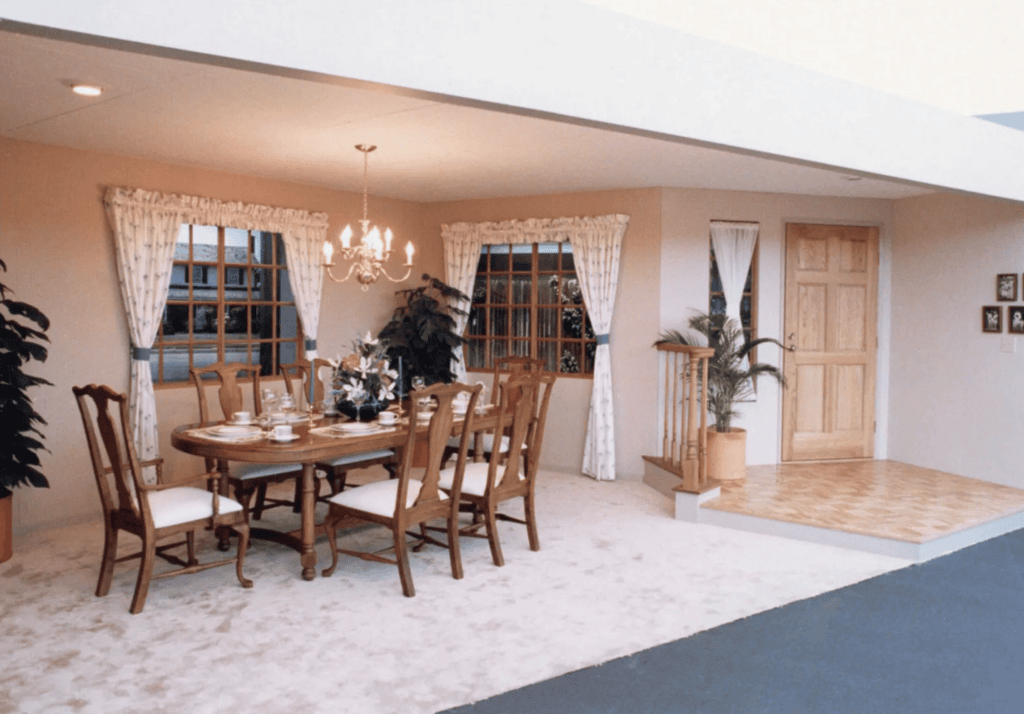
A staged room in California helped Toyota understand American lifestyles in a way data never could, and it still shapes cars today. There’s a moment in automotive history that feels almost absurd until you realize how important it was. Not a wind tunnel breakthrough. Not a new engine. Instead, it was a fake dining room built by Toyota’s California design studio to teach executives a simple truth. Americans are bigger, and they live differently.
That lesson didn’t come from spreadsheets or market reports. It came from chairs that creaked, table heights that felt wrong, and the physical awkwardness of executives trying to sit down in a room designed to reflect American life. The studio behind it was Calty, Toyota’s U.S.-based design arm. At the time, Toyota was still learning how to build cars not just for America, but for Americans.
You may also enjoy this: Toyota’s Secret Weapon: That Could Outclass Rolls-Royce
Why does this matter right now?
The modern American car market is defined by size, comfort, and usability. Look at today’s SUVs and you’ll see how far things have shifted. Vehicles like the Toyota Grand Highlander Hybrid reflect a deep understanding of space, accessibility, and real-world use.
Back in the 1970s and 1980s, Japanese automakers were expanding into the U.S. market. Their cars were efficient and reliable, but not always aligned with how Americans lived. Interiors felt tight. Seats were smaller. Controls weren’t always intuitive for larger drivers.
Toyota recognized the gap, but data alone wasn’t enough. Calty created a physical demonstration. It staged an American dining room built to reflect real proportions and habits. When executives visited, they experienced the difference firsthand. Chairs were larger. Spacing was wider. Movement felt different. The takeaway was immediate: design assumptions based on Japanese norms didn’t translate cleanly to American life. Cars are extensions of daily living. If a chair feels cramped, a car seat will too.
You may also enjoy this: 2025 Toyota Tacoma Trailhunter Review: Worth the Hype?
How does it compare to rivals or alternatives?
Toyota’s approach stood out because it was experiential rather than analytical. While other automakers relied on surveys and focus groups, Calty created a shared physical reference point. European brands often leaned into their own design philosophy, expecting American buyers to adapt. That worked in niche segments, but not at scale. American automakers understood local needs but didn’t always match Toyota’s efficiency.
The result of Toyota’s approach can be seen in vehicles like the Kia Telluride, where space and usability are central to the design philosophy across the segment. This wasn’t about abandoning Japanese design principles. It was about calibrating them, maintaining precision while expanding comfort and usability. Over time, interiors became more spacious. Seating positions adjusted. Controls grew more intuitive. Even door openings and seat heights evolved.
Who is this for and who should skip it?
This story matters if you’ve ever wondered why some cars feel more comfortable than others. The ease of entry, seat positioning, and interior layout all stem from deliberate design decisions. For enthusiasts, it highlights that great design isn’t just about performance, it’s about context.
A car that works in one country might feel completely wrong in another. Modern safety expectations, reflected in frameworks like NHTSA safety ratings, also build on this deeper understanding of how people actually use vehicles.
If you’re focused purely on horsepower or acceleration times, this might not resonate. There are no lap times here, just insight into how cars become usable in daily life.
You may also enjoy this: 2026 Toyota Corolla FX Edition: Hot Hatch or Heritage Hustle?
What is the long-term significance?
The influence of that staged dining room extends far beyond a single moment. It represents a shift toward localization in global product design. Today, automakers routinely design vehicles for specific regions. But decades ago, that wasn’t standard practice. Calty’s experiment showed that empathy and physical understanding could outperform abstract data.
Vehicles now reflect this philosophy. The rise of large SUVs, emphasis on comfort, and focus on usability mirror how Americans live. Even efficiency benchmarks, such as EPA-estimated fuel economy, are now paired with expectations around space and convenience.
You may also like this: 2027 Toyota Highlander goes electric as a three-row EV

Independent evaluations from organizations like the Insurance Institute for Highway Safety further reinforce how design must account for real-world usage. In a way, the dining room was an early example of immersive design thinking.
It forced decision-makers to step outside their assumptions and experience the problem directly. That lesson still applies today. Designing for people who don’t live as you do remains a challenge. The tools have improved, but the core issue is still human. And sometimes, the most effective solution isn’t more data. It’s a chair that doesn’t quite fit, and the realization that follows.