Inside BMW’s Factory of the Future. What It Could Mean for America
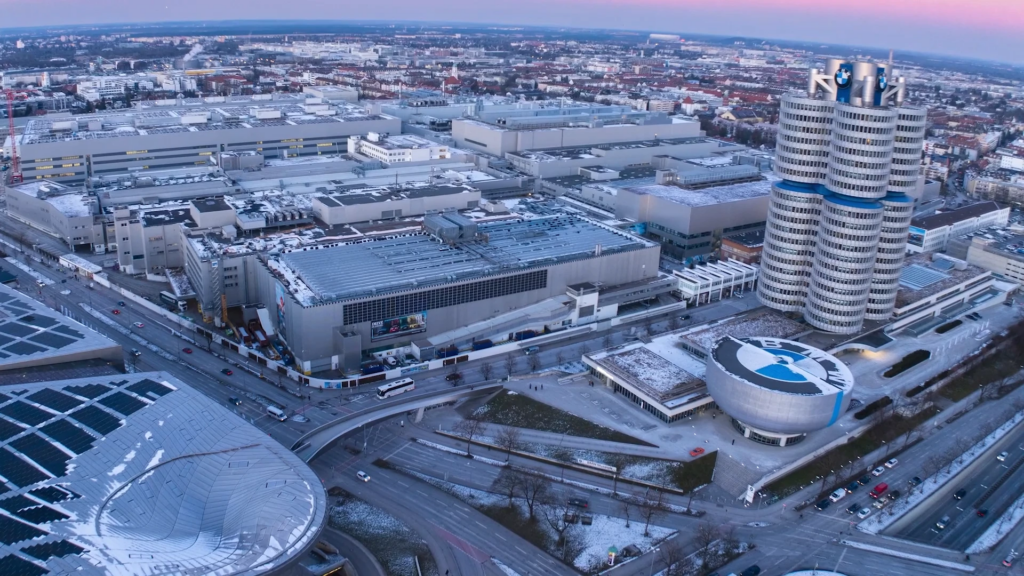
Step inside BMW’s Munich plant and it becomes clear almost immediately that this is not a typical automotive factory. Instead of being built on a vast stretch of land outside the city, it sits right in the middle of Munich, surrounded by residential buildings, corporate offices, and BMW’s own headquarters. That setting creates a unique set of constraints, and those constraints are shaping how BMW approaches manufacturing in ways that feel both deliberate and forward-looking.
The result is a facility that is not just evolving but quietly redefining how cars are built. While everything happening here is tailored to Europe, there is a growing sense that some of these ideas could influence how vehicles are produced in the United States. That influence may not be immediate or exact, but it is difficult to ignore the direction BMW is heading.
A Factory Reinventing Itself
BMW has been building vehicles at its Munich plant since 1922, and over that time, the facility has adapted to nearly every shift in the automotive industry. What is happening now, however, feels more fundamental than anything that has come before. The company is investing more than 700 million dollars to transform the plant into a fully electric production facility by 2027, and that investment is being applied to far more than just new vehicle types.
This transformation is about rethinking the entire production system. Every step of the process is being reconsidered, from how parts arrive at the factory to how vehicles move through the assembly line. Because BMW cannot expand outward, it has been forced to optimize every inch of space it already has. That has led to tighter workflows, smarter logistics, and a level of precision that leaves very little room for inefficiency.
The Neue Klasse Approach
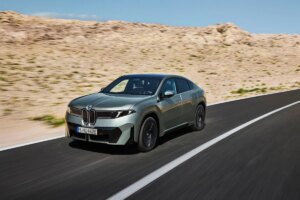
At the center of BMW’s strategy is the Neue Klasse platform, which represents a shift in how vehicles are engineered and built. Traditional vehicle platforms tend to introduce complexity, requiring different production processes for different models and creating inefficiencies over time. Neue Klasse is designed to simplify that equation by standardizing key components and reducing variation across the lineup.
This approach allows multiple models to be built more efficiently on the same production line, which can improve speed and reduce costs while maintaining consistent quality. It also gives BMW greater flexibility to respond to changes in demand, something that has become increasingly important in a market where consumer preferences are shifting quickly. While BMW has positioned Neue Klasse as central to its electric future, the extent to which these principles will be applied globally remains an open question.
A Logistics System With Almost No Margin
One of the most striking aspects of the Munich plant is how little inventory it carries at any given time. The facility operates with roughly four hours of parts on site, a figure that highlights just how tightly coordinated the system has become. Instead of storing large quantities of components, BMW relies on a continuous flow of parts arriving exactly when they are needed.
Approximately 70 percent of those components are delivered directly to the workstation where they will be used, eliminating the need for large storage areas and reducing excess inventory. This just-in-time system is built on precision, and it requires a level of coordination that leaves little room for disruption. When it works, it reduces costs, speeds up production, and minimizes waste. However, whether this level of efficiency can be maintained across larger and more complex supply chains remains an open question.
Robots Take on the Hard Work
Automation plays a significant role inside the Munich plant, particularly in the body shop where up to 2,000 robots handle tasks such as welding, assembly, and material movement. In some areas, automation levels reach approximately 98 percent, reflecting a high degree of consistency and efficiency. Despite this, the factory is not defined by the absence of people, but rather by a shift in how people contribute.
Robots are used to take on repetitive and physically demanding tasks, allowing human workers to focus on oversight, quality control, and problem-solving. This creates a different balance between human and machine, one that emphasizes collaboration rather than replacement. While automation improves efficiency, human judgment remains essential to ensuring that the final product meets the expected standards.
Data Driving Every Decision
As vehicles move through the Munich plant, they generate a substantial amount of data. Each unit produces up to 20,000 data points during production, and that information is used to monitor and refine the process in real time. AI-driven systems analyze this data continuously, identifying potential issues and flagging them before they become larger problems.
In some cases, these systems can even correct issues before they impact the finished vehicle. This creates a feedback loop in which each car contributes to improving the next one, resulting in a manufacturing process that becomes more efficient and more precise over time. It represents a shift from reactive quality control to a more proactive and adaptive approach.
A Possible Blueprint for the United States
BMW has a long-standing practice of developing and refining production systems in Munich before applying them to other facilities. One of the most important of those facilities is Spartanburg, South Carolina, which is already BMW’s largest production plant globally. The facility produces more than 400,000 vehicles each year and exports them to over 120 countries, making it a central part of BMW’s global operations.
The connection between Munich and Spartanburg suggests that some of the ideas being developed in Germany could eventually influence manufacturing in the United States. However, the transfer of these systems is not guaranteed or immediate. Differences in scale, supply chains, and operational structures mean that any adoption would likely involve adaptation rather than direct replication.
What This Means for Buyers
For consumers, most of these changes will take place out of sight. Buyers are unlikely to notice the logistics systems, the automation levels, or the data flowing through the factory. What they may notice is the result of those changes in the vehicles themselves.
More consistent build quality, improved efficiency, and potentially faster delivery times are all possible outcomes of a more refined manufacturing process. In addition, vehicles designed specifically for electric platforms can offer advantages in performance and packaging that are difficult to achieve with adapted designs. At the same time, the broader industry continues to balance multiple powertrains, which means the transition is likely to remain gradual rather than abrupt.
The Bigger Picture
What is happening in Munich reflects a broader shift in the automotive industry toward more integrated manufacturing systems. Production is no longer just about assembling parts, but about combining software, data, logistics, and engineering into a single, coordinated process. This allows manufacturers to respond more quickly to changes in technology and consumer demand, while also improving efficiency and consistency.
At the same time, this shift introduces new challenges, particularly around scalability and cost. What works in a tightly controlled urban factory may not translate directly to larger facilities with different constraints. That tension is likely to shape how these innovations are applied in other markets.
The Bottom Line
BMW’s Munich plant is not a concept or a prototype. It is a working facility producing vehicles every day while experimenting with new ways of building them. The ideas being tested here have the potential to influence manufacturing far beyond Germany, including in the United States, but the path forward remains flexible.
Some of these systems may be adopted quickly, while others may evolve or be adapted over time. What is clear is that the industry is changing, and that change is already underway inside one of BMW’s oldest and most important factories.