How the Wealthy Legally Pay Less in Taxes and What Most Workers Miss
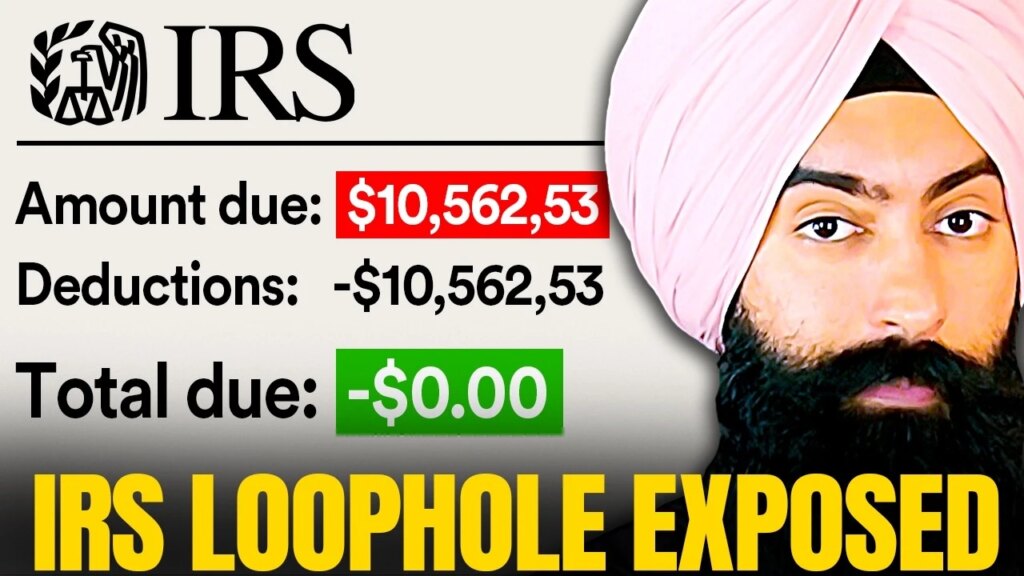
For most Americans, taxes feel automatic. Income comes in, withholding goes out, and the year ends with a refund or a bill. The process is so routine that many workers assume everyone is playing by roughly the same rules.
They are not.
The biggest divide in the tax code is not simply between high earners and low earners. It is between people who earn primarily from wages and people who earn through businesses, investments, and ownership. The first group is taxed early and often, usually with limited room to maneuver beyond standard deductions and retirement contributions. The second group often has access to deductions, depreciation, timing strategies, and lower tax rates that can reduce taxable income significantly, all within the law.
That difference is one reason the wealthy often appear to play a different financial game. In many cases, they do. The tax code is full of incentives meant to encourage certain behavior, starting businesses, buying equipment, investing in property, creating housing, and taking entrepreneurial risk. People who understand how those rules work can often lower their tax burden legally. People who do not are usually left paying taxes in the most straightforward, least flexible way possible.
The foundation of many tax-saving strategies is the concept of ordinary and necessary business expenses. The IRS allows businesses to deduct expenses that are common, appropriate, and directly related to running that business. For a W-2 employee, those opportunities are limited. For someone operating a legitimate business, even a small one, the list can be much broader: office costs, software, equipment, travel, business-use vehicles, and other documented expenses tied to producing income. That is where the tax code starts to open up.
This is why starting a business, whether as an LLC, S corporation, or other qualifying structure, can change the tax equation. It does not magically eliminate taxes, and it certainly does not mean personal spending becomes deductible. But it can create access to write-offs that employees generally do not have. A business with $50,000 in revenue and $25,000 in legitimate expenses is not taxed on $50,000. It is taxed on the profit. That basic shift, taxing net business income rather than gross revenue, is one of the first major tax advantages owners receive.
Of course, this is where many people get sloppy. The tax code is generous toward actual business activity and unforgiving toward abuse. Expenses have to be documented, supportable, and tied to the business. A vehicle, for example, can create deductions if it is used for business purposes and properly tracked. But treating luxury consumption as a fake business write-off is exactly how people get themselves into trouble. The outline makes the point clearly: these strategies are legal only when they are structured and documented correctly. That usually means working with a competent accountant, keeping records, and respecting the line between tax planning and tax fraud.
Where the tax code becomes even more powerful is real estate. Real estate investors have access to one of the most valuable concepts in American tax law: depreciation. Even when a property is appreciating in market value, the IRS allows the owner to deduct the gradual wear and tear of the building over time. In the case of residential rental property, that depreciation is typically spread over 27.5 years. The result is a paper deduction that can reduce taxable income without requiring new cash spending.
This is one of the reasons real estate has long been such a favored asset among wealth builders. A property might generate positive cash flow and still show reduced taxable income because depreciation is lowering the amount that gets reported for tax purposes. In plain terms, the owner may be making money while reporting less taxable profit than the cash flow alone would suggest. That is not a loophole. It is a feature of the tax code designed to encourage investment in housing and income-producing property.
The benefits can become even larger through accelerated depreciation and cost segregation. Instead of depreciating everything on the same long schedule, certain property components can be separated and written off more quickly. That can create much larger deductions in the early years of ownership. In some cases, those deductions can push taxable rental income down sharply or even create a paper loss. Under the right circumstances, those losses can offset other income, though the rules depend heavily on total income, participation, and whether the taxpayer qualifies as a real estate professional.
That is where the tax advantages of real estate can become especially meaningful for higher earners. If structured correctly, depreciation and related rules can soften or even erase taxes that would otherwise be owed. But again, the qualifier matters: the taxpayer has to meet the rules. Passive-loss rules, income phaseouts, and professional-status requirements all matter here. This is not a casual DIY area of the tax code. It is one where precision matters.
Another major advantage for business owners is the Qualified Business Income deduction, or QBI. In general terms, qualifying businesses may be allowed to deduct up to 20% of eligible business profit. That can meaningfully reduce taxable income, particularly when combined with ordinary business deductions. For a business owner reporting $25,000 in profit, a QBI deduction could reduce the taxable amount further. It is one more example of how ownership income is often treated more favorably than wage income.
Then there is the capital-gains system, which is another quiet divider between how workers and investors are taxed. Wage income is taxed through ordinary-income brackets. Long-term investment income can be taxed at lower rates, and in some cases at 0%, depending on overall income. That creates a very different tax environment for households building wealth through investments rather than through labor alone. It is one reason people who live increasingly from capital gains, dividends, business income, or property income often face a much different effective tax picture than people whose entire financial life runs through a paycheck.
The 1031 exchange extends that advantage in real estate by allowing investors to defer capital gains taxes when they sell one investment property and roll the proceeds into another qualifying property. The gain is not erased forever, but the ability to defer taxes while continuing to upgrade into larger or more productive assets can significantly accelerate wealth building. It allows capital to stay in motion rather than being interrupted by an immediate tax hit.
Put all of this together, and the larger pattern becomes clear. The tax code is not neutral. It rewards ownership, investment, business creation, and real estate more generously than it rewards labor income alone. That does not mean the system is fair in every respect. It does mean that understanding the incentives matters.
For ordinary workers, the practical takeaway is not that everyone needs to rush into speculative real estate deals or form a business overnight just to write things off. It is that building wealth usually means moving, over time, from being taxed mainly as a worker to being taxed increasingly as an owner. That can begin modestly, with a side business, investment accounts, or rental property. But the shift matters because the rules change once income is tied to assets and enterprise instead of only wages.
The most important caution is also the simplest: legal tax minimization depends on truth, documentation, and structure. The people who benefit most from the tax code are often the ones who understand the rules well enough to follow them carefully. The people who get hurt are often the ones who hear about deductions secondhand, confuse aggressive tax planning with fantasy, and fail to document anything.
In the end, the real lesson is not that the wealthy have a secret. It is that they often understand the incentives better. Taxes are not only about what you earn. They are about how you earn it, how you structure it, and whether you are building income from labor alone or from assets that the tax code was written to encourage.
Jaspreet Singh is not a licensed financial advisor. He is a licensed attorney, but he is not providing you with legal advice in this article. This article, the topics discussed, and ideas presented are Jaspreet’s opinions and presented for entertainment purposes only. The information presented should not be construed as financial or legal advice. Always do your own due diligence.